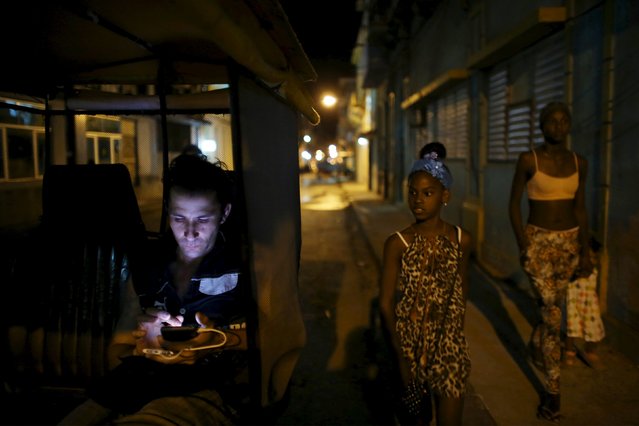
Self-employed pedicab driver Danilo Guerra, 25, uses his mobile phone as he waits for clients in downtown Havana April 12, 2016. (Photo by Alexandre Meneghini/Reuters)
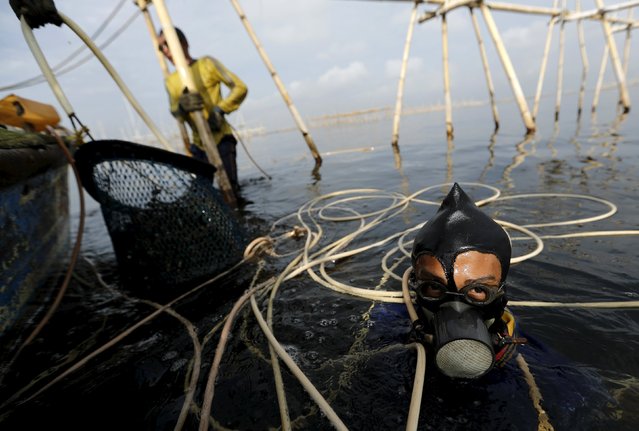
Eghy (L) uses his makeshift snorkel as his colleague lifts up green mussels to their boat in Jakarta Bay, Indonesia, April 20, 2016. (Photo by Reuters/Beawiharta)
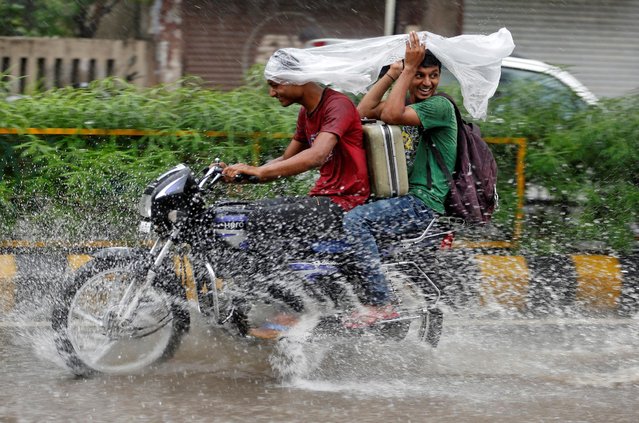
Commuters use a plastic sheet to take shelter from rain as they ride through a waterlogged road in Ahmedabad, India, July 27, 2016. (Photo by Amit Dave/Reuters)
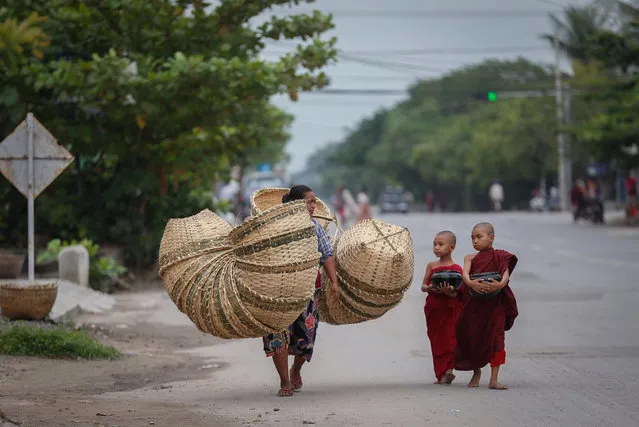
Two novice Buddhist monks walk alongside a basket seller to collect alms following a clerics rule of no footwear nor use of umbrellas in Mandalay, Myanmar, Friday, October 9, 2015. (Photo by Hkun Lat/AP Photo)
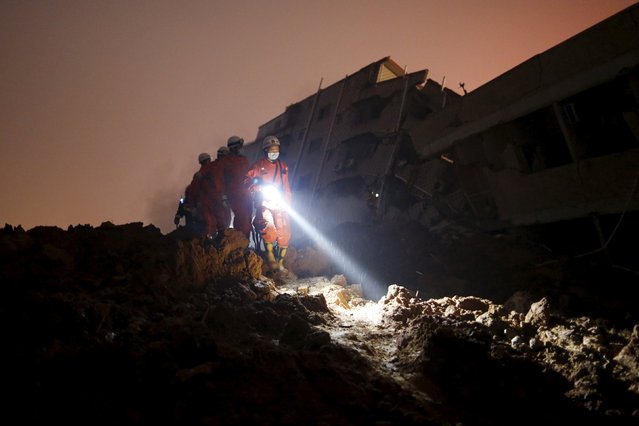
Firefighters use flashlights to search for survivors among the rubble of collapsed buildings after a landslide hit an industrial park in Shenzhen, Guangdong province, China December 20, 2015. (Photo by Tyrone Siu/Reuters)
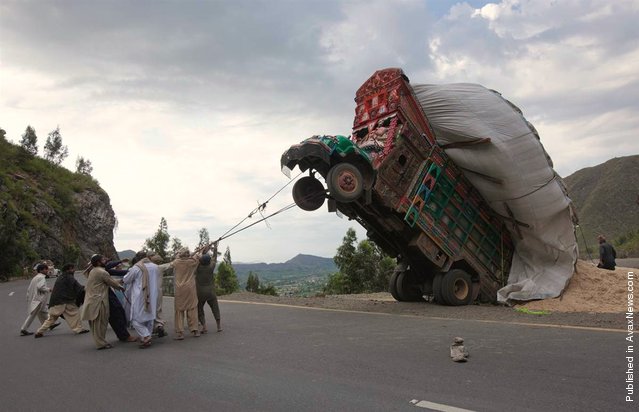
Men use ropes to try and right a supply truck overloaded with wheat straw along a road in Dargai, in the Malakand district, about 100 miles northwest of Pakistan's capital Islamabad, on April 13, 2012. (Photo by Mian Khursheed/Reuters)
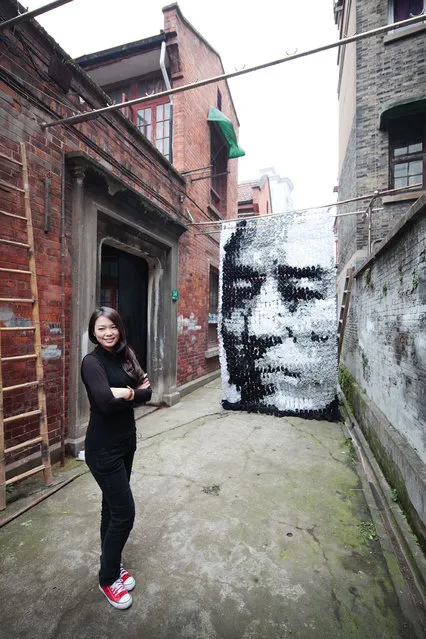
Shanghai-based artist Hong Yi, also known as Red, used 750 pair of socks to create a rather unusual sock portrait of famous Chinese film director Zhang Yimou. Yi, which is famous for her Coffee Stain Portrait, spent over three weeks on the project and used black, white and grey socks. (Photo by Ohiseered.com)
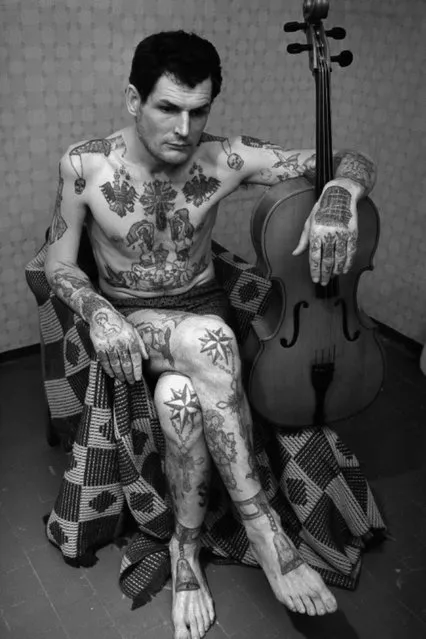
Tattoos are commonly used among criminals to show gang membership and record the wearer's personal history—such as his or her skills, specialties, accomplishments and convictions. They are also used as a means of personal expression. Certain designs have developed recognized coded meanings. The code systems can be quite complex and because of the nature of what they encode, the tattoo designs are not widely recognized.