Loading...
Done
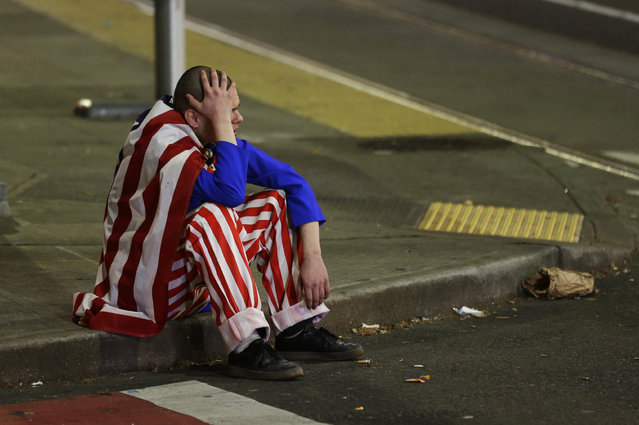
A man dressed in red-white-and-blue sits on the curb during a protest against President-elect Donald Trump, Wednesday, November 9, 2016, in Seattle's Capitol Hill neighborhood. (Photo by Ted S. Warren/AP Photo)

A man dressed in red-white-and-blue sits on the curb during a protest against President-elect Donald Trump, Wednesday, November 9, 2016, in Seattle's Capitol Hill neighborhood. (Photo by Ted S. Warren/AP Photo)
Details
10 Nov 2016 12:30:00
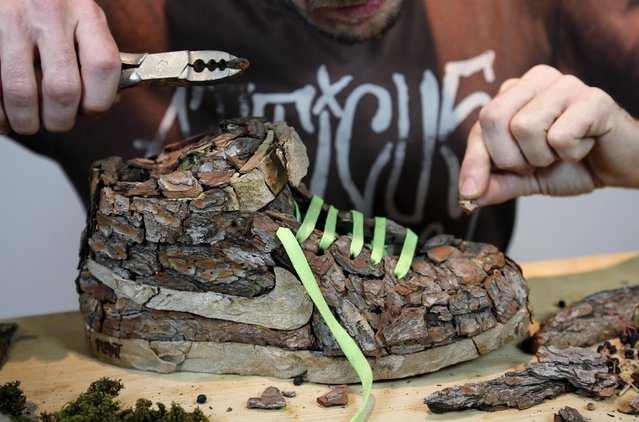
French artist Christophe Guinet, also known as “Mr Plant”, works on his plant shoe creation “Wood”, part of the artistic project “Just Grow It”, in his art gallery in Marseille, November 25, 2014. Guinet transforms name-brand Nike sneakers, cult footwear for urban youth, into vegetable compositions, creating a collection of artwork with trainers modified with tree bark, foam and flowers. (Photo by Jean-Paul Pelissier/Reuters)

French artist Christophe Guinet, also known as “Mr Plant”, works on his plant shoe creation “Wood”, part of the artistic project “Just Grow It”, in his art gallery in Marseille, November 25, 2014. Guinet transforms name-brand Nike sneakers, cult footwear for urban youth, into vegetable compositions, creating a collection of artwork with trainers modified with tree bark, foam and flowers. (Photo by Jean-Paul Pelissier/Reuters)
Details
29 Nov 2014 12:32:00
On August 31, 2012, a long filament of solar material that had been hovering in the sun's atmosphere, the corona, erupted out into space at 4:36 p.m. EDT. The coronal mass ejection, or CME, traveled at over 900 miles per second. The CME did not travel directly toward Earth, but did connect with Earth's magnetic environment, or magnetosphere, causing aurora to appear on the night of Monday, September 3. (Photo by NASA/GSFC/SDO)

On August 31, 2012, a long filament of solar material that had been hovering in the sun's atmosphere, the corona, erupted out into space at 4:36 p.m. EDT. The coronal mass ejection, or CME, traveled at over 900 miles per second. The CME did not travel directly toward Earth, but did connect with Earth's magnetic environment, or magnetosphere, causing aurora to appear on the night of Monday, September 3. (Photo by NASA/GSFC/SDO via The Atlantic)
Details
14 Sep 2012 09:01:00
While the lido was described as bringing “modernism to the masses” on the British coast it was just the latest example of a trend that had been developing since Victorian times – transforming seaside towns into resorts for leisure and entertainment. In the latter half of the nineteenth century, the fashion was for local authorities to build great piers stretching from the promenade out into the sea

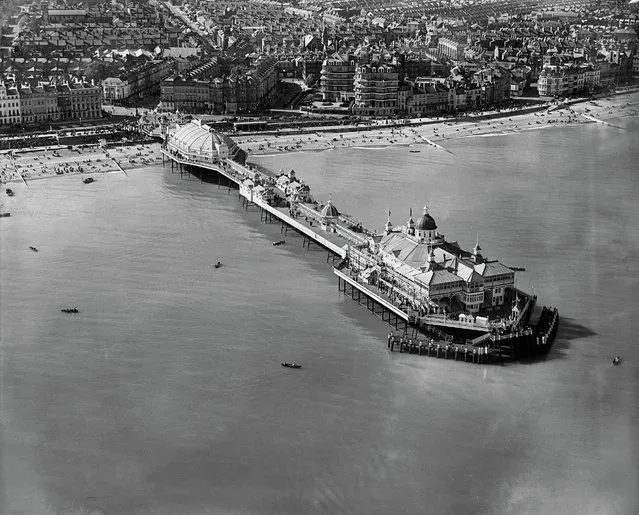
While the lido was described as bringing “modernism to the masses” on the British coast it was just the latest example of a trend that had been developing since Victorian times – transforming seaside towns into resorts for leisure and entertainment. In the latter half of the nineteenth century, the fashion was for local authorities to build great piers stretching from the promenade out into the sea. The Eastbourne Pier, pictured here in May 1931, was erected between 1866 and 1870 to an ingenious design by Eugenius Birch, which saw the structure sitting on special cups allowing the supporting struts to “move” in bad weather. Arranged on the pier's 1,000-foot length were kiosks, a theatre, a ballroom and a camera obscura. 1931. (Photo by Aerofilms Collection via “A History of Britain From Above”)
Details
25 Feb 2014 12:59:00
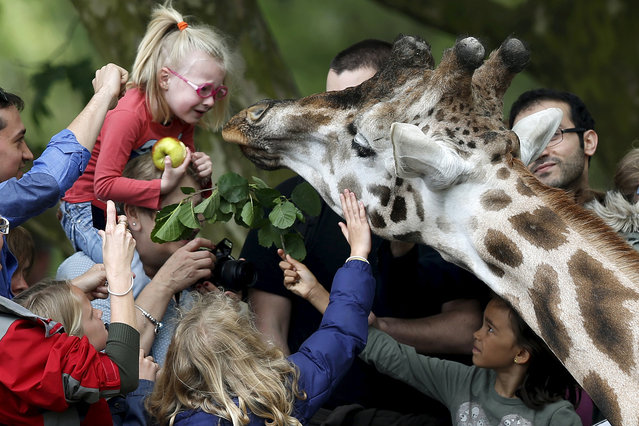
Children feed a giraffe at Pairi Daiza wildlife park, a zoo and botanical garden in Brugelette, Belgium, May 25, 2015. (Photo by Francois Lenoir/Reuters)

Children feed a giraffe at Pairi Daiza wildlife park, a zoo and botanical garden in Brugelette, Belgium, May 25, 2015. (Photo by Francois Lenoir/Reuters)
Details
26 May 2015 11:19:00
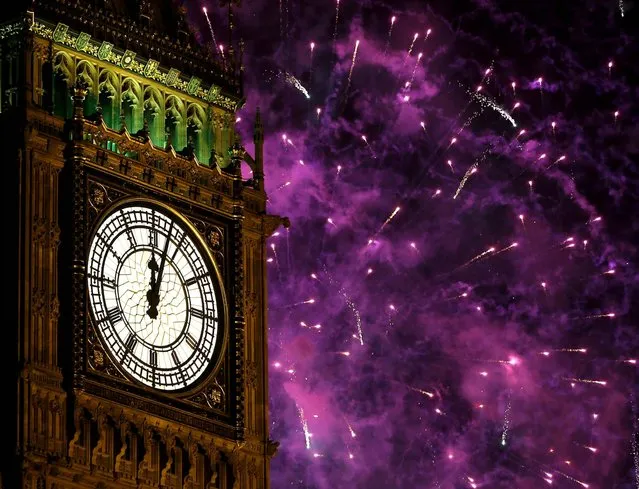
Fireworks explode over Elizabeth Tower housing the Big Ben clock in London. (Photo by Kirsty Wigglesworth/Associated Press)

Fireworks explode over Elizabeth Tower housing the Big Ben clock in London. (Photo by Kirsty Wigglesworth/Associated Press)
Details
01 Jan 2013 10:27:00
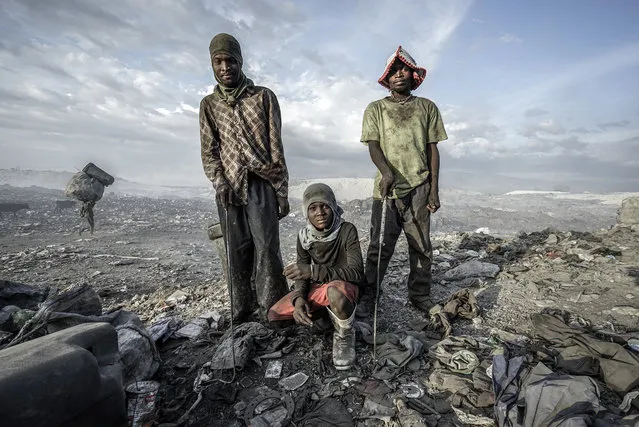
In a 200-acre-plus dump 5 kilometers north of Haiti’s capital, Port-au-Prince, hundreds of men, women and children scavenge day and night through the burning wasteland. They earn $12 to $15 a day – on a good day – for recycling plastics as well as clothing, household items and aluminum (for smelting). Some 5,000 tons of waste is created each day in the Port-au-Prince area. (Photo and caption by Giles Clarke/Getty Images Reportage)

In a 200-acre-plus dump 5 kilometers north of Haiti’s capital, Port-au-Prince, hundreds of men, women and children scavenge day and night through the burning wasteland. They earn $12 to $15 a day – on a good day – for recycling plastics as well as clothing, household items and aluminum (for smelting). Some 5,000 tons of waste is created each day in the Port-au-Prince area. (Photo and caption by Giles Clarke/Getty Images Reportage)
Details
02 Feb 2015 11:21:00
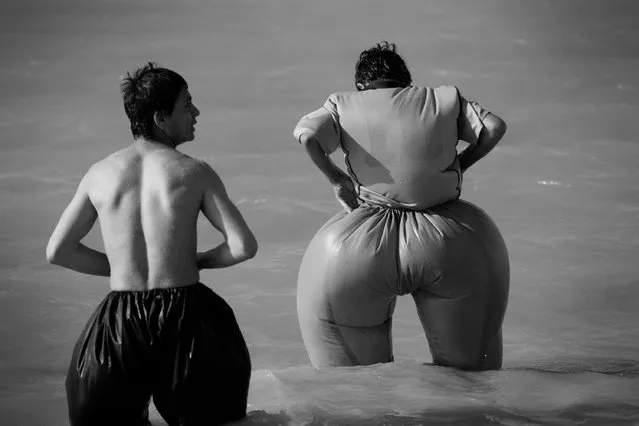
Afghan men escape increasing summer temperatures by wading in the Qarga reservoir on July 9, 2010 in a suburb of Kabul, Afghanistan. (Photo by Majid Saeedi/Getty Images)

“Life in War” (FotoEvidence Press) by Iranian photographer Majid Saeedi is probably the only book about Afghanistan that doesn’t show images of war. For ten years his camera photographed daily life in the context of war. His photographs reveal the humanity of a people living through decades of war. Here: Afghan men escape increasing summer temperatures by wading in the Qarga reservoir on July 9, 2010 in a suburb of Kabul, Afghanistan. (Photo by Majid Saeedi/Getty Images)
Details
17 Oct 2014 12:07:00