Loading...
Done
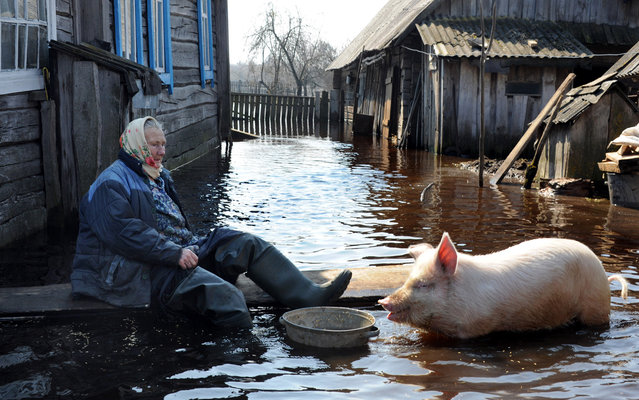
A woman feeds a pig in her yard during spring flood in the Belarus village of Snyadin near Pripyat river, some 300 km south of Minsk, on April 16, 2013. (Photo by Viktor Drachev/AFP Photo)

A woman feeds a pig in her yard during spring flood in the Belarus village of Snyadin near Pripyat river, some 300 km south of Minsk, on April 16, 2013. (Photo by Viktor Drachev/AFP Photo)
Details
20 Apr 2013 12:12:00
In this Thursday, April 11, 2013 photo, North Korean female soldiers stand watch on the river bank of the North Korean town of Sinuiju, opposite to the Chinese border city of Dandong. (Photo by AP Photo)

In this Thursday, April 11, 2013 photo, North Korean female soldiers stand watch on the river bank of the North Korean town of Sinuiju, opposite to the Chinese border city of Dandong. (Photo by AP Photo)
Details
22 May 2013 13:28:00
A country music fan cools off in the wind on the second day of the Stagecoach country music festival in Indio, California April 26, 2014. (Photo by Mike Blake/Reuters)

A country music fan cools off in the wind on the second day of the Stagecoach country music festival in Indio, California April 26, 2014. (Photo by Mike Blake/Reuters)
Details
03 May 2014 15:35:00
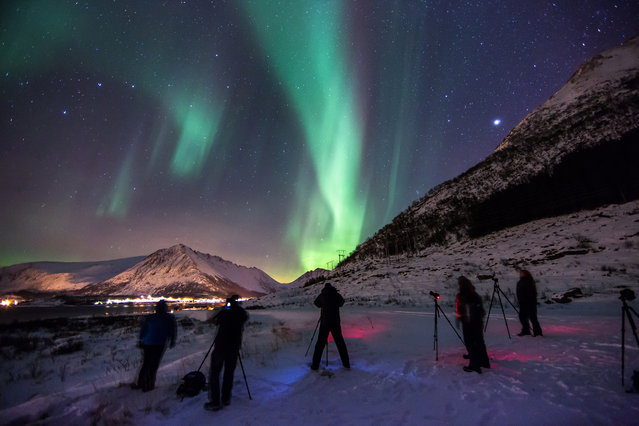
“Aurora Hunters”. Photographers taking part in a photography tour on the Lofoten Islands in Norway, pull over on the side of the road to take a photo of their first ever Aurora Borealis after spotting it from their tour bus. Photo location: Rystad, Lofoten Islands, Norway. (Photo and caption by Mark Gee/National Geographic Photo Contest)

“Aurora Hunters”. Photographers taking part in a photography tour on the Lofoten Islands in Norway, pull over on the side of the road to take a photo of their first ever Aurora Borealis after spotting it from their tour bus. Photo location: Rystad, Lofoten Islands, Norway. (Photo and caption by Mark Gee/National Geographic Photo Contest)
Details
17 Jun 2014 10:08:00
A Honduras fan cheers for her team before the start of the Group E football match between Honduras and Switzerland at the Amazonia Arena in Manaus during the 2014 FIFA World Cup on June 25, 2014. (Photo by Rodrigo Arangua/AFP Photo)

A Honduras fan cheers for her team before the start of the Group E football match between Honduras and Switzerland at the Amazonia Arena in Manaus during the 2014 FIFA World Cup on June 25, 2014. (Photo by Rodrigo Arangua/AFP Photo)
Details
10 Jul 2014 12:45:00
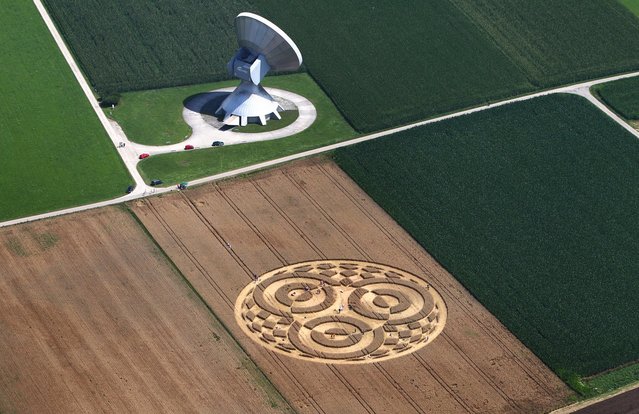
People walk through crop circles in a cornfield near Raisting, Germany, on July 28, 2014. (Photo by Karl-Josef Hildenbrand/DPA)

People walk through crop circles in a cornfield near Raisting, Germany, on July 28, 2014. According to media reports, a balloonist had discovered the circle some days ago. Since then, hundreds of people came to the field to watch it, however it is unclear who did create the pattern. (Photo by Karl-Josef Hildenbrand/DPA)
Details
02 Aug 2014 14:29:00
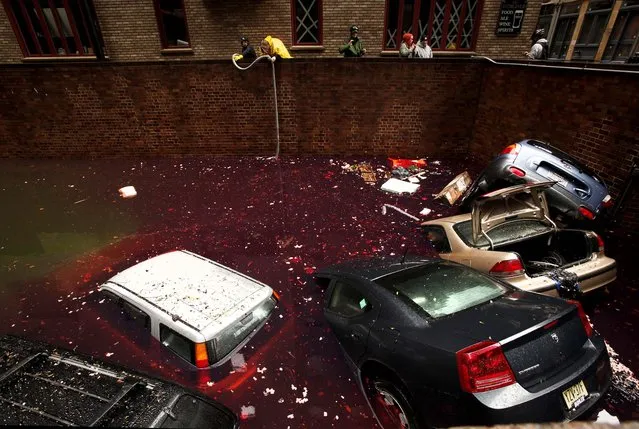
Cars float up from a car garage in a mixture of storm water and gasoline in lower Manhattan as workers begin the process of pumping out the mess. (Photo by Carolyn Cole/Los Angeles Times/MCT)

Cars float up from a car garage in a mixture of storm water and gasoline in lower Manhattan as workers begin the process of pumping out the mess. (Photo by Carolyn Cole/Los Angeles Times/MCT)
Details
31 Oct 2012 13:36:00
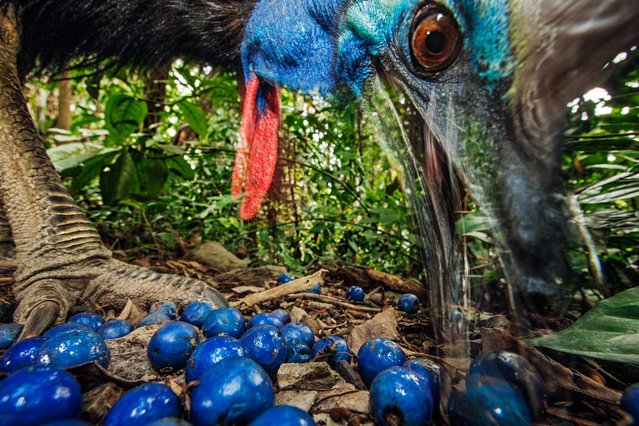
“Cassowaries are large, flightless birds related to emus and (more distantly) to ostriches, rheas, and kiwis”, writes Olivia Judson in the September issue of National Geographic magazine. (Photo by Christian Ziegler/National Geographic)

“Cassowaries are large, flightless birds related to emus and (more distantly) to ostriches, rheas, and kiwis”, writes Olivia Judson in the September issue of National Geographic magazine. How large? People-size: Adult males stand well over five foot five and top 110 pounds. Females are even taller, and can weigh more than 160 pounds. Dangerous when roused, they’re shy and peaceable when left alone. But even birds this big and tough are prey to habitat loss. The dense New Guinea and Australia rain forests where they live have dwindled. Today cassowaries might number 1,500 to 2,000. And because they help shape those same forests – by moving seeds from one place to another – “if they vanish”, Judson writes, “the structure of the forest would gradually change” too. (Photo by Christian Ziegler/National Geographic)
Details
06 Jan 2014 12:21:00