Loading...
Done
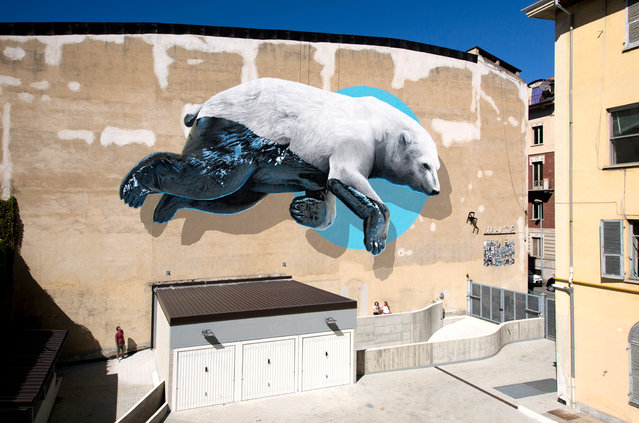
A polar bear whose bottom half is caked in oily black gunk. A whale wrapped in striped fabric: a pseudo straightjacket. These are the messes climate change leaves behind, the things we know are happening but often don’t have the opportunity to see with our own eyes. Swiss street art duo Christian Rebecchi and Pablo Togni, otherwise known as NeverCrew, met in art school when they were 15 and started making work together soon after. As a team, the artists adorn the world with eye-popping and gut-wrenching images depicting the consequences of humanity’s actions on earth. Here: “Black machine” mural painting and installation on the Colosseo theater in Turin, Italy, in September 2015. (Photo by NeverCrew/The Huffington Post)

A polar bear whose bottom half is caked in oily black gunk. A whale wrapped in striped fabric: a pseudo straightjacket. These are the messes climate change leaves behind, the things we know are happening but often don’t have the opportunity to see with our own eyes. Swiss street art duo Christian Rebecchi and Pablo Togni, otherwise known as NeverCrew, met in art school when they were 15 and started making work together soon after. As a team, the artists adorn the world with eye-popping and gut-wrenching images depicting the consequences of humanity’s actions on earth. (Photo by NeverCrew/The Huffington Post)
Details
13 Aug 2016 11:09:00
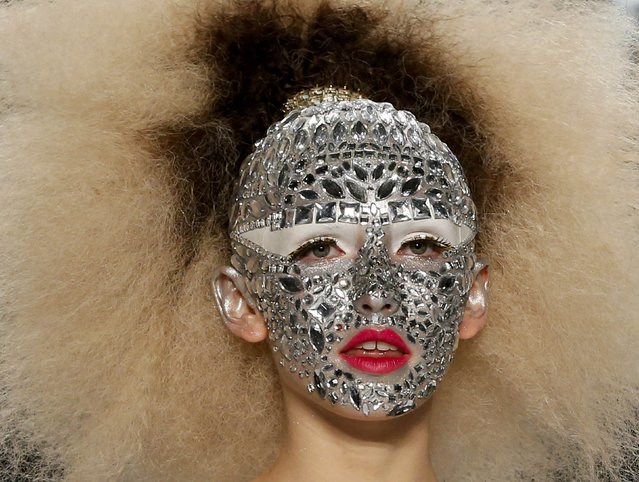
A model presents makeup creations during dress reharsal by Maybelline New York at the Berlin Fashion Week Autumn/Winter 2015 in Berlin January 19, 2015. (Photo by Fabrizio Bensch/Reuters)

A model presents makeup creations during dress reharsal by Maybelline New York at the Berlin Fashion Week Autumn/Winter 2015 in Berlin January 19, 2015. (Photo by Fabrizio Bensch/Reuters)
Details
20 Jan 2015 13:10:00
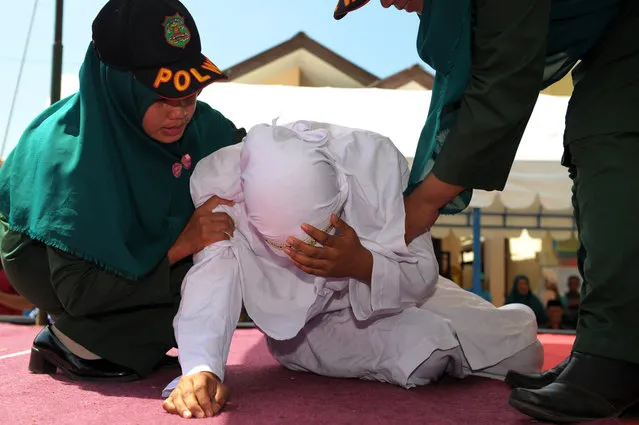
An Indonesian woman known as Linda (C) is helped by two Sharia officials after being caned for spending time in close proximity with a man who is not her husband, which is against Sharia law, in Banda Aceh on February 2, 2017. Aceh is the only province in the world's most populous Muslim-majority country that imposes sharia law. People can face floggings for a range of offences – from gambling, to drinking alcohol, to gay s*x. (Photo by Chaideer Mahyuddin/AFP Photo)

An Indonesian woman known as Linda (C) is helped by two Sharia officials after being caned for spending time in close proximity with a man who is not her husband, which is against Sharia law, in Banda Aceh on February 2, 2017. Aceh is the only province in the world's most populous Muslim-majority country that imposes sharia law. People can face floggings for a range of offences – from gambling, to drinking alcohol, to gay sеx. (Photo by Chaideer Mahyuddin/AFP Photo)
Details
03 Feb 2017 10:45:00
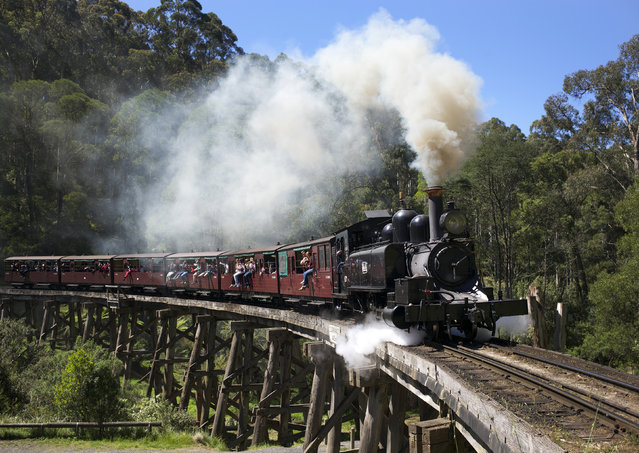
A Puffing Billy steam train hauled by locomotive 14A crosses the Monbulk Creek trestle after leaving Belgrave station near Melbourne, October 20, 2014. (Photo by Jason Reed/Reuters)

A Puffing Billy steam train hauled by locomotive 14A crosses the Monbulk Creek trestle after leaving Belgrave station near Melbourne, October 20, 2014. While the discovery of steam power 200 years ago powered the Industrial Revolution, the world long ago shunted most steam trains onto the sidings of history. (Photo by Jason Reed/Reuters)
Details
04 Nov 2014 12:21:00
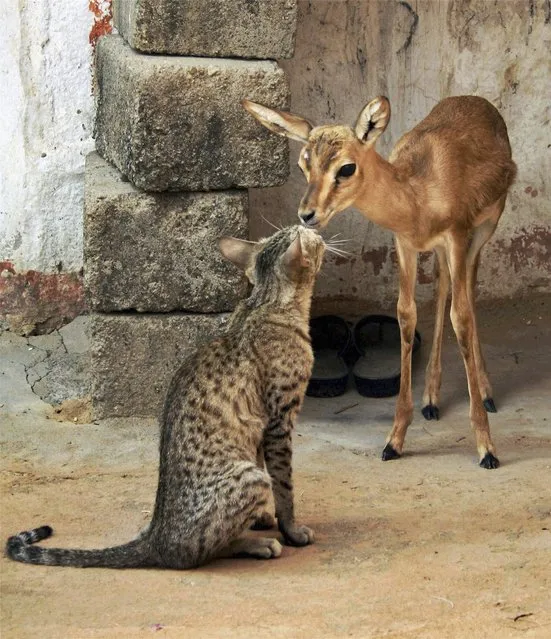
In this Wednesday, May 23, 2012 photograph, a young deer and a cat share a moment in Feench village near Jodhpur, Rajasthan state, India

In this Wednesday, May 23, 2012 photograph, a young deer and a cat share a moment in Feench village near Jodhpur, Rajasthan state, India. (Photo by AP Photo)
Details
16 Jun 2012 11:07:00
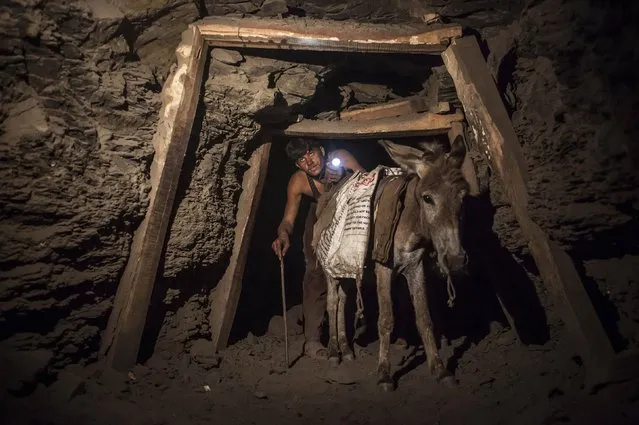
A miner with a donkey makes his way through the low and narrow tunnel leading out of a coal mine in Choa Saidan Shah in Punjab province, April 29, 2014. Workers at this mine in Choa Saidan Shah dig coal with pick axes, break it up and load it onto donkeys to be transported to the surface. (Photo by Sara Farid/Reuters)

A miner with a donkey makes his way through the low and narrow tunnel leading out of a coal mine in Choa Saidan Shah in Punjab province, April 29, 2014. Workers at this mine in Choa Saidan Shah dig coal with pick axes, break it up and load it onto donkeys to be transported to the surface. Employed by private contractors, a team of four workers can dig about a ton of coal a day, for which they earn around $10 to be split between them. The coalmine is in the heart of Punjab, Pakistan's most populous and richest province, but the labourers mostly come from the poorer neighbouring region of Khyber Pakhtunkhwa. (Photo by Sara Farid/Reuters)
Details
03 Aug 2014 07:35:00
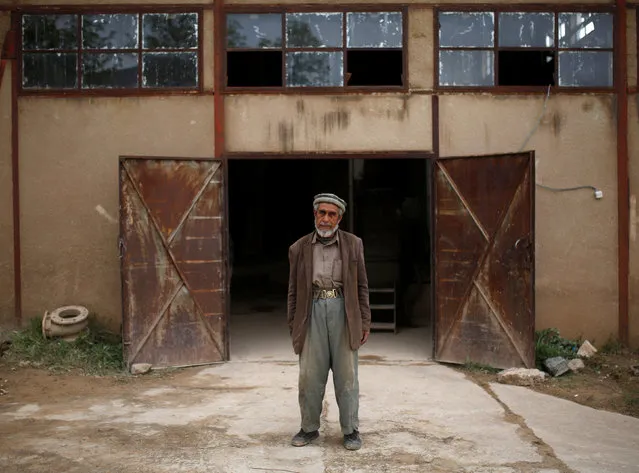
A worker at the Jabal Saraj cement factory poses for a photograph in Jabal Saraj, north of Kabul, Afghanistan April 19, 2016. (Photo by Ahmad Masood/Reuters)

A worker at the Jabal Saraj cement factory poses for a photograph in Jabal Saraj, north of Kabul, Afghanistan April 19, 2016. In an area desperately short of industry and jobs, local workers hope that the relaunch of the plant in Jabal Saraj, built by Czech engineers in 1957 and closed down by the Taliban in 1995, can show that Afghanistan's shattered industry can climb back to its feet after decades of war and destruction. But the outdated state-owned plant some 75 kilometres outside Kabul also shows how far it has to go before that promise can be achieved and there are serious questions over whether it has a viable future unless a new, modern facility is built to replace it. (Photo by Ahmad Masood/Reuters)
Details
31 May 2016 11:29:00
A woman runs along a bridge in front of a Stalin-era skyscraper in central Moscow on June 29, 2020. (Photo by Yuri Kadobnov/AFP Photo)

A woman runs along a bridge in front of a Stalin-era skyscraper in central Moscow on June 29, 2020. (Photo by Yuri Kadobnov/AFP Photo)
Details
11 Jul 2020 00:03:00