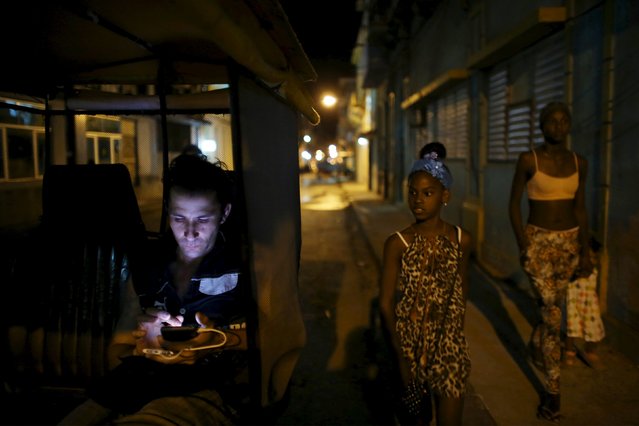
Self-employed pedicab driver Danilo Guerra, 25, uses his mobile phone as he waits for clients in downtown Havana April 12, 2016. (Photo by Alexandre Meneghini/Reuters)
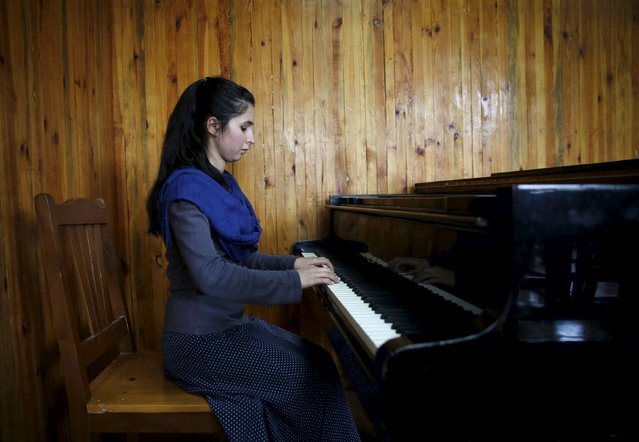
Negin Ekhpulwak, leader of the Zohra orchestra, an ensemble of 35 women, practises on a piano at Afghanistan's National Institute of Music, in Kabul, Afghanistan April 9, 2016. Playing instruments was banned under Taliban rule in Afghanistan, and even today, many conservative Muslims frown on most forms of music. Living in an orphanage in the capital, Kabul, 19-year-old Negin Ikhpolwak leads an ensemble of 35 women that plays both Western and Afghan musical instruments. In a country notorious internationally for harsh restrictions on women in most areas of life, Negin's story highlights a double challenge. (Photo by Ahmad Masood/Reuters)
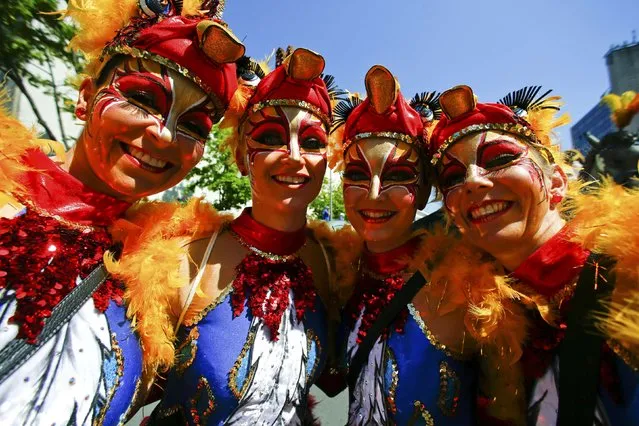
Carnival revellers pose during the postponed “Rosenmontag” (Rose Monday) parade in Mainz, Germany, May 8, 2016, after the original parade in February was cancelled due to severe weather. (Photo by Ralph Orlowski/Reuters)
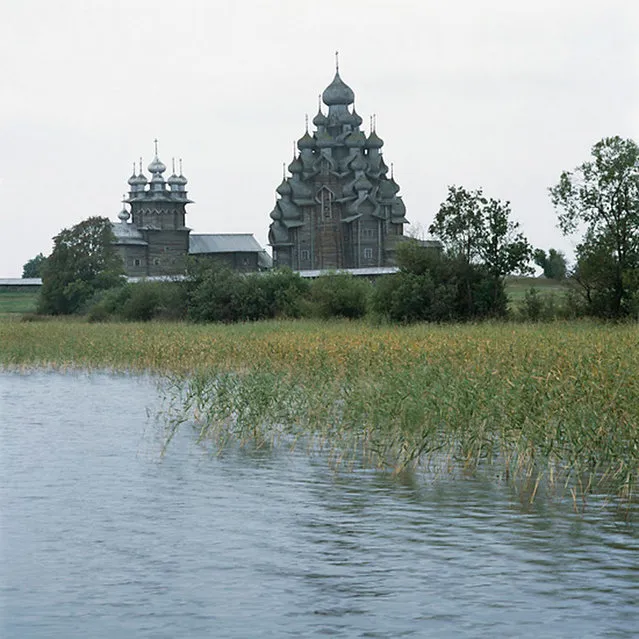
While communism, collectivism, worms, dry rot and casual looting failed to destroy the majestic wooden churches of Russia, it may be ordinary neglect that finally does them in. Dwindled now to several hundred remaining examples, these glories of vernacular architecture lie scattered amid the vastness of the world’s largest country. Just over a decade ago, Richard Davies, a British architectural photographer, struck out on a mission to record the fragile and poetic structures. Austerely beautiful and haunting, “Wooden Churches: Traveling in the Russian North” (White Sea Publishing; $132) is the result. Covering thousands of miles, Mr. Davies described how he and the writer Matilda Moreton tracked down the survivors from among the thousands of onion-domed structures built after Prince Vladimir converted to Christianity in 988.
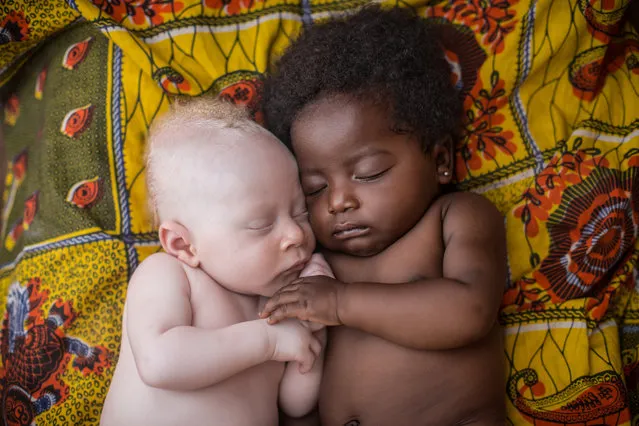
“Basunga”. Basunga (3 weeks-old newborn with albinism) is happily sleeping with his cousin. For now, he does not yet realize the difficulties he will face to integrate into the Congolese society as a PWA. The success of his integration will greatly depends of how he accepts himself and his skin condition a and how educated he will be. Photo location: Kinshasa, Congo RDC. (Photo and caption by Patricia Willocq/National Geographic Photo Contest)
Photographer Howard Schatz had an idea: place actors in a series of roles and dramatic situations to reveal the essence of their characters. Such was the premise behind his book, In Character: Actors Acting, which captures some of Hollywood’s most emotive stars in the act of, well, making faces. Luckily for us, he continued the tradition for Vanity Fair. Here are some of the best.
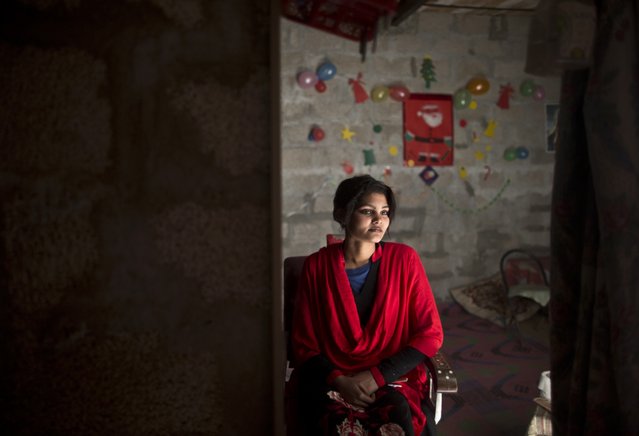
Pakistani Christian Maria Akbar, 15, checks herself in the mirror, after having her make up done by hairdresser Razia Rehmat, 39, in preparation for Christmas holiday, at a hair salon, in a slum that hosts Christian families, on the outskirts of Islamabad, Pakistan, Wednesday, December 24, 2014. (Photo by Muhammed Muheisen/AP Photo)
A visitor looks at a creation at the Artemide space during Milan Design Week, April 14, 2015. The Milan Design Week will be held until April 19. (Photo by Stefano Rellandini/Reuters)