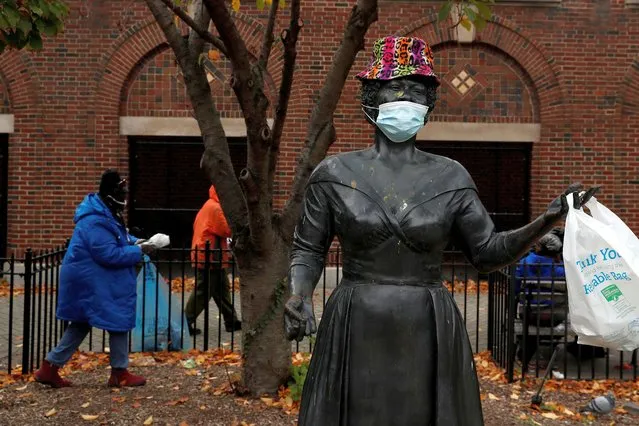
A bronze statue of late singer Ella Fitzgerald is seen wearing a hat and protective face mask, as the global outbreak of the coronavirus disease (COVID-19) continues, outside the Metro-North Railroad Station Plaza in Yonkers, New York, U.S., November 17, 2020. (Photo by Shannon Stapleton/Reuters)
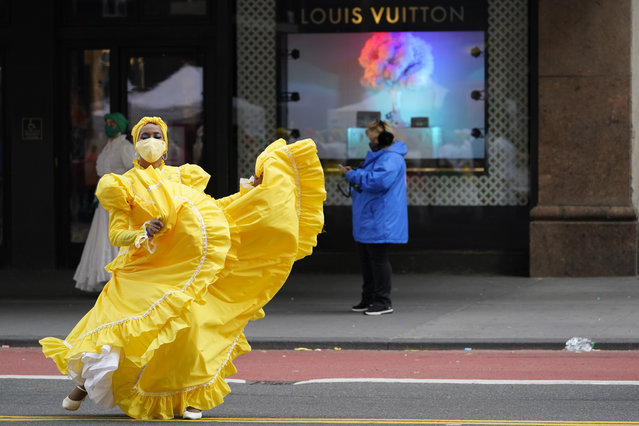
A dancer warms up along 34th Street while waiting to perform during a pre-taping of the Macy's Thanksgiving Day Parade in front of the flagship store in New York, Wednesday, November 25, 2020. (Photo by Mary Altaffer/AP Photo)
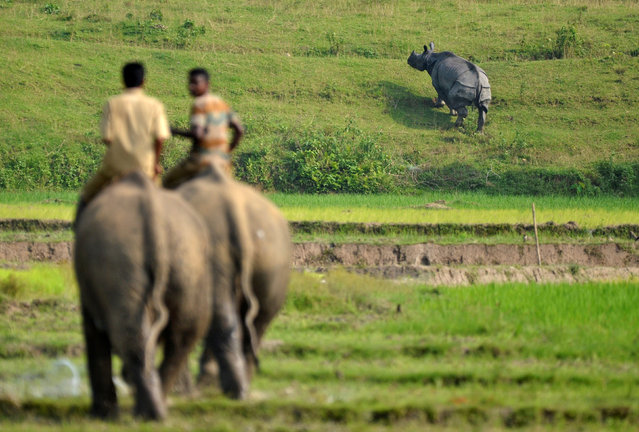
Forest guards chase away a rhino that strayed into a residential area after floods forced animals to escape the Kaziranga National park in Nagaon district, in the northeastern state of Assam, August 15, 2017. (Photo by Anuwar Hazarika/Reuters)
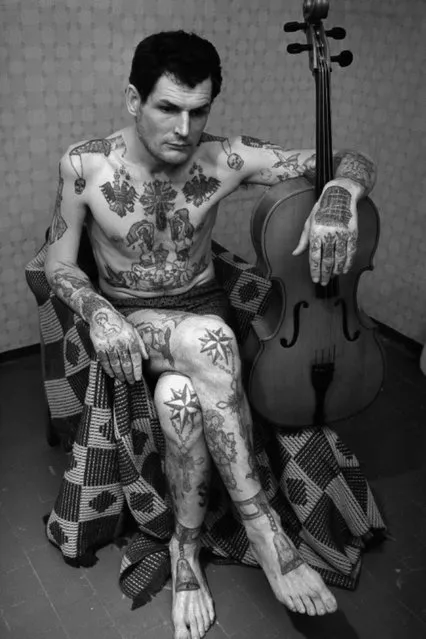
Tattoos are commonly used among criminals to show gang membership and record the wearer's personal history—such as his or her skills, specialties, accomplishments and convictions. They are also used as a means of personal expression. Certain designs have developed recognized coded meanings. The code systems can be quite complex and because of the nature of what they encode, the tattoo designs are not widely recognized.
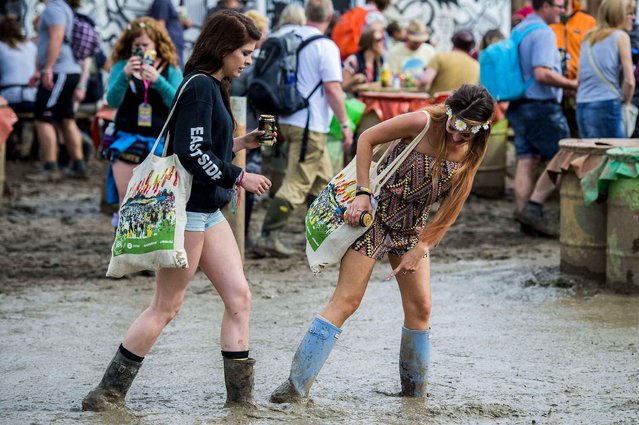
Festival goers arrive for the Glastonbury festival at Worthy Farm, in Somerset, England, Thursday, June 23, 2016. (Photo by Guy Bell/Rex Features/Shutterstock)
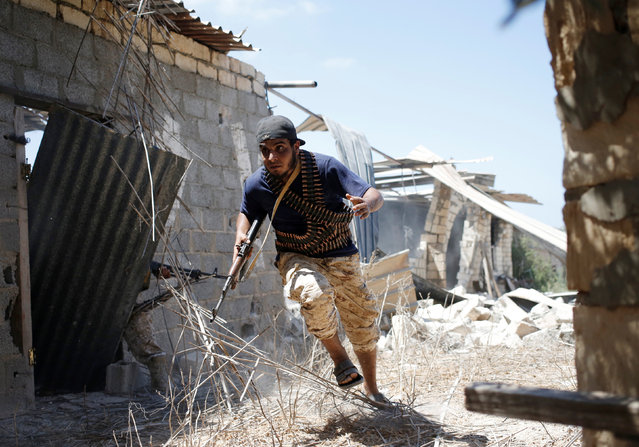
A fighter of Libyan forces allied with the U.N.-backed government runs for cover during a battle with Islamic State fighters in Sirte, Libya, July 31, 2016. (Photo by Goran Tomasevic/Reuters)
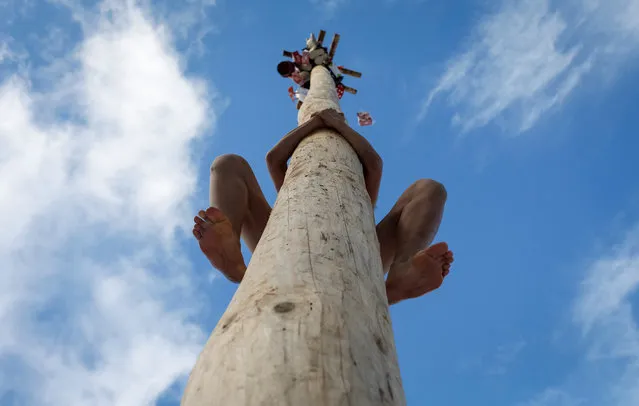
A man climbs up a wooden pole to get a prize during celebration of Maslenitsa, or Pancake Week, a pagan holiday marking the end of winter, near Rumyantsevo, Moscow region, Russia, February 26, 2017. (Photo by Sergei Karpukhin/Reuters)