Loading...
Done


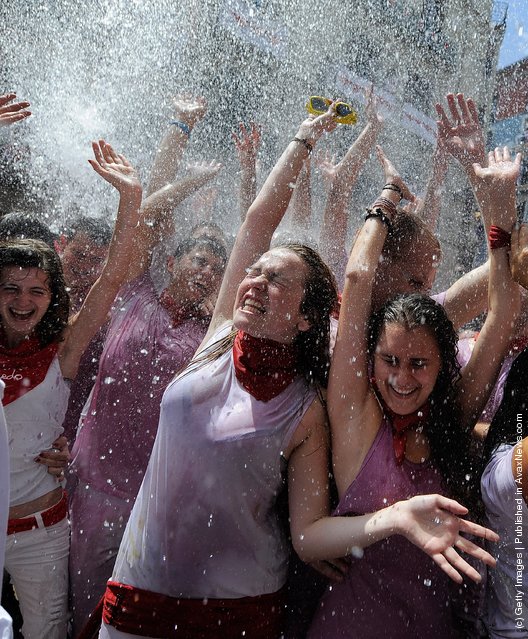
Festival goers celebrate during the Chupinazo, marking the beginning of the San Fermin festival on July 6, 2011 in Pamplona, Spain. Pamplona's famous Fiesta de San Fermin, which involves the running of the bulls through the historic heart of Pamplona for eight days starting July 7th, was made famous by the 1926 novel of U.S. writer Ernest Hemmingway called “The Sun Also Rises”. (Photo by Denis Doyle/Getty Images)
Details
07 Jul 2011 11:57:00
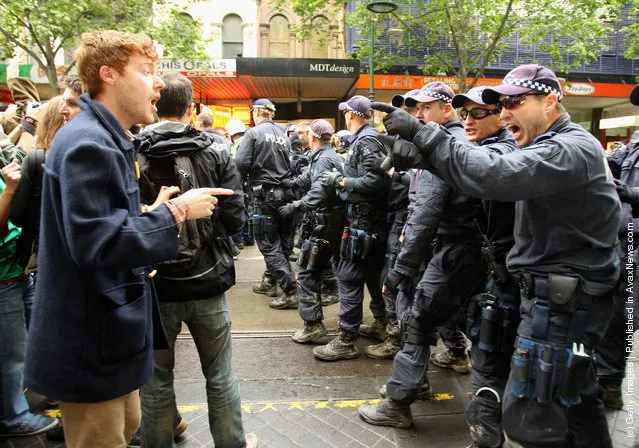
Occupy Melbourne Protesters Clash With Police

Police clash with “Occupy Melbourne” protestors on October 21, 2011 in Melbourne, Australia. Protesters and riot police clashed in Melbourne today after police, acting on a Melbourne City Council eviction order, attempted to break up the crowd of hundreds that had been positioned in City Square for a week. (Photo by Mark Dadswell/Getty Images)
Details
21 Oct 2011 10:10:00
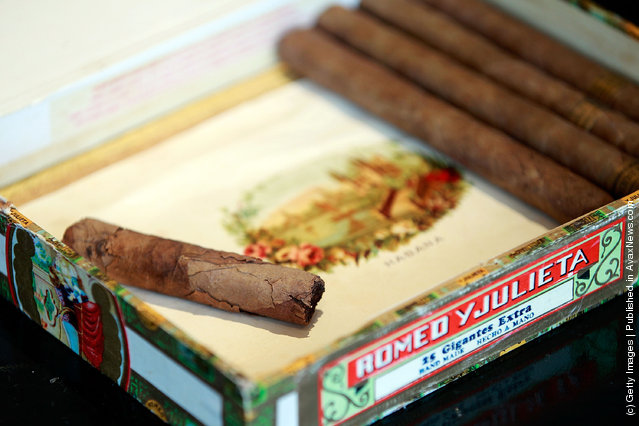
A collection of Sir Winston Churchill's wartime cigars, including four Romeo y Julieta Cuban Cigars

A collection of Sir Winston Churchill's wartime cigars, including four Romeo y Julieta Cuban Cigars given to Mr Percy Bower, Manager of the cigar department of his suppliers, the Army and Navy Stores to mark the end of the war, are displayed on January 13, 2012 in London, England. (Photo by Matthew Lloyd/Getty Images)
Details
21 Jan 2012 15:43:00
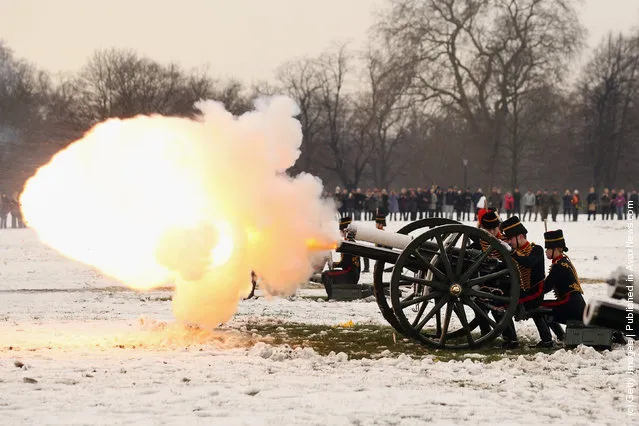
The King's Troop Royal Horse Artillery Prepare To Leave Their St. John's Wood Barracks For Woolwich

Members of the King's Troop Royal Horse Artillery fire a 41 gun salute in Hyde Park to mark the 60 anniversary of the accession of Her Majesty Queen Elizabeth II on February 6, 2012 in London, England. (Photo by Oli Scarff/Getty Images)
Details
07 Feb 2012 10:50:00
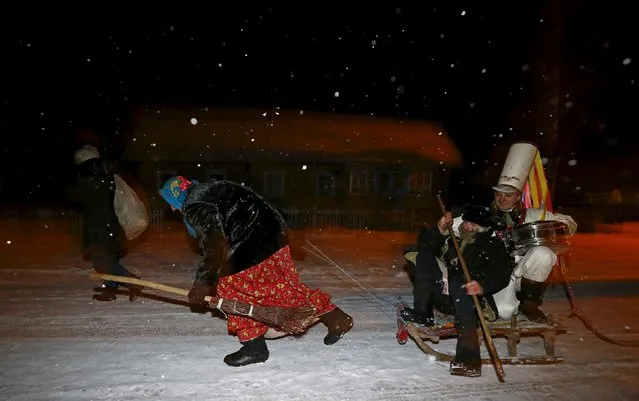
Belarussian villagers perform during a celebration of the "Tsary" rite in the village of Semezhevo, Belarus January 13, 2016. (Photo by Vasily Fedosenko/Reuters)

Belarussian villagers perform during a celebration of the “Tsary” rite in the village of Semezhevo, Belarus January 13, 2016. This unique rite originated from the 18th century, and now takes place only in this village marking the New Year, according to the Julian calendar, on January 13. (Photo by Vasily Fedosenko/Reuters)
Details
15 Jan 2016 08:06:00
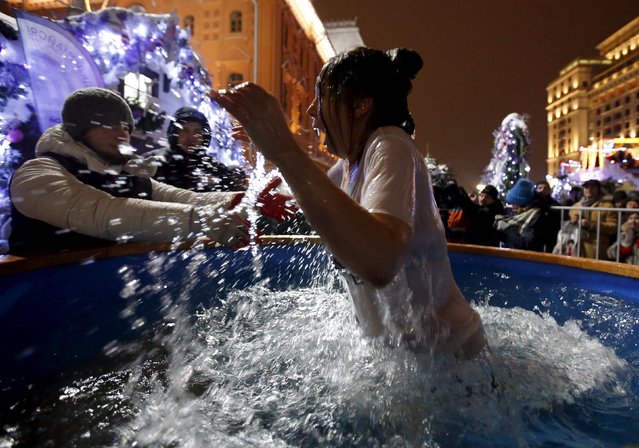
A woman takes a dip in a font on the eve of the Orthodox Epiphany in central Moscow, Russia, January 18, 2016. (Photo by Sergei Karpukhin/Reuters)

A woman takes a dip in a font on the eve of the Orthodox Epiphany in central Moscow, Russia, January 18, 2016. Orthodox believers mark Epiphany on January 19 by immersing themselves in icy waters regardless of the weather. (Photo by Sergei Karpukhin/Reuters)
Details
20 Jan 2016 08:04:00
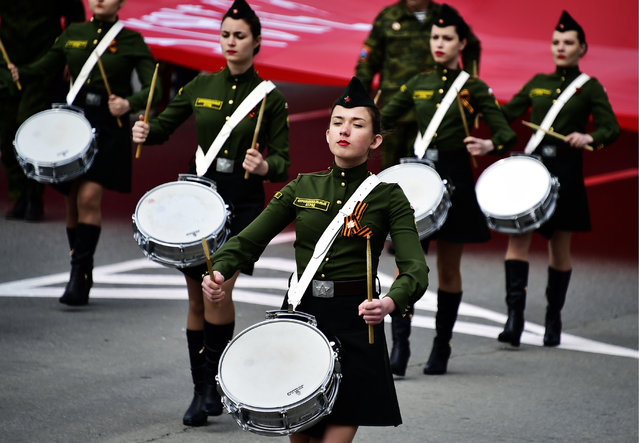
A military band playing during the Immortal Regiment march in Vladivostok, Russia on May 9, 2016. (Photo by Yuri Smityuk/TASS/Getty Images)

A military band playing during the Immortal Regiment march in Vladivostok, Russia on May 9, 2016. The celebrations marked the 71st anniversary of the defeat of Germany in WWII. (Photo by Yuri Smityuk/TASS/Getty Images)
Details
10 May 2016 12:32:00
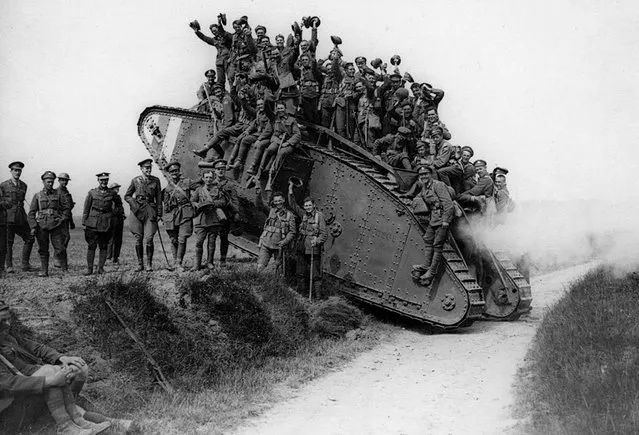
These black-and-white photos are taken from the new book “Armoured Warfare in the First World War 1916 – 1918” by Anthony Tucker-Jones and published by Pen & Sword Military. “Interestingly the British, French and Germans took completely different approaches with varying results”. The British military produced “Little Willie” in Autumn 1915 weighing 18 tonnes, which had a crew of two plus four gunners. “Inspired by a tracked artillery tractor “Little Willie” was referred to as a water tank – hence the name tank – to ensure secrecy”, said Anthony. “This led to the strange looking Mark I with its peculiar rhomboid shape, designed to cross trenches with guns in sponsons on either side. The Germans saw the tank as unchivalrous and were slow to grasp its utility. They favoured the Stormtrooper (specialist soldiers used to infiltrate enemy trenches) and artillery, not the tank”, said Anthony. “However, they didn’t hesitate to make use of captured British tanks. Although the tank helped secure victory and German soldiers dubbed it “Germany’s Downfall” the country was ultimately brought to its knees by the Allies blockade”. Here: British troops hitch a ride on a Mark IV after the massed tank fleet spearheading attack at Cambrai on November 20, 1917. (Photo by Anthony Tucker-Jones/Mediadrumworld.com)

These black-and-white photos are taken from the new book “Armoured Warfare in the First World War 1916 – 1918” by Anthony Tucker-Jones and published by Pen & Sword Military. Here: British troops hitch a ride on a Mark IV after the massed tank fleet spearheading attack at Cambrai on November 20, 1917. (Photo by Anthony Tucker-Jones/Mediadrumworld.com)
Details
23 Feb 2017 00:02:00