Loading...
Done
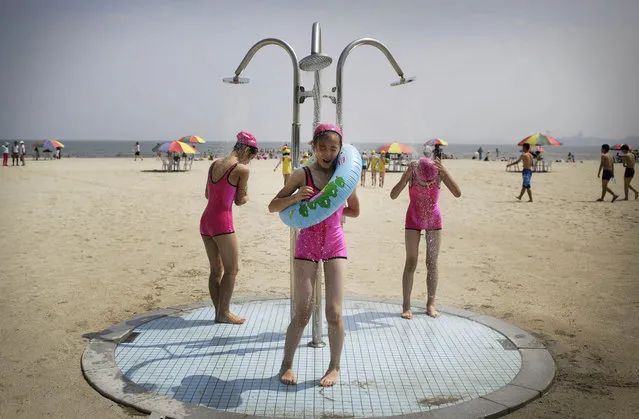
North Korean girls in similar bathing suits stand under a shower at the Songdowon International Children's Camp, Tuesday, July 29, 2014, in Wonsan, North Korea. The camp, which has been operating for nearly 30 years, was originally intended mainly to deepen relations with friendly countries in the Communist or non-aligned world. But officials say they are willing to accept youth from anywhere – even the United States. (Photo by Wong Maye-E/AP Photo)

North Korean girls in similar bathing suits stand under a shower at the Songdowon International Children's Camp, Tuesday, July 29, 2014, in Wonsan, North Korea. The camp, which has been operating for nearly 30 years, was originally intended mainly to deepen relations with friendly countries in the Communist or non-aligned world. But officials say they are willing to accept youth from anywhere – even the United States. (Photo by Wong Maye-E/AP Photo)
Details
31 Jul 2014 10:12:00
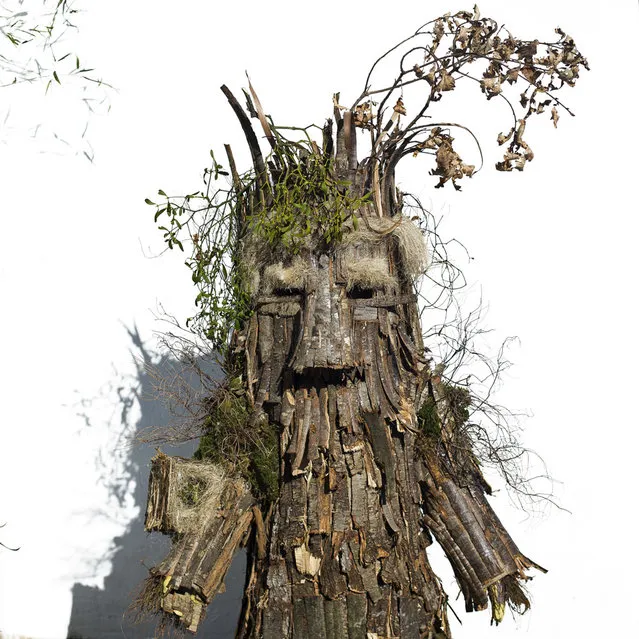
A man dressed as a  “Trapajon”, representing entities of nature, poses for a picture after taking part in the Vijanera Festival in Silio, northern Spain, Sunday, Jan. 6, 2013. The Vijanera masquerade, of pre-Roman origin, is the first carnival of the year in Europe symbolizing the triumph of good over evil and involving the participation of crowds of residents wearing different masks, animal skins and brightly colored clothing with its own complex function and symbolism and becoming the living example of the survival of archaic cults to nature. (Photo by Daniel Ochoa de Olza/AP Photo)

A man dressed as a “Trapajon”, representing entities of nature, poses for a picture after taking part in the Vijanera Festival in Silio, northern Spain, Sunday, Jan. 6, 2013. The Vijanera masquerade, of pre-Roman origin, is the first carnival of the year in Europe symbolizing the triumph of good over evil and involving the participation of crowds of residents wearing different masks, animal skins and brightly colored clothing with its own complex function and symbolism and becoming the living example of the survival of archaic cults to nature. (Photo by Daniel Ochoa de Olza/AP Photo)
Details
19 Jan 2013 13:01:00
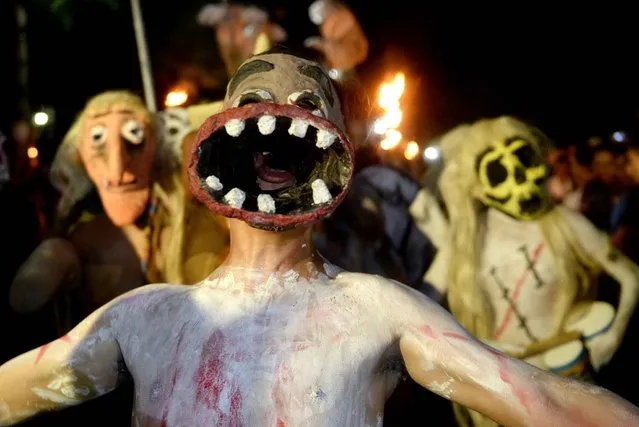
Young revelers take part in a parade called "La Calabiuza" on November 1, 2015, on the eve of the Day of the Dead in Tonacatepeque, 20 kms (13 miles) north of San Salvador. During the celebration, the residents of Tonacatepeque, originally an indigenous community, recall the characters from the mythology of Cuscatlan – pre-Columbian west and central regions of El Salvador – and their dead relatives. (Photo by Marvin Recinos/AFP Photo)

Young revelers take part in a parade called "La Calabiuza" on November 1, 2015, on the eve of the Day of the Dead in Tonacatepeque, 20 kms (13 miles) north of San Salvador. During the celebration, the residents of Tonacatepeque, originally an indigenous community, recall the characters from the mythology of Cuscatlan – pre-Columbian west and central regions of El Salvador – and their dead relatives. (Photo by Marvin Recinos/AFP Photo)
Details
04 Nov 2015 11:50:00
France's paralympic triple jumper Arnaud Assoumani poses in front of The Louvre Pyramide, designed by Ieoh Ming Pei, in Paris on April 20, 2024, ahead of the Paris 2024 Olympic and Paralympic games. The Louvre was originally built as a fortress in the late 12th century, became one of the main residences of the kings of France later and actually is one of the largest museum in the world. (Photo by Franck Fife/AFP Photo)

France's paralympic triple jumper Arnaud Assoumani poses in front of The Louvre Pyramide, designed by Ieoh Ming Pei, in Paris on April 20, 2024, ahead of the Paris 2024 Olympic and Paralympic games. The Louvre was originally built as a fortress in the late 12th century, became one of the main residences of the kings of France later and actually is one of the largest museum in the world. (Photo by Franck Fife/AFP Photo)
Details
03 Aug 2024 04:29:00
A general view of the residential area is pictured during dusk at Jodhpur in Rajasthan, April 5, 2015. Jodhpur, also known as the blue city in the desert Indian state of Rajasthan, which residents say originally, was used to show where the highest caste of priestly Hindus live, who wanted to set them apart from the rest of the population. Later the rest of the population followed suit. Another reason for the city to be blue is to keep the buildings cool during the summers, local residents said. (Photo by Adnan Abidi/Reuters)

A general view of the residential area is pictured during dusk at Jodhpur in Rajasthan, April 5, 2015. Jodhpur, also known as the blue city in the desert Indian state of Rajasthan, which residents say originally, was used to show where the highest caste of priestly Hindus live, who wanted to set them apart from the rest of the population. Later the rest of the population followed suit. Another reason for the city to be blue is to keep the buildings cool during the summers, local residents said. (Photo by Adnan Abidi/Reuters)
Details
12 Apr 2015 08:27:00
The Red Arrows make a flypast during the Trooping The Colour parade at Buckingham Palace, in London, Saturday, June 13, 2015. Hundreds of soldiers in ceremonial dress have marched in London in the annual Trooping the Color parade to mark the official birthday of Queen Elizabeth II. The Trooping the Color tradition originates from preparations for battle, when flags were carried or "trooped" down the rank for soldiers to see. (AP Photo/Tim Ireland)

The Red Arrows make a flypast during the Trooping The Colour parade at Buckingham Palace, in London, Saturday, June 13, 2015. Hundreds of soldiers in ceremonial dress have marched in London in the annual Trooping the Color parade to mark the official birthday of Queen Elizabeth II. The Trooping the Color tradition originates from preparations for battle, when flags were carried or "trooped" down the rank for soldiers to see. (AP Photo/Tim Ireland)

Details
17 Jun 2015 13:50:00
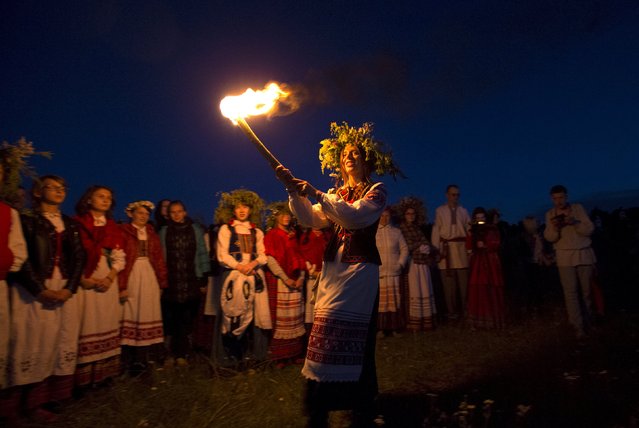
Belarusian people take part in the Ivan Kupala festival near the town of Rakov, west of Minsk June 27, 2015. The ancient tradition, originating from pagan times, is usually marked with grand overnight festivities. On Kupala night, people sing and dance around campfires, believing it will purge them of their sins and make them healthier. (Photo by Vasily Fedosenko/Reuters)

Belarusian people take part in the Ivan Kupala festival near the town of Rakov, west of Minsk June 27, 2015. The ancient tradition, originating from pagan times, is usually marked with grand overnight festivities. On Kupala night, people sing and dance around campfires, believing it will purge them of their sins and make them healthier. (Photo by Vasily Fedosenko/Reuters)
Details
29 Jun 2015 12:35:00
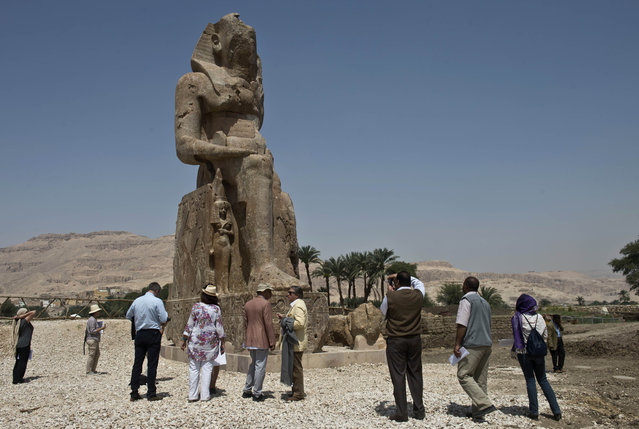
Tourists and journalists stand next to a newly displayed statue of pharaoh Amenhotep III and his wife Tiye (Down) in Egypt's temple city of Luxor on March 23, 2014. Two colossal statues of pharaoh Amenhotep III were unveiled by archaeologists today in their original sites in the funerary temple of the king, on the west bank of the Nile in Luxor, adding to the existing two famous ancient Memnon colossi. (Photo by Khaled Desouki/AFP Photo)

Tourists and journalists stand next to a newly displayed statue of pharaoh Amenhotep III and his wife Tiye (Down) in Egypt's temple city of Luxor on March 23, 2014. Two colossal statues of pharaoh Amenhotep III were unveiled by archaeologists today in their original sites in the funerary temple of the king, on the west bank of the Nile in Luxor, adding to the existing two famous ancient Memnon colossi. (Photo by Khaled Desouki/AFP Photo)
Details
25 Mar 2014 09:02:00