Loading...
Done
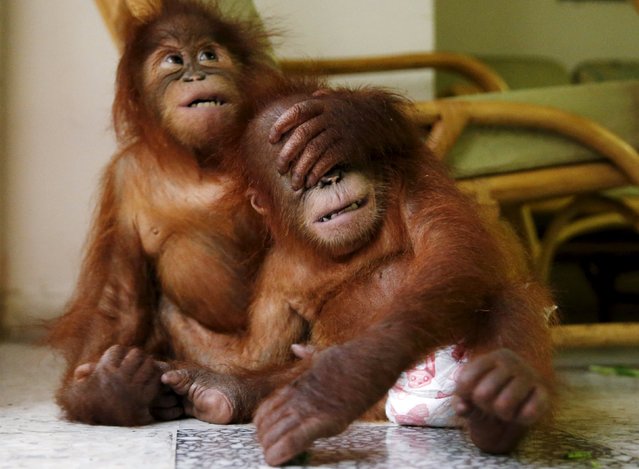
Two baby orangutans play with each other at the wildlife department in Kuala Lumpur, Malayasia, October 19, 2015. The Malaysian wildlife department in July seized two baby Sumatran orangutans, found in duffel bags, from traffickers who were attempting to sell them to buyers in Malaysia. According to local media, the orangutans will be returned to Medan, Indonesia on Tuesday. The illegal wildlife trade is estimated to be $8 billion a year worldwide, according to TRAFFIC, a wildlife trade monitoring network. (Photo by Olivia Harris/Reuters)

Two baby orangutans play with each other at the wildlife department in Kuala Lumpur, Malayasia, October 19, 2015. The Malaysian wildlife department in July seized two baby Sumatran orangutans, found in duffel bags, from traffickers who were attempting to sell them to buyers in Malaysia. According to local media, the orangutans will be returned to Medan, Indonesia on Tuesday. The illegal wildlife trade is estimated to be $8 billion a year worldwide, according to TRAFFIC, a wildlife trade monitoring network. (Photo by Olivia Harris/Reuters)
Details
24 Dec 2015 08:06:00
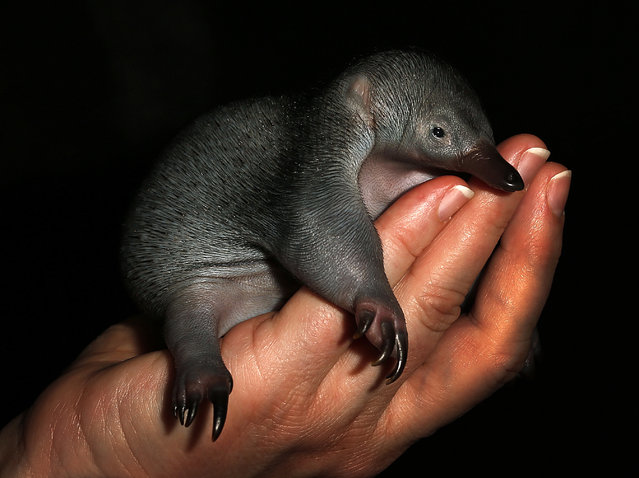
Bo, a 55-day-old baby Echidna known as a puggle, rests in the hands of vet nurse Annabelle Sehlmeier at Taronga Zoo in Sydney November 1, 2012. The puggle was brought to the zoo after it being found by itself on a walking track north of Sydney and will be fed by hand until it is weaned at about six months of age. (Photo by Tim Wimborne/Reuters)

Bo, a 55-day-old baby Echidna known as a puggle, rests in the hands of vet nurse Annabelle Sehlmeier at Taronga Zoo in Sydney November 1, 2012. The puggle was brought to the zoo after it being found by itself on a walking track north of Sydney and will be fed by hand until it is weaned at about six months of age. (Photo by Tim Wimborne/Reuters)
Details
23 Apr 2018 00:03:00
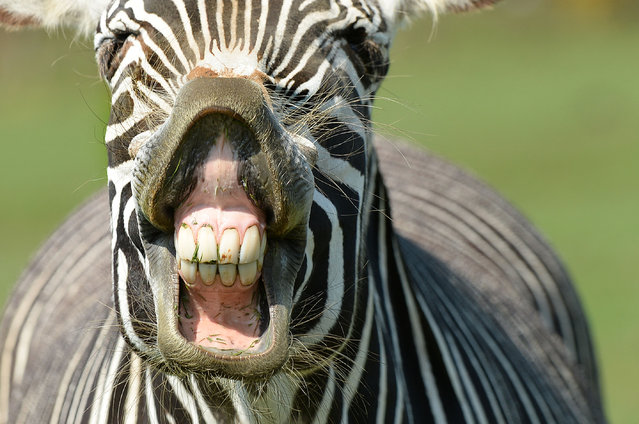
A Grevy’s zebra gets itself noticed at ZSL Whipsnade Zoo in Whipsnade, England on April 20, 2018. (Photo by Tony Margiocchi/Barcroft Media)

A Grevy’s zebra gets itself noticed at ZSL Whipsnade Zoo in Whipsnade, England on April 20, 2018. (Photo by Tony Margiocchi/Barcroft Media)
Details
29 Apr 2018 00:03:00
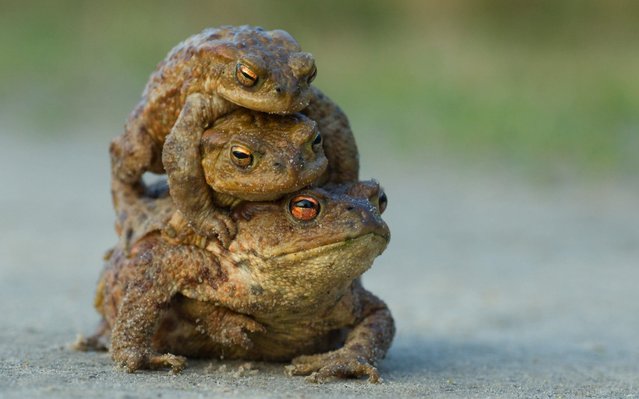
A photographer in Somerset captured the mating rituals of toads as several males attempt to mate with one female all at once. (Photo by John Waters/NPL)

A photographer in Somerset, South West England captured the mating rituals of toads as several males attempt to mate with one female all at once. (Photo by John Waters/NPL)
Details
27 May 2018 00:03:00


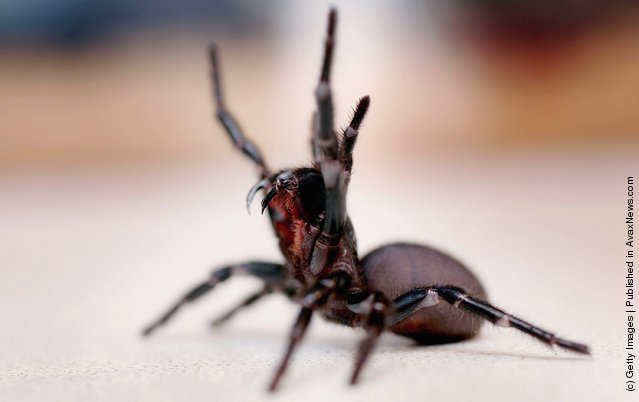
A Funnel Web spider is pictured at the Australian Reptile Park January 23, 2006 in Sydney, Australia. The Funnel Web is one of Australia's deadliest animals, with a venom that is packed with at least 40 different toxic proteins. A bite from a Funnel Web causes massive electrical over-load in the body's nervous system. Finally, fatalities occur from either heart attack or a pulmonary oedema, where the capillaries around the lungs begin to leak fluid and the patient effectively drowns. Death can come as quickly as two hours after a bite if no medical treatment is sought. Due to advances in anti-venom, there has been no death from a Funnel Web bite in Australia since 1980. Australia is home to some of the most deadly and poisonous animals on earth. (Photo by Ian Waldie/Getty Images)
Details
25 Apr 2011 07:49:00


A young exhibitor arrives with her kitten on a lead at the National Cat Club show at Crystal Palace, London. (Photo by Fox Photos/Getty Images). 2nd December 1931
Details
28 Jul 2011 12:02:00
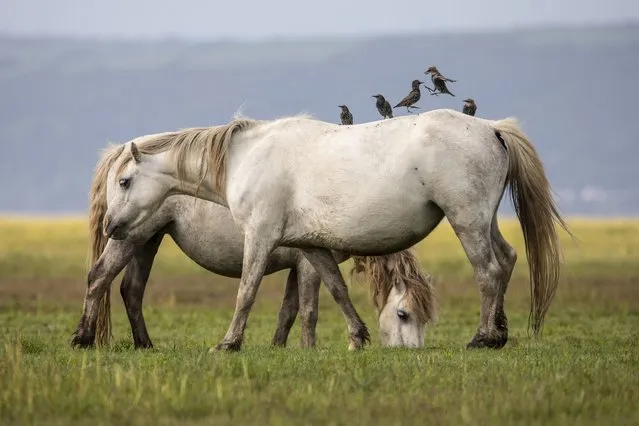
Semi-feral, conservation ponies, graze on the salt marsh's of Gower, Swansea, Wales, United Kingdom on September 7, 2022. (Photo by Joann Randles/Cover Images)

Semi-feral, conservation ponies, graze on the salt marsh's of Gower, Swansea, Wales, United Kingdom on September 7, 2022. (Photo by Joann Randles/Cover Images)
Details
18 Sep 2022 04:43:00
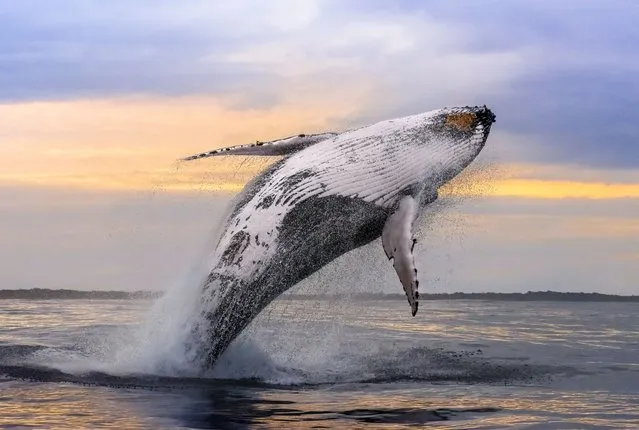
A 40-tonne humpback launching out of the water in an incredible breach in New South Wales, Australia on October 2022 in front of a sunset. The humpback whale can grow up to 56 feet long and typically covers 9,900 miles a year as it travels through the oceans of the world. Humpback whales are a species of Baleen whale, meaning they don't have teeth. Instead, they have baleen which helps them to filter feed. Their main source of food is krill or tiny bait fish. (Photo by Jodie Lowe/Media Drum Images)

A 40-tonne humpback launching out of the water in an incredible breach in New South Wales, Australia on October 2022 in front of a sunset. The humpback whale can grow up to 56 feet long and typically covers 9,900 miles a year as it travels through the oceans of the world. Humpback whales are a species of Baleen whale, meaning they don't have teeth. Instead, they have baleen which helps them to filter feed. Their main source of food is krill or tiny bait fish. (Photo by Jodie Lowe/Media Drum Images)
Details
30 Oct 2022 04:28:00