Dutch collaborators under arrest at Nijmegan, Holland. They were rounded up after the capture of Nijmegan Bridge by the Allies. (Photo by H. Warhurst/PNA Rota/Getty Images). 1945
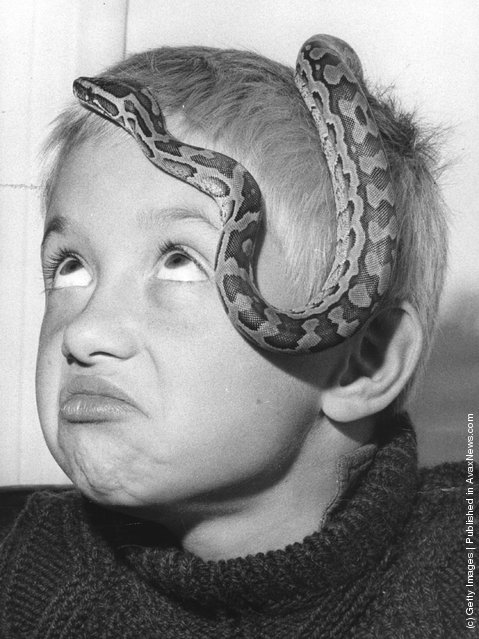
Nine-year-old Barry Miller appears none too impressed with the movements of an African Rock Python which is exploring his scalp. (Photo by Keystone/Getty Images). 27th August 1961
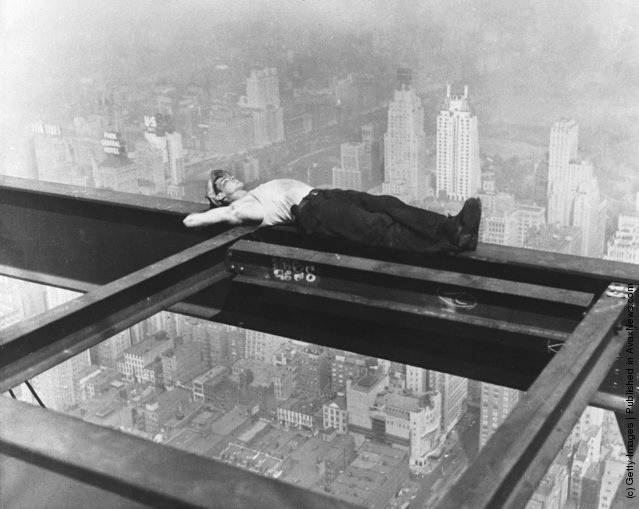
A workman takes a siesta on a girder during the building of Radio City, the city of New York spread out below. (Photo by General Photographic Agency/Getty Images). Circa 1933
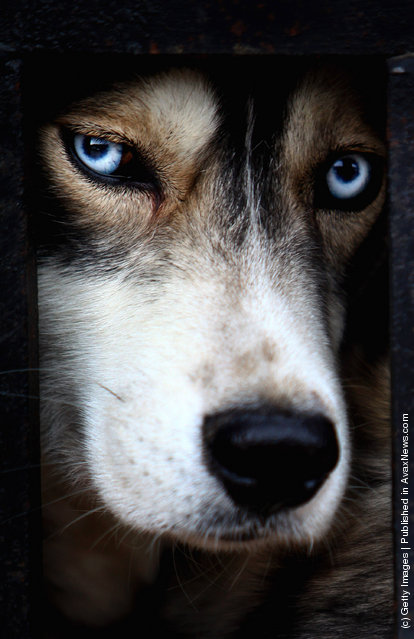
“Husky is a general term for several breeds of dogs used as sled dogs. Huskies were originally used as sled dogs in northern regions but are now also kept as pets. The word “husky” is a corruption of the derogative term “Eskie”, also given to the Esquimaux tribes that came into contact with Europeans who made early expeditions into their lands. The most common huskies are the Siberian Husky and the Alaskan Husky”. – Wikipedia
Photo: A husky looks out from his pen as competitors and teams prepare for the 27th annual Aviemore Husky Sled Dog Rally beside Loch Morlich on January 21, 2010 Aviemore, Scotland. (Photo by Jeff J Mitchell/Getty Images)
1974: American boxer Muhammad Ali, formerly Cassius Clay, strikes an aggressive pose at a press conference on November 29, 1974. (Photo by Harry Dempster/Express/Getty Images); American actor Will Smith at the Royal Premiere of the film Ali in London on December 11, 2001. Smith starred as Muhammad Ali in the film. (Photo by Dave Hogan/Getty Images)
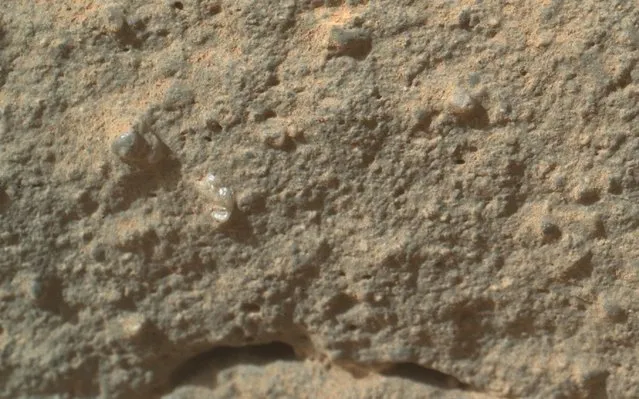
“The scientists behind NASA's $2.5 billion Curiosity rover mission on Mars on Tuesday explained the nature of a tiny, gleaming "flower" embedded in Red Planet rock, and revealed where they'll be using the SUV-sized robot's drill for the first time”. – Alan Boyle via NBCNews.com
Photo: Scientists say that a “Martian flower”, seen here in an image from the Curiosity rover's Mars Hand Lens Imager, is a 2-millimeter-wide grain or pebble that's embedded in the surrounding rock. Another, darker-colored mineral grain can be seen above and to the left. (Photo by NASA)