Loading...
Done
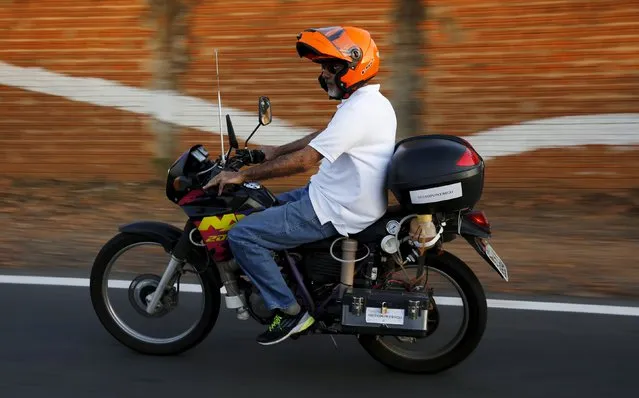
Ricardo Azevedo rides his Honda NX 200 motorbike, which he converted to be powered by water, in Salto, northwest of Sao Paulo, Brazil, August 6, 2015. The Sao Paulo civil servant built the motorbike which can cover up to 500 kilometres (311 miles) fueled by just one liter of water. Dubbed "Moto Power H2O", the bike is powered by a process of electrolysis by which the water molecule is broken down into its constituent elements. (Photo by Nacho Doce/Reuters)

Ricardo Azevedo rides his Honda NX 200 motorbike, which he converted to be powered by water, in Salto, northwest of Sao Paulo, Brazil, August 6, 2015. The Sao Paulo civil servant built the motorbike, which can cover up to 500 kilometres (311 miles) fuelled by just one litre of water. Dubbed “Moto Power H2O” the bike is powered by the process of electrolysis, which breaks the water molecule down into its constituent elements. (Photo by Nacho Doce/Reuters)
Details
13 Aug 2015 12:00:00
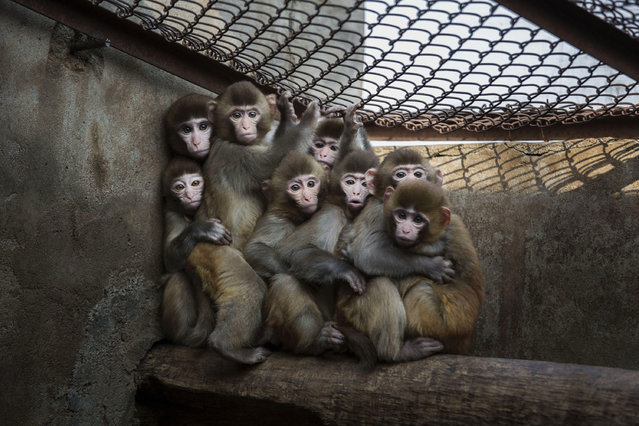
Macaque monkeys crowd together in their cage at a monkey farm on February 3, 2016 in Xinye county, Henan province, China. The area boasts a centuries-long and lucrative history of raising and training monkeys for performance. In Xinye, villagers are seeing an increase in business with the lunar calendar's “Year of the Monkey”. Farmers say most of the monkeys are bred and raised for domestic zoos, circuses, and performing groups, but add that some are also sold for medical research in China and the United States. Despite the popularity of the tradition, critics contend the training methods and conditions constitute animal cruelty. (Photo by Kevin Frayer/Getty Images)

Macaque monkeys crowd together in their cage at a monkey farm on February 3, 2016 in Xinye county, Henan province, China. The area boasts a centuries-long and lucrative history of raising and training monkeys for performance. In Xinye, villagers are seeing an increase in business with the lunar calendar's “Year of the Monkey”. Farmers say most of the monkeys are bred and raised for domestic zoos, circuses, and performing groups, but add that some are also sold for medical research in China and the United States. Despite the popularity of the tradition, critics contend the training methods and conditions constitute animal cruelty. (Photo by Kevin Frayer/Getty Images)
Details
31 Dec 2016 09:56:00
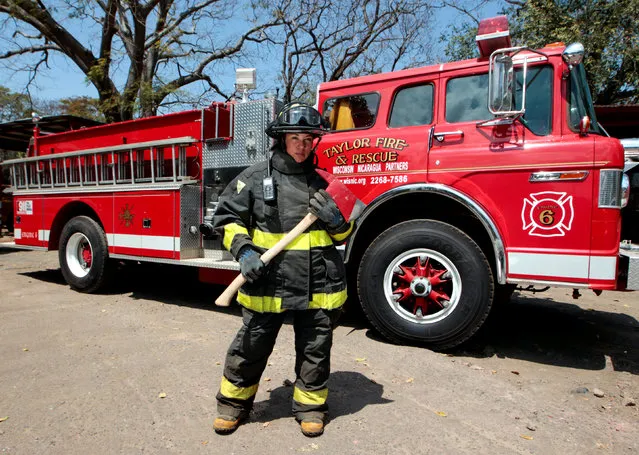
Yolaina Chavez Talavera, 31, a firefighter, poses for a photograph in front of a truck at a fire station in Managua, Nicaragua, February 22, 2017. “In my early days as a female firefighter, men, my team mates, thought that I would not last long in the organisation due to the hard training. However, in practice I showed them that I am able to take on tasks at the same level as men. I think women must fight to break through in all areas, in the midst of the machismo that still persists in Nicaragua and in Hispanic countries”, Talavera said. (Photo by Oswaldo Rivas/Reuters)

Wednesday March 8 marks International Women's Day, with festivals, concerts and exhibitions among the numerous events planned around the world to celebrate the achievements of women in society. The annual event has been held since the early 1900s and traditionally promotes a different theme each year, with this year's edition calling on people to #BeBoldForChange and push for a more gender-inclusive working world. Reuters photographers have been speaking with women in a range of professions around the world about their experiences of gender inequality. Here: Yolaina Chavez Talavera, 31, a firefighter, poses for a photograph in front of a truck at a fire station in Managua, Nicaragua, February 22, 2017. (Photo by Oswaldo Rivas/Reuters)
Details
04 Mar 2017 00:06:00
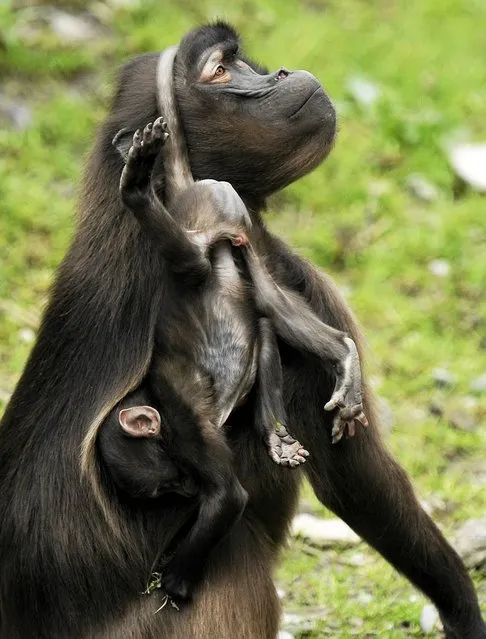
Gelada baboons (Theropithecus gelada) play in their enclosure at the Zoo in Zurich, Switzerland, Wednesday, May 15, 2013. (Photo by Steffen Schmidt/Keystone/AP Photo)

Gelada baboons (Theropithecus gelada) play in their enclosure at the Zoo in Zurich, Switzerland, Wednesday, May 15, 2013. (Photo by Steffen Schmidt/Keystone/AP Photo)
Details
18 May 2013 12:04:00
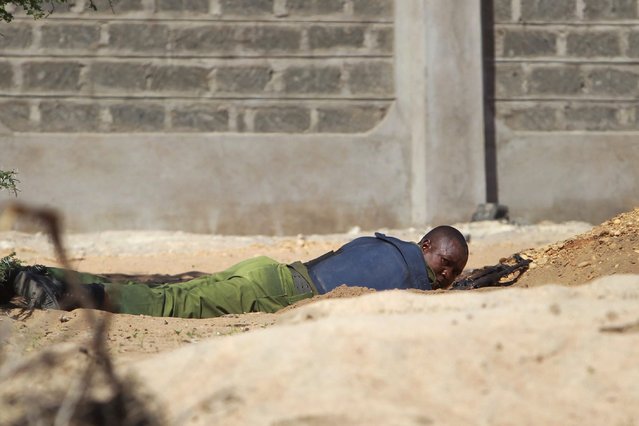
A Kenyan soldier takes cover as shots are fired in front of Garissa University in Garissa town, located near the border with Somalia, some 370km northeast of the capital Nairobi, Kenya, 02 April 2015. At least 15 people have been killed and some 60 were injured in an attack carried out by Somalia's Islamist militant group al-Shabab, according to local media reports. (Photo by Dai Kurokawa/EPA)

A Kenyan soldier takes cover as shots are fired in front of Garissa University in Garissa town, located near the border with Somalia, some 370km northeast of the capital Nairobi, Kenya, 02 April 2015. At least 15 people have been killed and some 60 were injured in an attack carried out by Somalia's Islamist militant group al-Shabab, according to local media reports. (Photo by Dai Kurokawa/EPA)
Details
03 Apr 2015 12:47:00
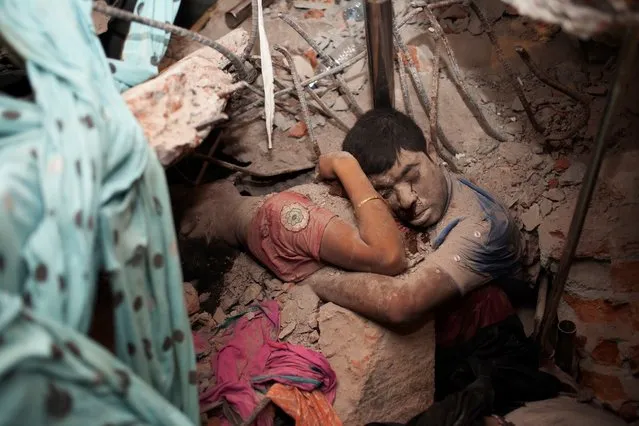
Two victims amid the rubble of a garment factory building collapse in Savar, near Dhaka, Bangladesh, April 25, 2013. (Photo by Taslima Akhter)

Many powerful photographs have been made in the aftermath of the devastating collapse of a garment factory on the outskirts of Dhaka, Bangladesh. But one photo, by Bangladeshi photographer Taslima Akhter, has emerged as the most heart wrenching, capturing an entire country’s grief in a single image... Photo: Two victims amid the rubble of a garment factory building collapse in Savar, near Dhaka, Bangladesh, April 25, 2013. (Photo by Taslima Akhter)
Details
10 May 2013 11:19:00
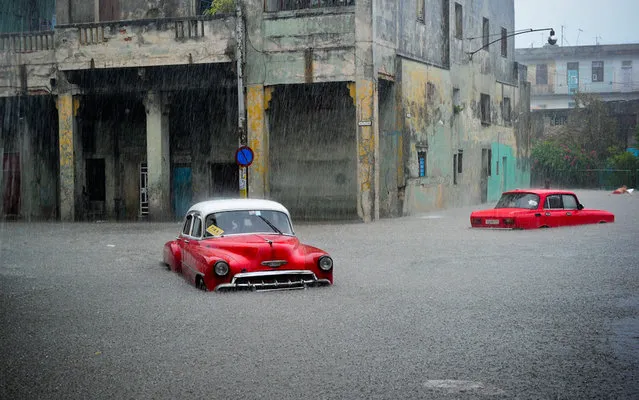
Stranded cars remain in a flooded street during an intense rainstorm in Havana, on April 29, 2015.  Two people were killed, three buildings collapsed and another 24 suffered some kind of damage due to the heavy rain that affected several sectors of Havana Wednesday. (Photo by Yamil Lage/AFP Photo)

Stranded cars remain in a flooded street during an intense rainstorm in Havana, on April 29, 2015. Two people were killed, three buildings collapsed and another 24 suffered some kind of damage due to the heavy rain that affected several sectors of Havana Wednesday. (Photo by Yamil Lage/AFP Photo)
Details
02 May 2015 14:04:00
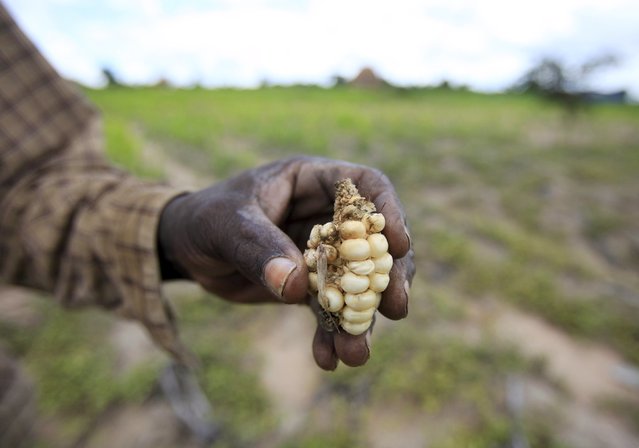
A Zimbabwean subsistence farmer holds a stunted maize cob in his field outside Harare, January 20, 2016. About 14 million people face hunger in Southern Africa because of a drought that has been exacerbated by an El Nino weather pattern, the United Nations World Food Programme (WFP) said on Monday. In Zimbabwe, 1.5 million people, more than 10 percent of the population, face hunger, WFP said. (Photo by Philimon Bulawayo/Reuters)

A Zimbabwean subsistence farmer holds a stunted maize cob in his field outside Harare, January 20, 2016. About 14 million people face hunger in Southern Africa because of a drought that has been exacerbated by an El Nino weather pattern, the United Nations World Food Programme (WFP) said on Monday. In Zimbabwe, 1.5 million people, more than 10 percent of the population, face hunger, WFP said. (Photo by Philimon Bulawayo/Reuters)
Details
22 Jan 2016 10:06:00