Loading...
Done
Yedam Kim (L) and Chaewon Kim, both of South Korea, look at a smartphone backstage after performing on stage during the first day of the 51st Prix de Lausanne at the Theatre de Beaulieu, in Lausanne, Switzerland, 30 January 2023. Launched in 1973, the Prix de Lausanne is an international dance competition for young dancers aged 15 to 18. Closing the six-day event, scholarships granting free tuition in a world-renowned dance school or dance company will be award to the best dancers out of 87 participants who come from 18 different countries this year. (Photo by Laurent Gillieron/EPA)

Yedam Kim (L) and Chaewon Kim, both of South Korea, look at a smartphone backstage after performing on stage during the first day of the 51st Prix de Lausanne at the Theatre de Beaulieu, in Lausanne, Switzerland, 30 January 2023. (Photo by Laurent Gillieron/EPA)
Details
01 Feb 2023 00:08:00
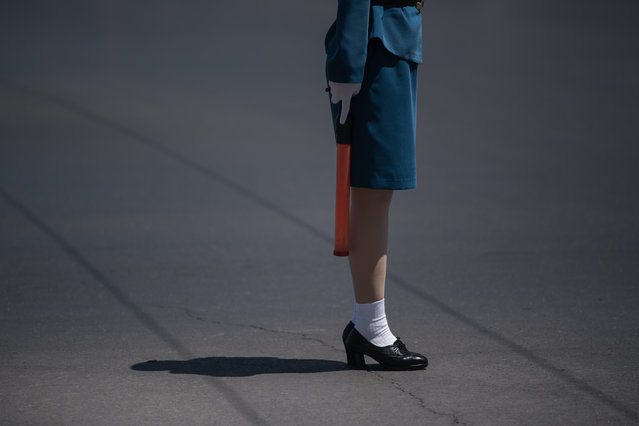
In a photo taken on June 5, 2017 a traffic security officer stands on duty at an intersection in Pyongyang. Officially known as traffic security officers but universally referred to as traffic ladies, they are chosen for their looks in a society that remains traditionalist in many respects. They must leave the role if they marry, and have a finite shelf-life, with compulsory retirement looming at just 26. The 300-odd ladies are unique to Pyongyang, which North Korean authorities are always keen to present in the best possible light despite their nuclear-armed country's impoverished status, and ensure a steady supply of photogenic young women who are the favourite subject of visiting tourists and journalists. (Photo by Ed Jones/AFP Photo)

In a photo taken on June 5, 2017 a traffic security officer stands on duty at an intersection in Pyongyang. Officially known as traffic security officers but universally referred to as traffic ladies, they are chosen for their looks in a society that remains traditionalist in many respects. They must leave the role if they marry, and have a finite shelf-life, with compulsory retirement looming at just 26. (Photo by Ed Jones/AFP Photo)
Details
21 May 2018 00:03:00
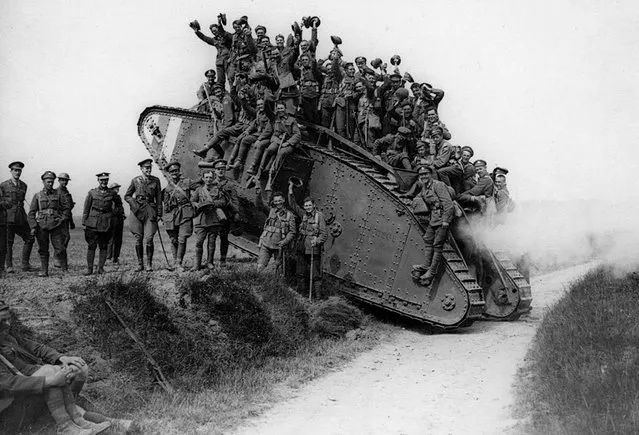
These black-and-white photos are taken from the new book “Armoured Warfare in the First World War 1916 – 1918” by Anthony Tucker-Jones and published by Pen & Sword Military. “Interestingly the British, French and Germans took completely different approaches with varying results”. The British military produced “Little Willie” in Autumn 1915 weighing 18 tonnes, which had a crew of two plus four gunners. “Inspired by a tracked artillery tractor “Little Willie” was referred to as a water tank – hence the name tank – to ensure secrecy”, said Anthony. “This led to the strange looking Mark I with its peculiar rhomboid shape, designed to cross trenches with guns in sponsons on either side. The Germans saw the tank as unchivalrous and were slow to grasp its utility. They favoured the Stormtrooper (specialist soldiers used to infiltrate enemy trenches) and artillery, not the tank”, said Anthony. “However, they didn’t hesitate to make use of captured British tanks. Although the tank helped secure victory and German soldiers dubbed it “Germany’s Downfall” the country was ultimately brought to its knees by the Allies blockade”. Here: British troops hitch a ride on a Mark IV after the massed tank fleet spearheading attack at Cambrai on November 20, 1917. (Photo by Anthony Tucker-Jones/Mediadrumworld.com)

These black-and-white photos are taken from the new book “Armoured Warfare in the First World War 1916 – 1918” by Anthony Tucker-Jones and published by Pen & Sword Military. Here: British troops hitch a ride on a Mark IV after the massed tank fleet spearheading attack at Cambrai on November 20, 1917. (Photo by Anthony Tucker-Jones/Mediadrumworld.com)
Details
23 Feb 2017 00:02:00
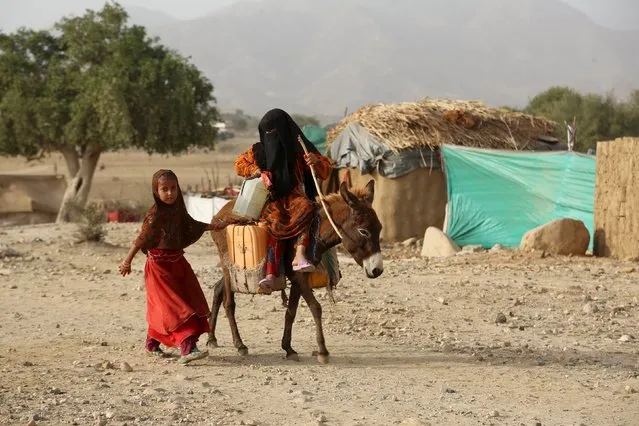
A girl rides a donkey as another walks by at the Shawqaba camp for internally displaced people who were forced to leave their villages by the war in Yemen's northwestern province of Hajjah March 12, 2016. In northwest Yemen, one of the poorest countries in the Middle East, about 400 families uprooted by the war have been stuck in the Shawqaba camp in Hajjah province for the past year. Residents live in poorly built huts that protect them neither from summer heat nor winter cold in a camp that lacks the most basic services. (Photo by Abduljabbar Zeyad/Reuters)

A girl rides a donkey as another walks by at the Shawqaba camp for internally displaced people who were forced to leave their villages by the war in Yemen's northwestern province of Hajjah March 12, 2016. In northwest Yemen, one of the poorest countries in the Middle East, about 400 families uprooted by the war have been stuck in the Shawqaba camp in Hajjah province for the past year. Residents live in poorly built huts that protect them neither from summer heat nor winter cold in a camp that lacks the most basic services. (Photo by Abduljabbar Zeyad/Reuters)
Details
09 Apr 2016 13:16:00
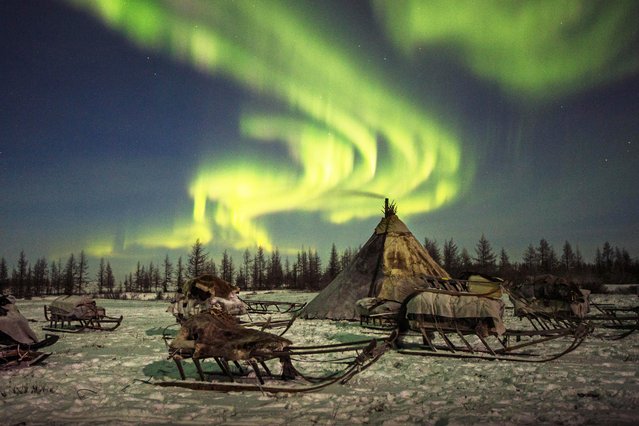
An empty camp is shown beneath a colourful sky in Siberia, December 2016. (Photo by Timothy Allen/Barcroft Productions)

A British photographer has captured life at the “edge of the world”. Timothy Allen, best known for his work on BBC's Human Planet, trekked through the freezing Siberian wilderness for 16 days as he joined part of an 800km migration of reindeer in the Yamal-Nenets region – a name that roughly translates to “edge of the world”. The stunning pictures feature the nomadic Nenets tribe, who drink blood to survive in -45°C temperatures. Timothy's epic journey, which will be revealed in an eight-minute documentary on Animal Planet USA, saw him travel across the bleak terrain of the frozen Ob River with the Nenets people in December last year. Here: An empty camp is shown beneath a colourful sky in Siberia, December 2016. (Photo by Timothy Allen/Barcroft Productions)
Details
19 Sep 2017 07:48:00
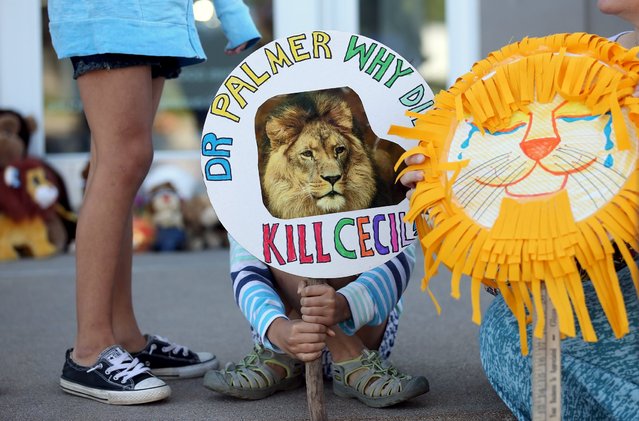
Piper Hoppe, 10, from Minnetonka, Minnesota, holds a sign at the doorway of River Bluff Dental clinic in protest against the killing of a famous lion in Zimbabwe, in Bloomington, Minnesota July 29, 2015. (Photo by Eric Miller/Reuters)

Piper Hoppe, 10, from Minnetonka, Minnesota, holds a sign at the doorway of River Bluff Dental clinic in protest against the killing of a famous lion in Zimbabwe, in Bloomington, Minnesota July 29, 2015. A Zimbabwean court on Wednesday charged a professional local hunter Theo Bronkhorst with failing to prevent an American from unlawfully killing “Cecil”, the southern African country's best-known lion. The American, Walter James Palmer, a Minnesota dentist who paid $50,000 to kill the lion, has left Zimbabwe. He says he did kill the animal but believed the hunt was legal and that the necessary permits had been issued. (Photo by Eric Miller/Reuters)

Details
30 Jul 2015 12:01:00
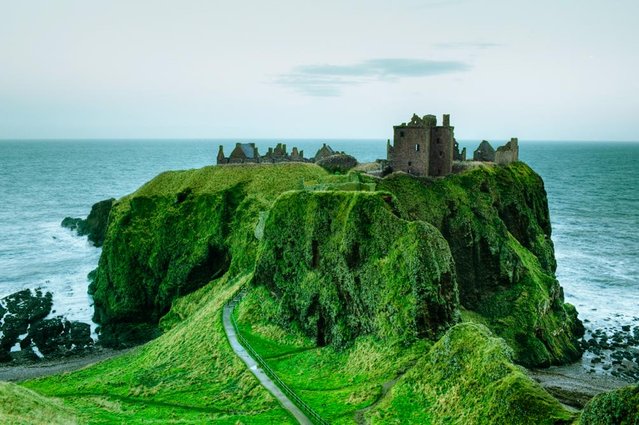
Dunnottar Castle In Scottish

Dunnottar Castleis a ruined medieval fortress located upon a rocky headland on the north-east coast of Scotland, about 3 kilometres (1.9 mi) south of Stonehaven. The surviving buildings are largely of the 15th and 16th centuries, but the site is believed to have been fortified in the Early Middle Ages. Dunnottar has played a prominent role in the history of Scotland through to the 18th-century Jacobite risings because of its strategic location and the strength of its situation. Dunnottar is best known as the place where the Honours of Scotland, the Scottish crown jewels, were hidden from Oliver Cromwell's invading army in the 17th century. The property of the Keiths from the 14th century, and the seat of the Earl Marischal, Dunnottar declined after the last Earl forfeited his titles by taking part in the Jacobite rebellion of 1715. The castle was restored in the 20th century and is now open to the public.
Details
13 Jan 2014 11:31:00
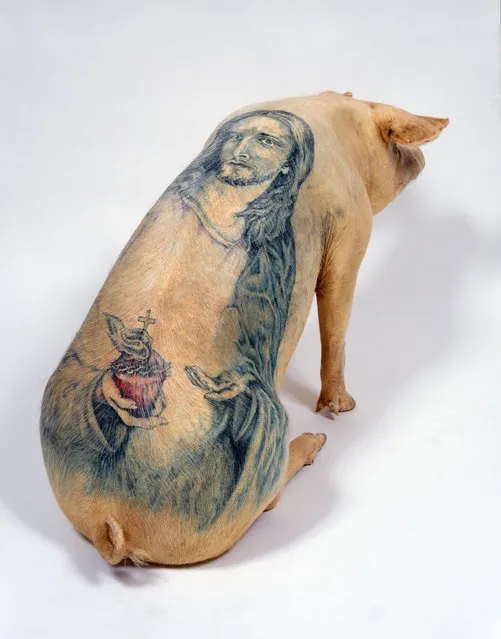
Tattooing Pigs By Wim Delvoye

Wim Delvoye is a notorious tattoo artist, who became famous when he started tattooing live pigs. He first began in 1997 and after animal rights activists found out about what he was doing, he had to move to China to continue his business. There is nothing special about the tattoos that Wim Delvoye creates, they look mediocre at best, and the only reason why he’s famous is his acts of animal cruelty. Nevertheless, Wim states that the pigs feel just fine and are well fed and taken care off. Full anesthesia is used to ensure that the pig doesn’t feel pain during the course of the whole procedure. During this time three tattoo artists work on the tattoo simultaneously to complete it as quickly as possible. Skins of those pigs are then sold for as much as £50k a piece.
Details
02 Apr 2015 09:06:00