Loading...
Done
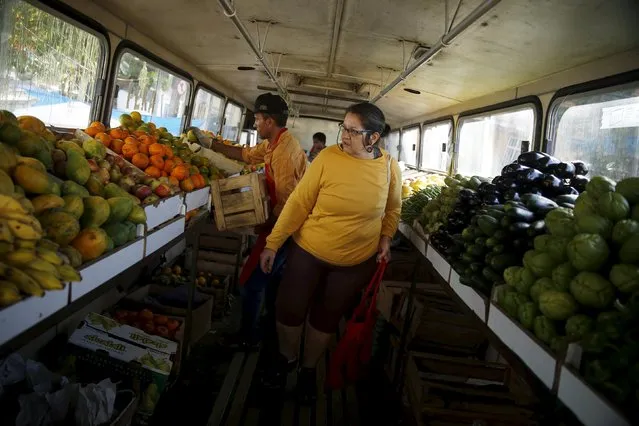
A woman looks for fruits to buy inside a bus called Sacolao in Santa Teresa neighborhood in Rio de Janeiro, Brazil, July 7, 2015. (Photo by Pilar Olivares/Reuters)

A woman looks for fruits to buy inside a bus called Sacolao in Santa Teresa neighborhood in Rio de Janeiro, Brazil, July 7, 2015. The bus, which began operating as a municipal initiative but has been taken over by a private enterprise, arrives every week in some neighborhoods to facilitate families with their grocery shopping and sells food at an affordable price, according to sellers. (Photo by Pilar Olivares/Reuters)
Details
08 Jul 2015 11:52:00
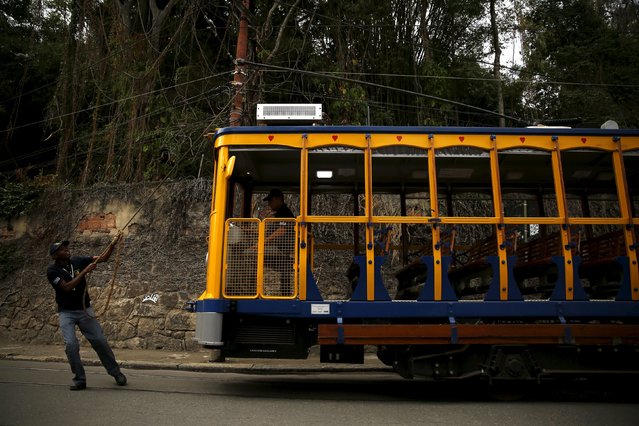
A worker manually changes the direction of the bonde, the typical tram line in Santa Teresa neighborhood, using a rope in Rio de Janeiro, Brazil, September 9, 2015. (Photo by Pilar Olivares/Reuters)

A worker manually changes the direction of the bonde, the typical tram line in Santa Teresa neighborhood, using a rope in Rio de Janeiro, Brazil, September 9, 2015. The Santa Teresa bonde, called “Bondinho” in Portuguese, is running with passengers as a part of a test period, after the service was suspended in 2011 following an accident that killed six people, according to residents. (Photo by Pilar Olivares/Reuters)
Details
11 Sep 2015 12:53:00
Men look on from the banks of Rio Doce (Doce River), which was flooded with mud after a dam owned by Vale SA and BHP Billiton Ltd burst, as the river joins the sea on the coast of Espirito Santo in Regencia Village, Brazil, November 22, 2015. (Photo by Ricardo Moraes/Reuters)

Men look on from the banks of Rio Doce (Doce River), which was flooded with mud after a dam owned by Vale SA and BHP Billiton Ltd burst, as the river joins the sea on the coast of Espirito Santo in Regencia Village, Brazil, November 22, 2015. (Photo by Ricardo Moraes/Reuters)
Details
24 Nov 2015 08:02:00
An aerial view shows the Amazon rainforest at the Bom Futuro National Forest near Rio Pardo in Porto Velho, Rondonia State, Brazil, September 3, 2015. The town of Rio Pardo, a settlement of about 4,000 people in the Amazon rainforest, rises where only jungle stood less than a quarter of a century ago. Loggers first cleared the forest followed by ranchers and farmers, then small merchants and prospectors. (Photo by Nacho Doce/Reuters)

An aerial view shows the Amazon rainforest at the Bom Futuro National Forest near Rio Pardo in Porto Velho, Rondonia State, Brazil, September 3, 2015. The town of Rio Pardo, a settlement of about 4,000 people in the Amazon rainforest, rises where only jungle stood less than a quarter of a century ago. Loggers first cleared the forest followed by ranchers and farmers, then small merchants and prospectors. Brazil's government has stated a goal of eliminating illegal deforestation, but enforcing the law in remote corners like Rio Pardo is far from easy. (Photo by Nacho Doce/Reuters)
Details
08 Nov 2015 08:00:00
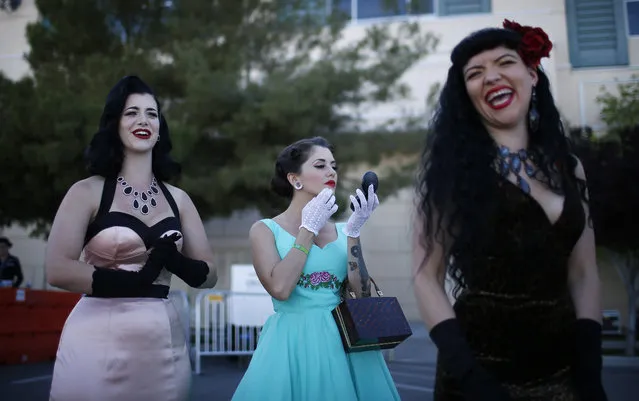
In this April 4, 2015, photo, Marilia Skraba, center, of Brazil, applies makeup while waiting to compete in the Miss Viva Las Vegas contest during the Viva Las Vegas Rockabilly Weekend in Las Vegas. The event draws thousands of people from around the world. (Photo by John Locher/AP Photo)

In this April 4, 2015, photo, Marilia Skraba, center, of Brazil, applies makeup while waiting to compete in the Miss Viva Las Vegas contest during the Viva Las Vegas Rockabilly Weekend in Las Vegas. The event draws thousands of people from around the world. (Photo by John Locher/AP Photo)
Details
08 Apr 2015 11:37:00
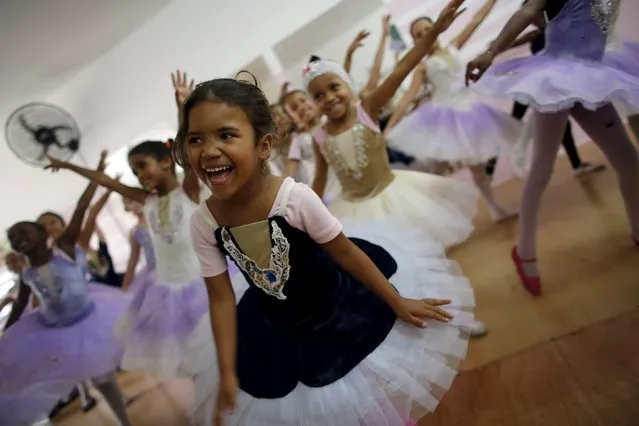
Young girls take ballet lessons at the New Dreams dance studio in the Luz neighborhood known to locals as Cracolandia (Crackland) in Sao Paulo, Brazil, August 14, 2015. (Photo by Nacho Doce/Reuters)

Young girls take ballet lessons at the New Dreams dance studio in the Luz neighborhood known to locals as Cracolandia (Crackland) in Sao Paulo, Brazil, August 14, 2015. For the young girls learning to jump and plie, the dance studio provides a way forward and out of the difficult environment they have grown up in. Brazil is one of the world's highest consuming countries of crack cocaine, and Cracolandia, or “Crack Land”, located in the outskirts of Sao Paulo, is one of the most intense and brutal hubs. (Photo by Nacho Doce/Reuters)
Details
18 Aug 2015 13:59:00
An environmental activist performs during a protest in front of the headquarters of Brazilian mining company Vale SA in downtown Rio de Janeiro, Brazil, November 16, 2015. (Photo by Sergio Moraes/Reuters)

An environmental activist performs during a protest in front of the headquarters of Brazilian mining company Vale SA in downtown Rio de Janeiro, Brazil, November 16, 2015. The collapse of two dams at a Brazilian mine, owned by Vale SA and BHP Billiton Ltd, has cut off drinking water for quarter of a million people and saturated waterways downstream with dense orange sediment that could wreck the ecosystem for years to come. Nine people were killed, 19 are still listed as missing and 500 people were displaced from their homes when the dams burst at an iron ore mine in southeastern Brazil on November 5. (Photo by Sergio Moraes/Reuters)
Details
18 Nov 2015 08:00:00
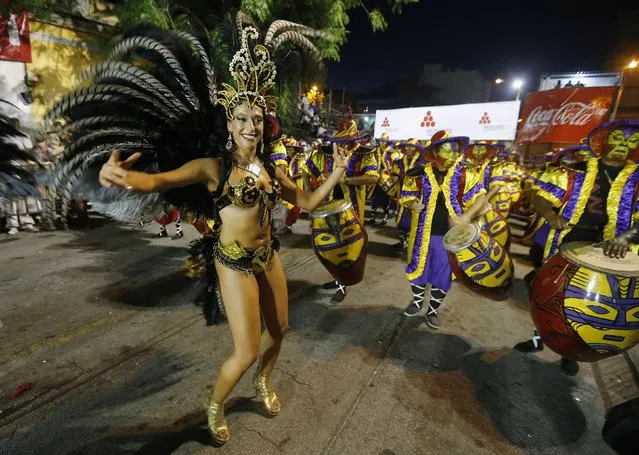
A member of a comparsa, a Uruguayan carnival group, dances during the Llamadas parade in Montevideo February 5, 2015. Thousands of people crowd the capital's Barrio Sur as costumed drummers and dancers kick off the street fiesta known as Llamadas which has traditional Afro-Uruguayan roots. The fiesta, also known in Spanish as “The Calls”, started during the colonial period as a slave parade on the city streets. (Photo by Andres Stapff/Reuters)

A member of a comparsa, a Uruguayan carnival group, dances during the Llamadas parade in Montevideo February 5, 2015. Thousands of people crowd the capital's Barrio Sur as costumed drummers and dancers kick off the street fiesta known as Llamadas which has traditional Afro-Uruguayan roots. The fiesta, also known in Spanish as “The Calls”, started during the colonial period as a slave parade on the city streets. (Photo by Andres Stapff/Reuters)
Details
08 Feb 2015 11:44:00