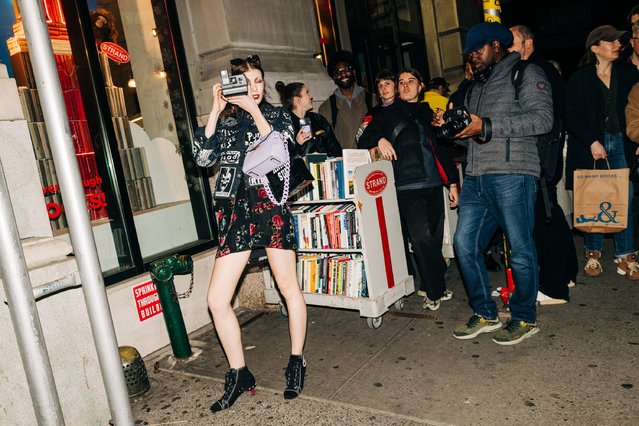
A model takes a picture of photographers outside the Anna Sui show at the Strand Rare Book Room in New York on February 10, 2024. (Photo by Jeenah Moon for The Washington Post)
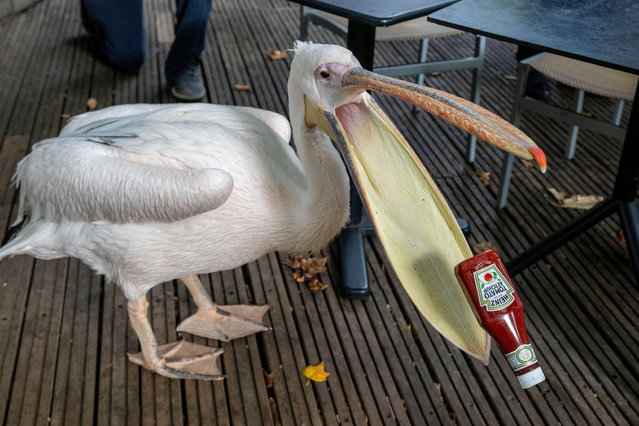
A pelican investigates a fallen ketchup bottle outside a cafe in St James’s Park in London, England on October 9, 2025. The species has lived there for hundreds of years and remain a popular sight for visitors. Introduced in 1664 as a gift from the Russian ambassador, about 40 pelicans have since made the park their home. The bottle was safely retrieved from the pelican. (Photo by Stephen Chung/Alamy Live News)
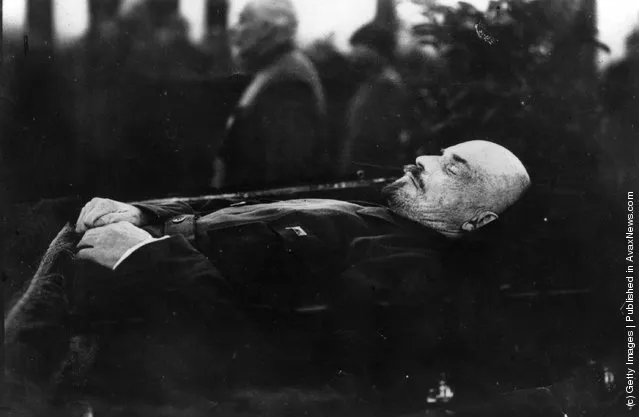
Photo: Vladimir Ilyich Lenin (1870 – 1924) lying in state in the Kremlin. (Photo by Hulton Archive/Getty Images). 1924
Important! For the same article in Russian language click here.
Something quite intriguing is happening within Russian-speaking internet during the last few – should you type a fully academic inquiry (at least, according to Russian academic requirements) in national search engines for "Lenin's mausoleum" – the first thing you get (even in top 10 searches) is website pages talking about black magic and occult. Website authors view this construction differently, but unconditionally agree on one thing: the mausoleum of the "leader of the world proletariat” – the essence of a magical artifact, a sort of “energy vampire”. It was built with a certain purpose: to drain the energy out of miserable Soviet citizens on one hand; and to poison the anthroposphere of one-sixth part of the earth with its vibes (the exact territory that was occupied by the former Soviet Union), depriving the Russian people of will to resist on the other hand. Complete nonsense? No doubt. Nevertheless, an intriguing one. Well, probably because some oddities do exist in mausoleum's history. These oddities are the thing we are going to discuss this time. First, let me refresh you memory on the subject.
People walk past the Sleepwalker, a sculpture along the High Line in New York, US on May 10, 2016. The hyperrealistic work by Brooklyn artist Tony Matelli is part of the linear park’s Wanderlust exhibition. (Photo by Xinhua/Barcroft Images)
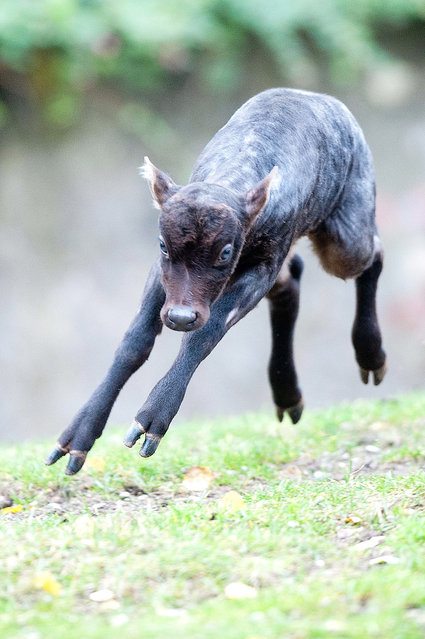
A young anoa, also known as midget buffalo, named Tycoon runs around at the Zoo in Berlin, Germany, on November 9, 2012. (Photo by Maurizio Gambarini/EPA)
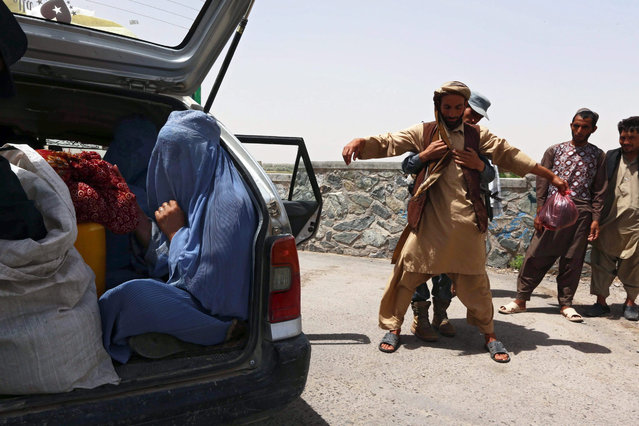
An Afghan policeman frisks a man while a burqa-cald woman sits in the trunk of a car on a roadside in Herat, Afghanistan, 05 July 2015. At least 18 police, two civilians and 30 rebels were killed in central Afghanistan during three days of fierce fighting, police said on 04 July. The clashes ended 04 July after security forces retook control of nine police checkpoints that had fallen to the rebels. (Photo by Jalil Rezayee/EPA)
A picture made available on 13 May 2016 shows A Tiwa girl performing her traditional dance as they celebrated the Wanchuwa festival in Karbi Anglong District of Assam state, India, 11 May 2016. Wanchuwa is one of the most important festivals of the Tiwa tribal community living in the hills as it is related with agriculture which is the mainstay of their economy. Tiwas pray for a bountiful harvest during this festival and to protect their crops from pest and other natural calamities. Tiwa is a major tribe of Assam state who practice Jhum or shifting cultivation for their living in the hills. (Photo by EPA/Stringer)