Loading...
Done
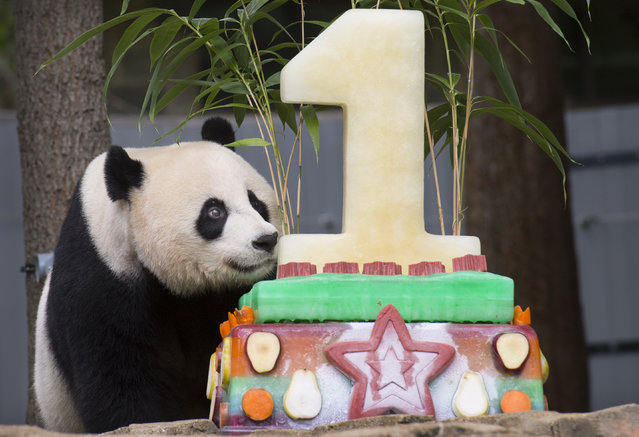
Giant panda Mei Xiang discovers a birthday cake meant for her cub Bei Bei (NP) who turns one at the Smithsonian National Zoo in Washington, DC on August 20, 2016. (Photo by Linda Davidson/The Washington Post)

Giant panda Mei Xiang discovers a birthday cake meant for her cub Bei Bei (NP) who turns one at the Smithsonian National Zoo in Washington, DC on August 20, 2016. (Photo by Linda Davidson/The Washington Post)
Details
21 Aug 2016 10:44:00
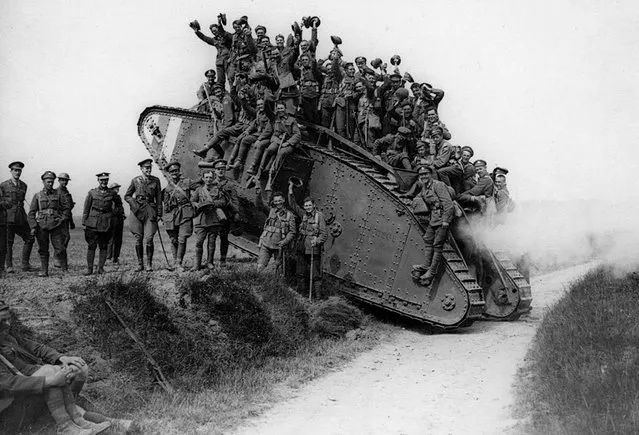
These black-and-white photos are taken from the new book “Armoured Warfare in the First World War 1916 – 1918” by Anthony Tucker-Jones and published by Pen & Sword Military. “Interestingly the British, French and Germans took completely different approaches with varying results”. The British military produced “Little Willie” in Autumn 1915 weighing 18 tonnes, which had a crew of two plus four gunners. “Inspired by a tracked artillery tractor “Little Willie” was referred to as a water tank – hence the name tank – to ensure secrecy”, said Anthony. “This led to the strange looking Mark I with its peculiar rhomboid shape, designed to cross trenches with guns in sponsons on either side. The Germans saw the tank as unchivalrous and were slow to grasp its utility. They favoured the Stormtrooper (specialist soldiers used to infiltrate enemy trenches) and artillery, not the tank”, said Anthony. “However, they didn’t hesitate to make use of captured British tanks. Although the tank helped secure victory and German soldiers dubbed it “Germany’s Downfall” the country was ultimately brought to its knees by the Allies blockade”. Here: British troops hitch a ride on a Mark IV after the massed tank fleet spearheading attack at Cambrai on November 20, 1917. (Photo by Anthony Tucker-Jones/Mediadrumworld.com)

These black-and-white photos are taken from the new book “Armoured Warfare in the First World War 1916 – 1918” by Anthony Tucker-Jones and published by Pen & Sword Military. Here: British troops hitch a ride on a Mark IV after the massed tank fleet spearheading attack at Cambrai on November 20, 1917. (Photo by Anthony Tucker-Jones/Mediadrumworld.com)
Details
23 Feb 2017 00:02:00
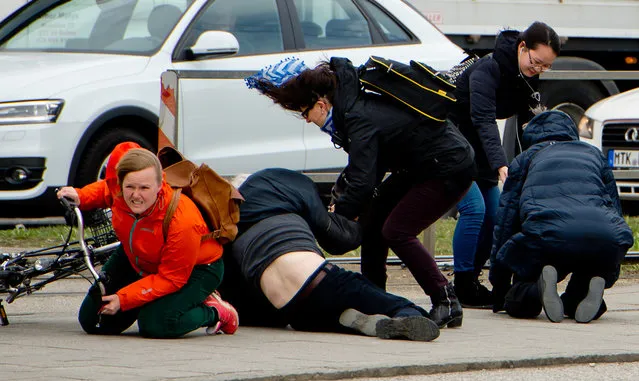
Pedestrians are falling after a gust of wind in Munich southern Germany, Tuesday, March 31, 2015. (Photo by Sven Hoppe/AP Photo/DPA)

Pedestrians are falling after a gust of wind in Munich southern Germany, Tuesday, March 31, 2015. One of the strongest storm fronts in years hit Germany on Tuesday, as Storm “Niklas” uncovered roofs, toppled scaffolding and caused severe disruption to rail services. (Photo by Sven Hoppe/AP Photo/DPA)
Details
01 Apr 2015 11:30:00
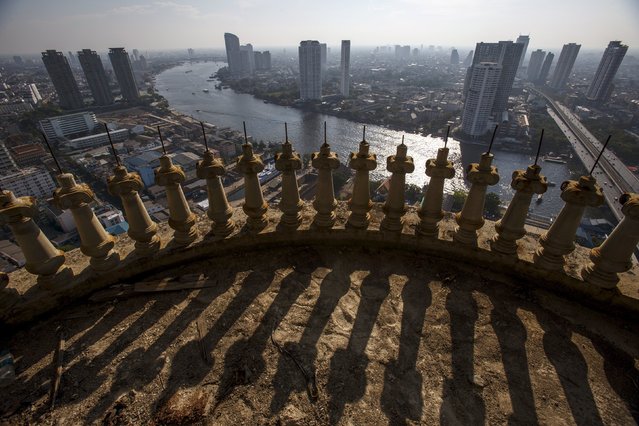
Central Bangkok and the Chao Phraya River are seen from an abandoned skyscraper in Bangkok April 19, 2015. (Photo by Athit Perawongmetha/Reuters)

Central Bangkok and the Chao Phraya River are seen from an abandoned skyscraper in Bangkok April 19, 2015. The abandoned building, known as Satorn Unique, dubbed the “ghost tower” was destined to become one of Bangkok's most luxurious residential addresses but construction was never completed as the Thai economy was hit during the 1997 Asian Financial Crisis. Now, many travellers visit and explore 49-storey skyscraper. (Photo by Athit Perawongmetha/Reuters)
Details
20 Apr 2015 12:33:00
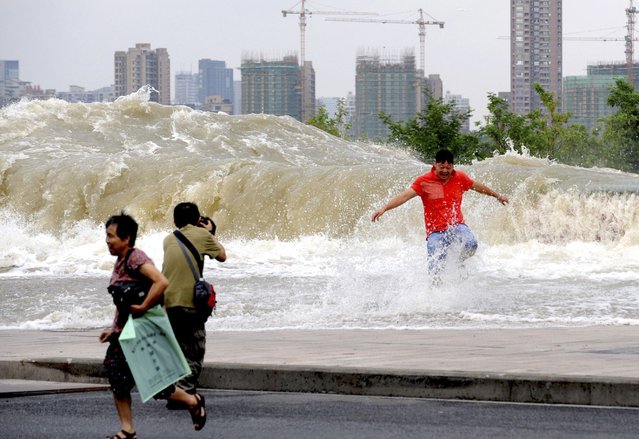
A man (2nd L) takes pictures as visitors run away from a wave caused by a tidal bore which surged past a barrier on the banks of Qiantang River, in Hangzhou, Zhejiang province August 14, 2014. (Photo by Reuters/Stringer)

A man (2nd L) takes pictures as visitors run away from a wave caused by a tidal bore which surged past a barrier on the banks of Qiantang River, in Hangzhou, Zhejiang province August 14, 2014. (Photo by Reuters/Stringer)
Details
19 Aug 2014 10:40:00
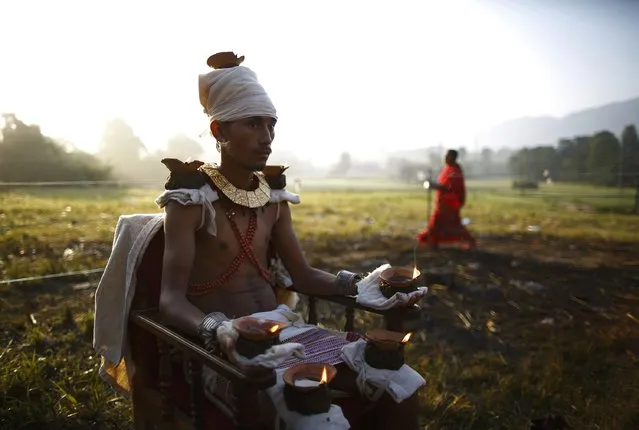
A devotee sits with lighted oil lamps while offering prayers during the “Dashain”, Hinduism's biggest religious festival in Bhaktapur October 3, 2014. Hindus in Nepal celebrate victory over evil during the festival by flying kites, feasting, playing swings, sacrificing animals and worshipping the Goddess Durga as well as other gods and goddess as part of celebrations held throughout the country. (Photo by Navesh Chitrakar/Reuters)

A devotee sits with lighted oil lamps while offering prayers during the “Dashain”, Hinduism's biggest religious festival in Bhaktapur October 3, 2014. Hindus in Nepal celebrate victory over evil during the festival by flying kites, feasting, playing swings, sacrificing animals and worshipping the Goddess Durga as well as other gods and goddess as part of celebrations held throughout the country. (Photo by Navesh Chitrakar/Reuters)
Details
03 Oct 2014 11:30:00
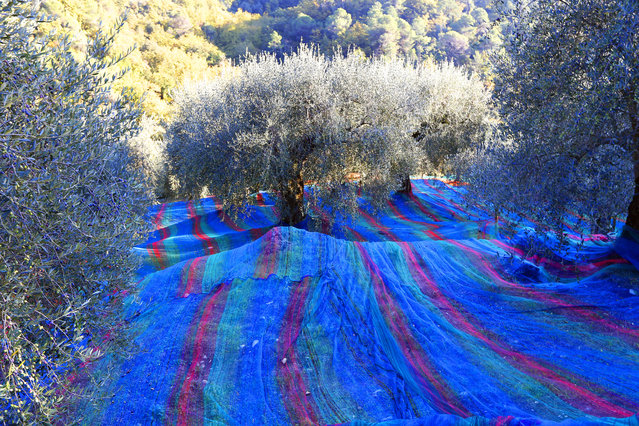
Multicolored nets are set under olive trees to collect the olives on November 27, 2013 in Castagniers, southeastern France. (Photo by Valery Hache/AFP Photo)

Multicolored nets are set under olive trees to collect the olives on November 27, 2013 in Castagniers, southeastern France. (Photo by Valery Hache/AFP Photo)
Details
02 Dec 2013 11:47:00
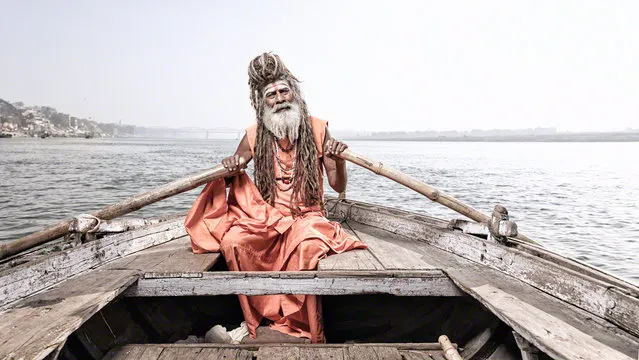
Varanasi: India's City of Death and Life

Varanasi is a city on the banks of the Ganges in Uttar Pradesh, 320 kilometres (200 mi) southeast of the state capital, Lucknow. It is holiest of the seven sacred cities (Sapta Puri) in Hinduism and Jainism. Hindus believe that death at Varanasi brings salvation. It is one of the oldest continuously inhabited cities in the world and the oldest in India.
Details
02 May 2013 12:41:00