Loading...
Done
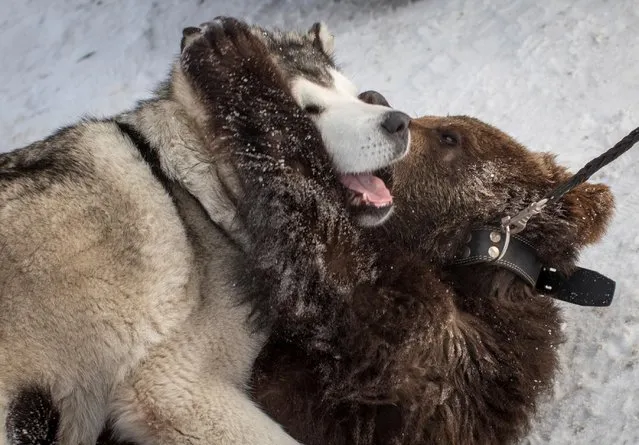
Andreyka, a 10-month-old female bear cub, plays with Rommi, an Alaskan malamute, at the Siberian Zoo in the settlement of Listvyanka, Irkutsk Region, Russia on December 9, 2020. The bear cub, which was found in a weak condition earlier this year, now play-fights with the Alaskan malamute, who adopted her and has seen three generations of bear cubs brought up in the Siberian zoo and released back into the wild. (Photo by Yuri Novikov/Reuters)

Andreyka, a 10-month-old female bear cub, plays with Rommi, an Alaskan malamute, at the Siberian Zoo in the settlement of Listvyanka, Irkutsk Region, Russia on December 9, 2020. The bear cub, which was found in a weak condition earlier this year, now play-fights with the Alaskan malamute, who adopted her and has seen three generations of bear cubs brought up in the Siberian zoo and released back into the wild. (Photo by Yuri Novikov/Reuters)
Details
17 Dec 2020 00:05:00
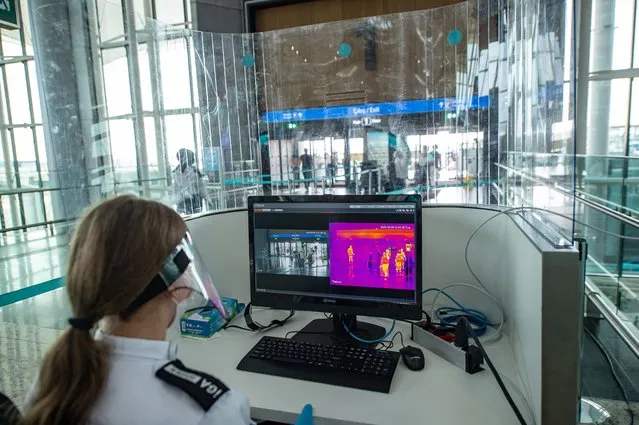
A security officer looks at a scanning screen for checking passengers' temperature at the Istanbul Airport in Istanbul, Turkey, on June 9, 2020. Technology and innovation will top the precautions of Turkey's biggest airport Istanbul Airport against the COVID-19 in the post-pandemic era, according to the management of the airport. The management on June 9 presented their final preparations and measures taken against coronavirus while Turkish airline companies are preparing to resume their international operations the next day. (Photo by Yasin Akgul/Xinhua News Agency via Getty Images)

A security officer looks at a scanning screen for checking passengers' temperature at the Istanbul Airport in Istanbul, Turkey, on June 9, 2020. Technology and innovation will top the precautions of Turkey's biggest airport Istanbul Airport against the COVID-19 in the post-pandemic era, according to the management of the airport. The management on June 9 presented their final preparations and measures taken against coronavirus while Turkish airline companies are preparing to resume their international operations the next day. (Photo by Yasin Akgul/Xinhua News Agency via Getty Images)
Details
11 Jun 2020 00:03:00
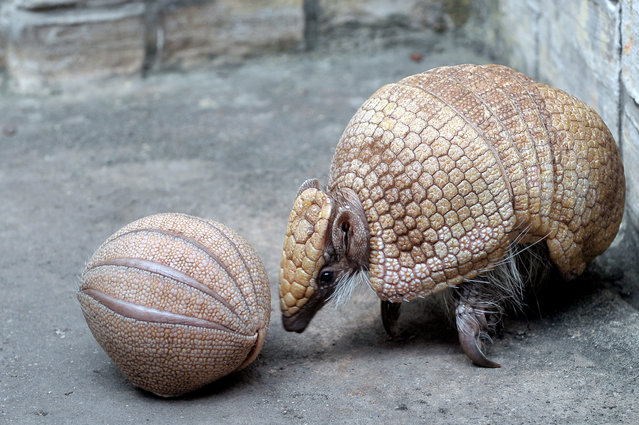
A four-week old southern three-banded armadillo (Tolypeutes matacus) is rolled up into a ball next to its mother in the tropical house of Budapest Zoo in Budapest, Hungary on May 3, 2019. The South American insect-eating mammal and its close relative, the Brasilian three-banded armadillo (Tolypeutes tricinctus) are the only two species of armadillos capable of rolling into a complete ball to defend themselves when feeling threatened. (Photo by Attila Kovács/EPA/EFE)

A four-week old southern three-banded armadillo (Tolypeutes matacus) is rolled up into a ball next to its mother in the tropical house of Budapest Zoo in Budapest, Hungary on May 3, 2019. The South American insect-eating mammal and its close relative, the Brasilian three-banded armadillo (Tolypeutes tricinctus) are the only two species of armadillos capable of rolling into a complete ball to defend themselves when feeling threatened. (Photo by Attila Kovács/EPA/EFE)
Details
05 May 2019 00:03:00
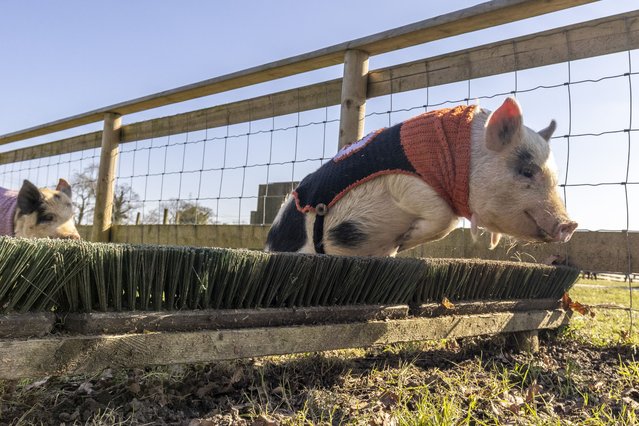
Two miniature pigs, Brad Pigg and Gordon Hamsey, train for racing season at Monk Park Farm near Thirsk, North Yorkshire, UK on March 18, 2025. (Photo by James Glossop/Times Media Ltd)

Two miniature pigs, Brad Pigg and Gordon Hamsey, train for racing season at Monk Park Farm near Thirsk, North Yorkshire, UK on March 18, 2025. (Photo by James Glossop/Times Media Ltd)
Details
30 Mar 2025 03:29:00
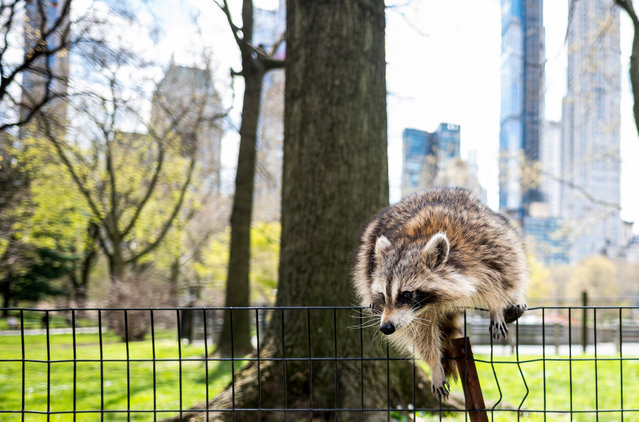
A racoon jumps over a fence in almost deserted Central Park in Manhattan on April 16, 2020 in New York City. Gone are the softball games, horse-drawn carriages and hordes of tourists. In their place, pronounced birdsong, solitary walks and renewed appreciation for Central Park's beauty during New York's coronavirus lockdown. The 843-acre (341-hectare) park – arguably the world's most famous urban green space – normally bustles with human activity as winter turns to spring, but this year due to Covid-19 it's the wildlife that is coming out to play. (Photo by Johannes Eisele/AFP Photo)

A racoon jumps over a fence in almost deserted Central Park in Manhattan on April 16, 2020 in New York City. Gone are the softball games, horse-drawn carriages and hordes of tourists. In their place, pronounced birdsong, solitary walks and renewed appreciation for Central Park's beauty during New York's coronavirus lockdown. The 843-acre (341-hectare) park – arguably the world's most famous urban green space – normally bustles with human activity as winter turns to spring, but this year due to Covid-19 it's the wildlife that is coming out to play. (Photo by Johannes Eisele/AFP Photo)
Details
14 Dec 2025 07:04:00
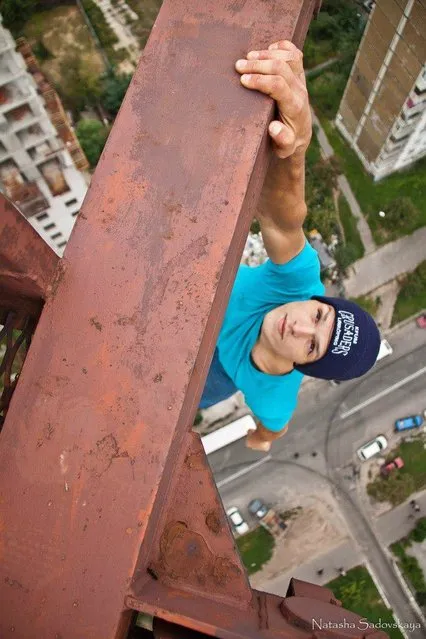
“Mustang Wanted” – the Thrill-seeker from Ukraine

"Mustang Wanted" – is it so itself calls. It seems, he is 26 years old. It seems, it from Kiev, Ukraine. That I can tell still... Fearless man. (Photo by Mustang Wanted)
Details
21 Mar 2013 09:37:00
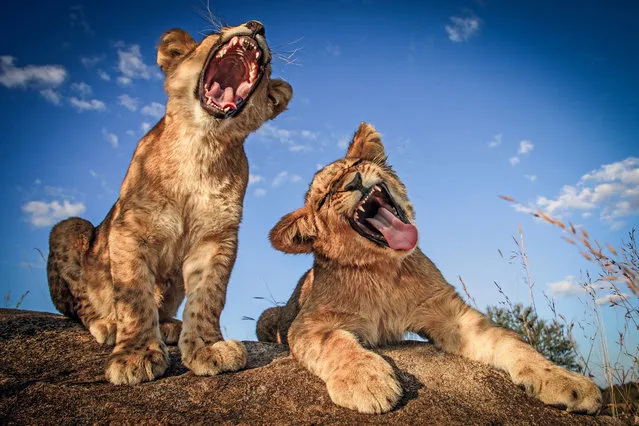
The two lion cubs singing their hearts out  at Antelope park in Zimbabwe. (Photo by David Jenkins/Caters News Agency)

They say a picture is worth a thousand words, and these striking images of 2017 are no exception. The photo highlights include incredible snapshots of the natural world as well as some awesome animal and human encounters. The vibrant gallery also shows thrill-seekers pushing themselves to the limit with breathtaking stunts captured in perfect clarity. The pictures have been taken by a host of photographers from around the world. Here: The two lion cubs singing their hearts out at Antelope park in Zimbabwe. (Photo by David Jenkins/Caters News Agency)
Details
03 Jan 2018 07:27:00
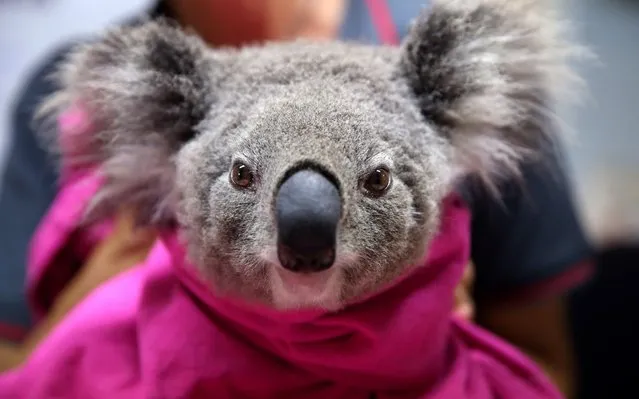
A koala named Lisa from Pappinbarra recovers from burns at The Port Macquarie Koala Hospital on November 29, 2019 in Port Macquarie, Australia. Volunteers from the Koala Hospital have been working alongside National Parks and Wildlife Service crews searching for koalas following weeks of devastating bushfires across New South Wales and Queensland. Koalas rescued from fire grounds have been brought back to the hospital for treatment. An estimated million hectares of land has been burned by bushfire across Australia following catastrophic fire conditions in recent weeks, killing an estimated 1000 koalas along with other wildlife. (Photo by Nathan Edwards/Getty Images)

A koala named Lisa from Pappinbarra recovers from burns at The Port Macquarie Koala Hospital on November 29, 2019 in Port Macquarie, Australia. Volunteers from the Koala Hospital have been working alongside National Parks and Wildlife Service crews searching for koalas following weeks of devastating bushfires across New South Wales and Queensland. Koalas rescued from fire grounds have been brought back to the hospital for treatment. An estimated million hectares of land has been burned by bushfire across Australia following catastrophic fire conditions in recent weeks, killing an estimated 1000 koalas along with other wildlife. (Photo by Nathan Edwards/Getty Images)
Details
15 Dec 2019 05:31:00