Loading...
Done
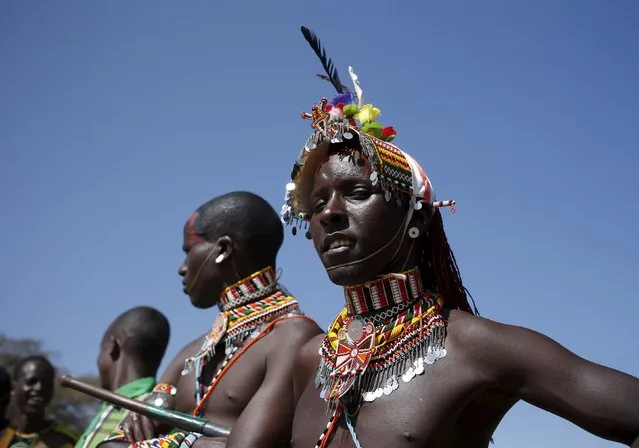
Samburu tribesmen stand during the Maralal Camel Derby, Kenya, August 15, 2015. (Photo by Goran Tomasevic/Reuters)

Samburu tribesmen stand during the Maralal Camel Derby, Kenya, August 15, 2015. Maralal, a small, arid town about an eight-hour drive north of the Kenyan capital Nairobi, holds an annual camel festival, bringing together members of the Samburu, Turkana and Pokot semi-nomadic cattle-herding tribes. (Photo by Goran Tomasevic/Reuters)
Details
20 Aug 2015 13:37:00


Guiyu, China is known as the “Town of E-waste.” Thousands of its residents depend on processing electronic waste for a living. Guiyu receives its e-waste from China and from abroad, including places like Japan, Europe and America. Under Chinese law, most of the e-waste imported from overseas is illegal.
Details
01 Apr 2013 11:45:00
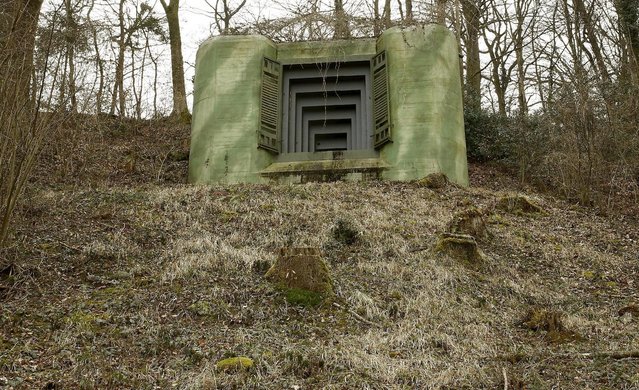
A bunker at aformer Swiss artillery fortress called Heldsberg stands near the town of St. Margareten, Switzerland March 22, 2015. Heldsberg fortress, located on the Swiss-Austrian border near the River Rhine and Lake Constance was built from 1938 to 1940 and remained in military use until 1992. Since 1993 it is open to the public as Fortress Museum Heldsberg. (Photo by Arnd Wiegmann/Reuters)

A bunker at aformer Swiss artillery fortress called Heldsberg stands near the town of St. Margareten, Switzerland March 22, 2015. Heldsberg fortress, located on the Swiss-Austrian border near the River Rhine and Lake Constance was built from 1938 to 1940 and remained in military use until 1992. Since 1993 it is open to the public as Fortress Museum Heldsberg. (Photo by Arnd Wiegmann/Reuters)
Details
09 Jan 2016 08:03:00
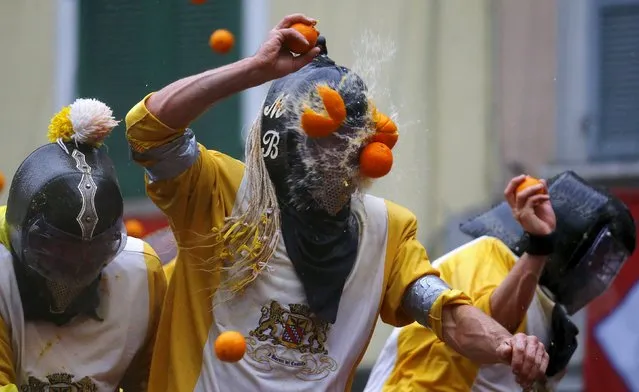
A participant is hit by an orange during an annual carnival battle in the northern Italian town of Ivrea February 7, 2016. Dressed up as Middle Age kings' guards, a group of men ride in a horse-drawn carriage and pelt “foot soldiers” with oranges as thousands of people gather to re-enact a Middle Age battle when the townsfolk of Ivrea overthrew an evil king. In a strange twist, instead of swords and cross bows, these days the weapons of choice are oranges. (Photo by Stefano Rellandini/Reuters)

A participant is hit by an orange during an annual carnival battle in the northern Italian town of Ivrea February 7, 2016. Dressed up as Middle Age kings' guards, a group of men ride in a horse-drawn carriage and pelt “foot soldiers” with oranges as thousands of people gather to re-enact a Middle Age battle when the townsfolk of Ivrea overthrew an evil king. In a strange twist, instead of swords and cross bows, these days the weapons of choice are oranges. (Photo by Stefano Rellandini/Reuters)
Details
08 Feb 2016 12:03:00
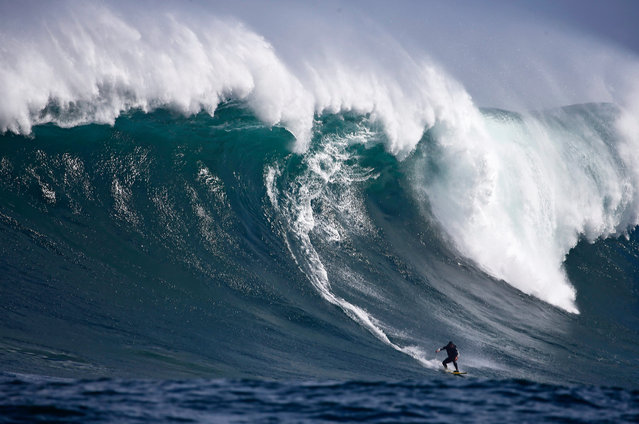
South African surfer Andy Marr rides a wave at Dungeons offshore reef in the Atlantic Ocean outside Cape Town, South Africa, 01 September 2016. The big wave surfing season is at its peak with winter swells driven by storms in the South Atlantic breaking on the Cape's outer reefs providing good conditions. Big wave surfers are competing in the 2016 Striped Horse Challenge and Rebel Sessions big wave competitons symultaneously throughout the season. (Photo by Nic Bothma/EPA)

South African surfer Andy Marr rides a wave at Dungeons offshore reef in the Atlantic Ocean outside Cape Town, South Africa, 01 September 2016. The big wave surfing season is at its peak with winter swells driven by storms in the South Atlantic breaking on the Cape's outer reefs providing good conditions. Big wave surfers are competing in the 2016 Striped Horse Challenge and Rebel Sessions big wave competitons symultaneously throughout the season. (Photo by Nic Bothma/EPA)
Details
02 Sep 2016 14:00:00
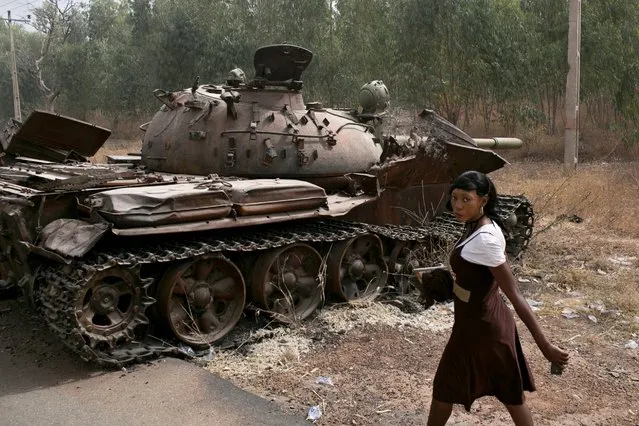
An abandoned tank left by Boko Haram, February 20, 2016, seen on the road to Michika, Nigeria – a town formerly occupied by the insurgents. On April 14, 2014, 300 schoolgirls in the Chibok village in Nigeria were kidnapped by the terrorist group, Boko Haram. Two years later, the majority of these girls are still missing. According to the Global Terrorism Index Report 2015, Boko Haram, which operates mainly in Nigeria, has become the most deadly terrorist group in the world. (Photo by Danielle Villasana)

An abandoned tank left by Boko Haram, February 20, 2016, seen on the road to Michika, Nigeria – a town formerly occupied by the insurgents. On April 14, 2014, 300 schoolgirls in the Chibok village in Nigeria were kidnapped by the terrorist group, Boko Haram. Two years later, the majority of these girls are still missing. According to the Global Terrorism Index Report 2015, Boko Haram, which operates mainly in Nigeria, has become the most deadly terrorist group in the world. (Photo by Danielle Villasana)
Details
22 Apr 2016 13:13:00
Detail of a sand sculpture of Pirates of the Caribbean  is seen as pieces are prepared as part of this year's Hollywood themed annual Weston-super-Mare Sand Sculpture festival on March 26, 2013 in Weston-Super-Mare, England. Due to open on Good Friday, currently twenty award winning sand sculptors from across the globe are working to create sand sculptures including Harry Potter, Marilyn Monroe and characters from the Star Wars films as part of the town's very own movie themed festival on the beach.  (Photo by Matt Cardy)

Detail of a sand sculpture of Pirates of the Caribbean is seen as pieces are prepared as part of this year's Hollywood themed annual Weston-super-Mare Sand Sculpture festival on March 26, 2013 in Weston-Super-Mare, England. Due to open on Good Friday, currently twenty award winning sand sculptors from across the globe are working to create sand sculptures including Harry Potter, Marilyn Monroe and characters from the Star Wars films as part of the town's very own movie themed festival on the beach. (Photo by Matt Cardy)
Details
27 Mar 2013 08:58:00
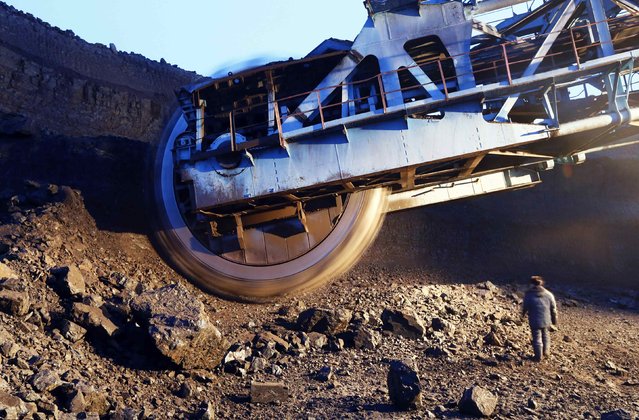
An employee walks near a rotary dredge which works on the coal face of the Borodinsky opencast colliery, near the Siberian town of Borodino, east of Krasnoyarsk, December 9, 2014. The Borodinsky colliery, 9 km (5.6 miles) long and more than 100 meters (328 feet) deep, annually produces more than 20 million tons of coal and is considered to be the biggest opencast coal mine in Russia, according to official representatives. (Photo by Ilya Naymushin/Reuters)

An employee walks near a rotary dredge which works on the coal face of the Borodinsky opencast colliery, near the Siberian town of Borodino, east of Krasnoyarsk, December 9, 2014. The Borodinsky colliery, 9 km (5.6 miles) long and more than 100 meters (328 feet) deep, annually produces more than 20 million tons of coal and is considered to be the biggest opencast coal mine in Russia, according to official representatives. (Photo by Ilya Naymushin/Reuters)
Details
11 Dec 2014 13:29:00