A lone protester sings outside the offices of Republican president-elect Donald Trump at Trump Tower in New York, New York, U.S. November 14, 2016. (Photo by Carlo Allegri/Reuters)
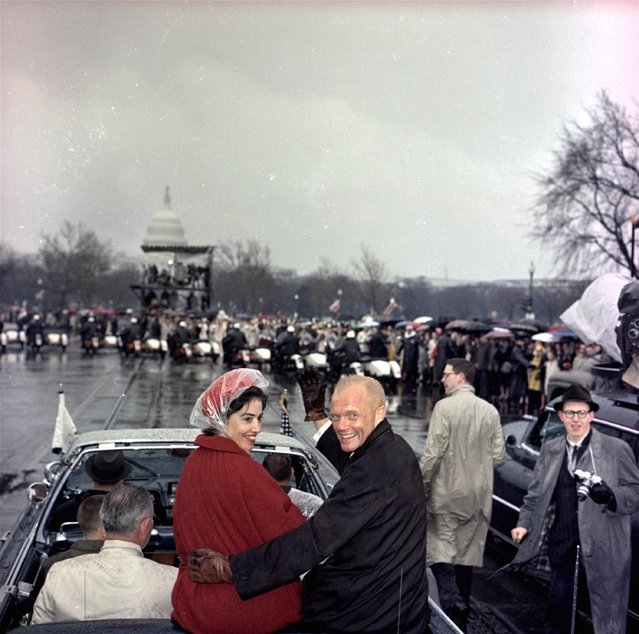
In this February 26, 1962 file photo, Mercury astronaut John Glenn, and his wife, Annie, ride in the back of an open car with Vice-President Johnson during a parade in Glenn's honor in Washington. The Capitol is seen in the background. Glenn, the first American to orbit Earth who later spent 24 years representing Ohio in the Senate, died Thursday, Dec. 8, 2016, at the age of 95. (Photo by AP Photo)
Spanish soldiers of the 7th Airborne Light Infantry Brigade “Galicia” fire a howitzer Light Gun L118 during maneuvers with other units in preparation to NATO's Very High Readiness Joint Task Force (VJTF) in Zaragoza, Spain, April 19, 2016. (Photo by Javier Cebollada/EPA)
Doutzen Kroes and Candice Swanpoel arrive at the Mert Alas x Marcus Piggot book launch party at Public Hotelon September 7, 2017 in New York City. (Photo by Pierre Suu/GC Images)
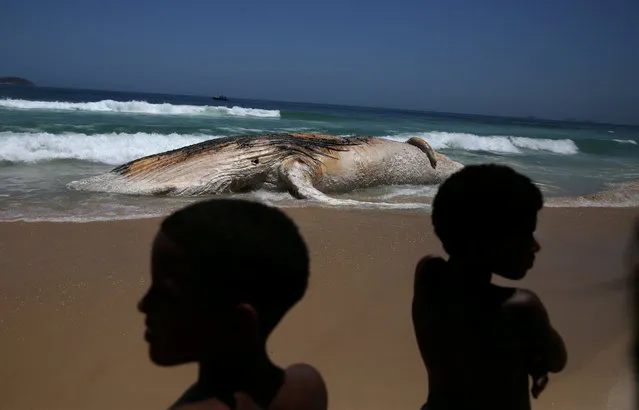
A dead whale is seen on the shore of the Ipanema beach in Rio de Janeiro, Brazil November 15, 2017. A biologist, Rafael Carvalho, said on Wednesday the whale appeared to have been dead for a few days. Authorities were urging beachgoers who had flocked to Ipanema on a national holiday to stay away from the animal. However, many were spotted near the carcass with some people playing in the water nearby. The whale is approximately 39 feet (12 metres) long and weighs about 25 tonnes. (Photo by Pilar Olivares/Reuters)
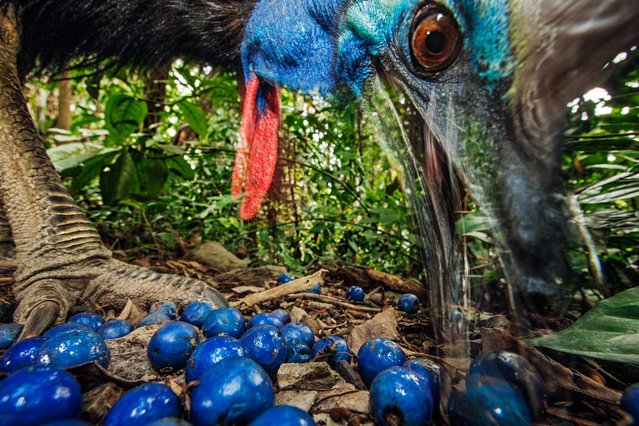
“Cassowaries are large, flightless birds related to emus and (more distantly) to ostriches, rheas, and kiwis”, writes Olivia Judson in the September issue of National Geographic magazine. How large? People-size: Adult males stand well over five foot five and top 110 pounds. Females are even taller, and can weigh more than 160 pounds. Dangerous when roused, they’re shy and peaceable when left alone. But even birds this big and tough are prey to habitat loss. The dense New Guinea and Australia rain forests where they live have dwindled. Today cassowaries might number 1,500 to 2,000. And because they help shape those same forests – by moving seeds from one place to another – “if they vanish”, Judson writes, “the structure of the forest would gradually change” too. (Photo by Christian Ziegler/National Geographic)
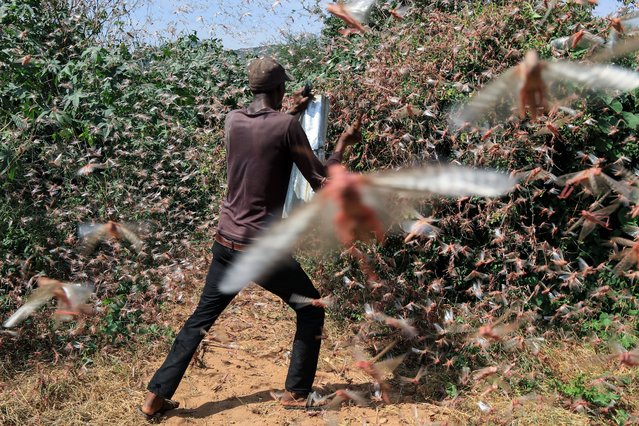
A man uses iron sheet to make noises, as a way of trying to disperse desert locusts that had invaded their farms during the second wave invasion in Kakongo village, in Nuu-Mwingi East, in Kitui, Kenya, 06 February 2021. The second wave invasion of the desert locusts in the country comes at a time where most famers are expecting to harvest their farm produce in the country. (Photo by Daniel Irungu/EPA/EFE)