Loading...
Done
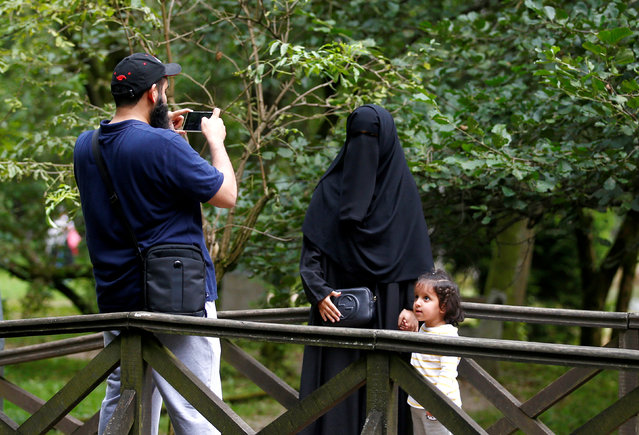
Tourists from the Middle East take pictures at Vrelo Bosne nature park in Ilidza near Sarajevo, Bosnia and Herzegovina, August 19, 2016. (Photo by Dado Ruvic/Reuters)

Tourists from the Middle East take pictures at Vrelo Bosne nature park in Ilidza near Sarajevo, Bosnia and Herzegovina, August 19, 2016. They discovered mountainous Bosnia, where half the population is Muslim, after the Arab Spring which destabilized many traditional holiday destinations such as Libya, Tunisia and Egypt. (Photo by Dado Ruvic/Reuters)
Details
25 Aug 2016 09:37:00
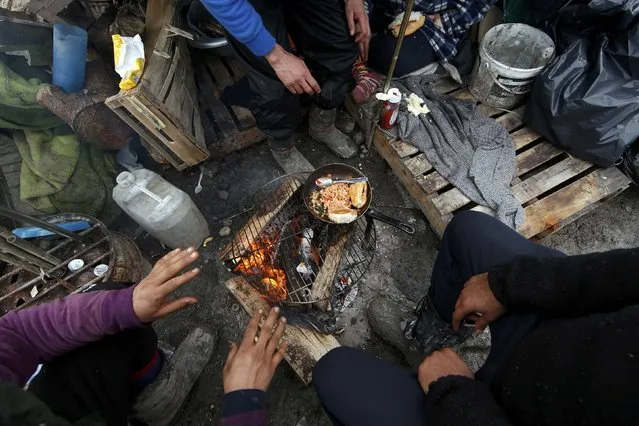
Migrants prepare their food outside shelters in a muddy field called the Grande-Synthe jungle, near Dunkirk, northern France, January 12, 2016. (Photo by Benoit Tessier/Reuters)

Migrants prepare their food outside shelters in a muddy field called the Grande-Synthe jungle, near Dunkirk, northern France, January 12, 2016. The Grande-Synthe jungle is a camp of tents and makeshift shelters where migrants and asylum seekers from Irak, Kurdistan and Syria gather. (Photo by Benoit Tessier/Reuters)
Details
14 Jan 2016 08:03:00
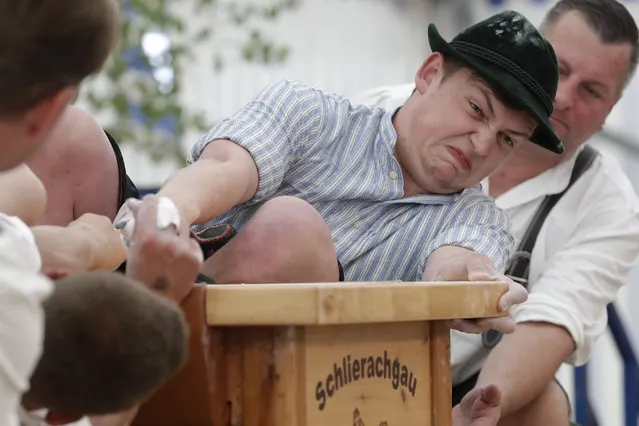
A man dressed in traditional clothes tries to pull his opponent over the table at the 40th Alpine Country Championships in Fingerhakeln_finger wrestling_ in Woernsmuehl, Germany, Thursday, May 25, 2017. (Photo by Matthias Schrader/AP Photo)

A man dressed in traditional clothes tries to pull his opponent over the table at the 40th Alpine Country Championships in Fingerhakeln_finger wrestling_ in Woernsmuehl, Germany, Thursday, May 25, 2017. Competitors battled for the title in this traditional rural sport where the winner has to pull his opponent over a marked line on the table. (Photo by Matthias Schrader/AP Photo)
Details
27 May 2017 08:08:00
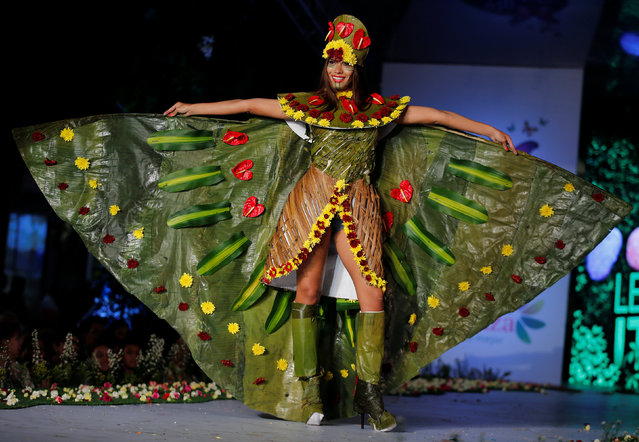
A model presents a creation during the Biofashion show, which features designs made from plants, recycled and natural materials, in Cali, Colombia, November 19, 2016. (Photo by Jaime Saldarriaga/Reuters)

A model presents a creation during the Biofashion show, which features designs made from plants, recycled and natural materials, in Cali, Colombia, November 19, 2016. BioFashion is an environmental initiative that seeks to create awareness about the preservation and management of natural resources where new designers develop dresses made with living plants, flowers and organic elements. (Photo by Jaime Saldarriaga/Reuters)
Details
21 Nov 2016 10:37:00
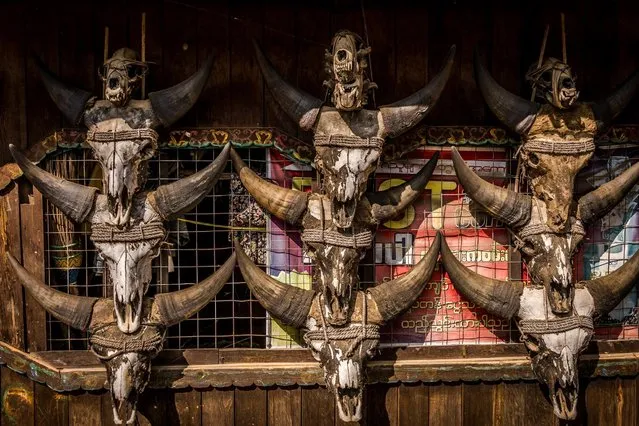
Traditional sculptures by Chin tribe in, Mindat, Myanmar, November 2016. (Photo by Teh Han Lin/Barcroft Images)

Traditional sculptures by Chin tribe in, Mindat, Myanmar, November 2016. In the mountains of Myanmar lives a tribe where the women have taken a unique approach to their beauty regime by decorating their faces with tattoos. The Chin people in the remote mountain town of Mindat, have been marking women in the area with intricate face tattoos for centuries. (Photo by Teh Han Lin/Barcroft Images)
Details
28 Dec 2016 07:01:00
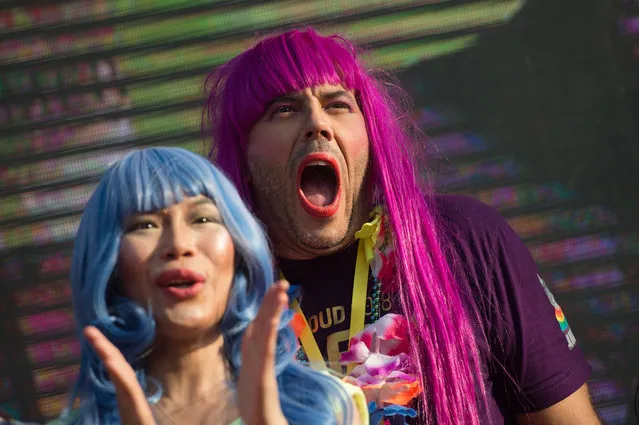
This photo taken on January 28, 2018 shows participants taking part in games on stage during the “&Proud” LGBT festival in Yangon. (Photo by Ye Aung Thu/AFP Photo)

This photo taken on January 28, 2018 shows participants taking part in games on stage during the “&Proud” LGBT festival in Yangon. Races, games, music and fun were just some of the highlights of the “&Proud” LGBT festival, which took place in a Yangon public park for the first time at the weekend in a country where same-s*x relations are still officially illegal. (Photo by Ye Aung Thu/AFP Photo)
Details
02 Feb 2018 06:49:00
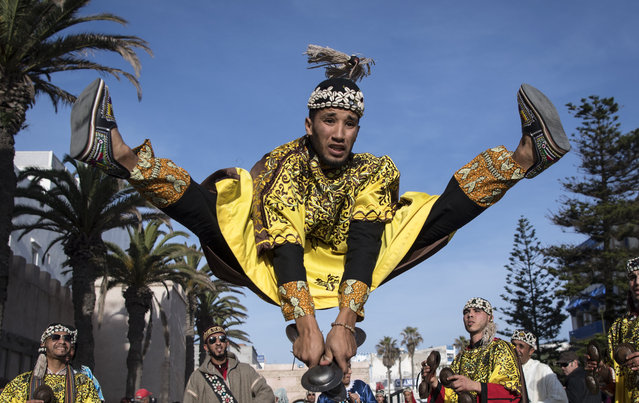
A Gnawa traditional group performs in the city of Essaouira on December 14, 2019, to celebrate the decision of adding the Gnawa culture to UNESCO's list of Intangible Cultural Heritage of Humanity. Gnawa culture, a centuries-old Moroccan practice rooted in music, African rituals and Sufi traditions, was added to UNESCO's list of Intangible Cultural Heritage of Humanity earlier in the week. Gnawa refers to a “set of musical productions, fraternal practices and therapeutic rituals where the secular mixes with the sacred”, according to the nomination submitted by Morocco. Often dressed in colourful outfits, Gnawa musicians play the guenbri, a type of lute with three strings, accompanied by steel castanets called krakebs. (Photo by Fadel Senna/AFP Photo)

A Gnawa traditional group performs in the city of Essaouira on December 14, 2019, to celebrate the decision of adding the Gnawa culture to UNESCO's list of Intangible Cultural Heritage of Humanity. Gnawa culture, a centuries-old Moroccan practice rooted in music, African rituals and Sufi traditions, was added to UNESCO's list of Intangible Cultural Heritage of Humanity earlier in the week. Gnawa refers to a “set of musical productions, fraternal practices and therapeutic rituals where the secular mixes with the sacred”, according to the nomination submitted by Morocco. Often dressed in colourful outfits, Gnawa musicians play the guenbri, a type of lute with three strings, accompanied by steel castanets called krakebs. (Photo by Fadel Senna/AFP Photo)
Details
18 Dec 2019 00:05:00
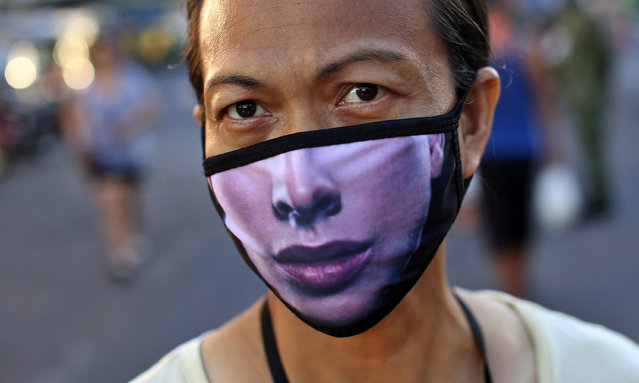
A Filipino woman wears a mask to try and protect against the spread of coronavirus in Malate district, Manila City on March 24, 2020. The Philippines has taken drastic measures to combat the spread of Covid-19. The entire country is under strict quarantine and the army is on the streets to monitor compliance. According to official figures, there are 462 positive cases and 33 dead in the Philippines, but it is thought that thousands of cases remain undetected due to lack of resources in a country where millions of people have no access to health care. In the poorest and most crowded areas, it’s almost impossible to adhere to the physical distancing required during quarantine. (Photo by Alejandro Ernesto/The Guardian)

A Filipino woman wears a mask to try and protect against the spread of coronavirus in Malate district, Manila City on March 24, 2020. The Philippines has taken drastic measures to combat the spread of Covid-19. The entire country is under strict quarantine and the army is on the streets to monitor compliance. According to official figures, there are 462 positive cases and 33 dead in the Philippines, but it is thought that thousands of cases remain undetected due to lack of resources in a country where millions of people have no access to health care. In the poorest and most crowded areas, it’s almost impossible to adhere to the physical distancing required during quarantine. (Photo by Alejandro Ernesto/The Guardian)
Details
08 Apr 2020 00:01:00