Loading...
Done
Britain's Last Battery Hen Is Released

Jane Howorth from national charity the British Hen Welfare Trust holds Liberty the last ex-battery hen to be rehomed on December 29, 2011 in Chulmleigh, England. The rehoming of Liberty signifies the end of the small battery hen cage, which has been phased out and replaced by enriched cages in preparation of the European Union directive banning the smaller cages from January 1, 2012. (Photo by Matt Cardy/Getty Images)
Details
30 Dec 2011 11:20:00
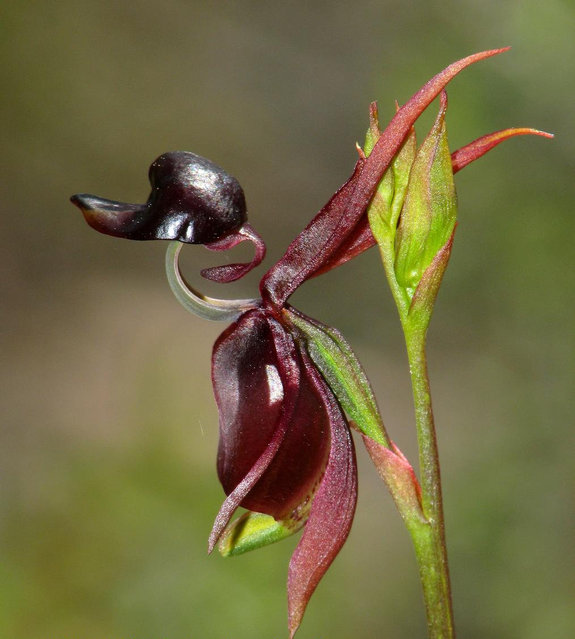
The Flying Duck Orchid

Caleana major, the Flying Duck Orchid is a small orchid found in eastern and southern Australia. This terrestrial plant features a remarkable flower, resembling a duck in flight. The flower is an attractant to insects, such as male sawflies which pollinate the flower in a process known as pseudocopulation. In 1986 this orchid was featured on an Australian postage stamp.


See Also: Monkey Orchid
Details
22 Apr 2013 10:56:00
A Muslim woman wearing a hijab walks past a lingerie advertisement in downtown Vancouver, British Columbia April 26, 2013. (Photo by Andy Clark/Reuters)

A Muslim woman wearing a hijab walks past a lingerie advertisement in downtown Vancouver, British Columbia April 26, 2013. (Photo by Andy Clark/Reuters)

P.S. All pictures are presented in high resolution. To see Hi-Res images – just TWICE click on any picture. In other words, click small picture – opens the BIG picture. Click BIG picture – opens VERY BIG picture (if available; this principle works anywhere on the site AvaxNews)
Details
27 Apr 2013 14:37:00
'Dancing sifaka'. (Photo by Alison Buttigieg/Comedy Wildlife Photography Awards/Mercury Press)

More than 1,500 snappers submitted their most hilarious pictures of all creatures great and small, and now 45 have made the cut. From drunken-eyed owls to embarrassed chipmunks and laughing goats – the finalists in the Comedy Wildlife Photography Awards are guaranteed to raise a smile. Here: 'Dancing sifaka'. (Photo by Alison Buttigieg/Comedy Wildlife Photography Awards/Mercury Press)
Details
12 Oct 2015 08:06:00
The Amazing Rock City In Spain

Ronda is a small Spanish town that it well known by many people around the world. It became a popular tourist destination due to its peculiar location. Some of its buildings are standing right next to the large cliff drop, making for a very scary sight, especially if you were to look down through one of their windows unaware of what kind of sight awaits you. If you ever find yourself looking for this ancient town, you can travel to it from Costa del Sol or Malaga. In the past, this town played a major strategic role due to its high elevation, which made defending it from invaders a lot easier.
Details
03 Mar 2015 11:40:00
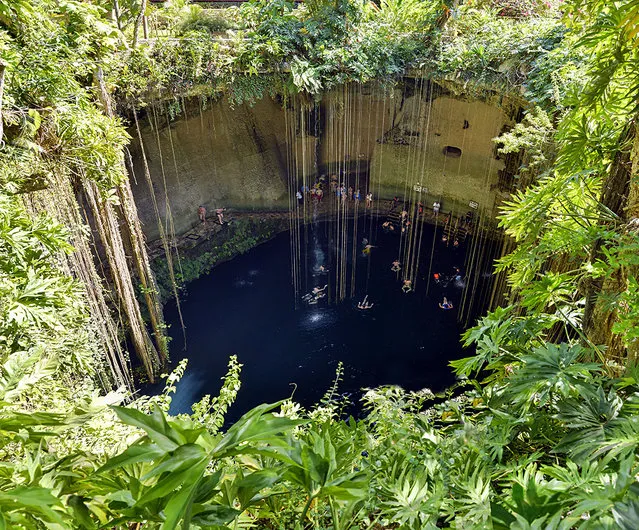
Cenote In Mexico

A cenote is a natural phenomenon, a sinkhole in the Earth’s surface. The Yucatan Peninsula in Mexico has an estimated 7,000 cenotes because it is primarily made up of porous limestone. For millions of years, rainfall slowly ate away at the limestone and a huge system of underground caves and caverns was formed. Many filled with water from rain or from the underground water table. When the roof of a water filled cave collapses, a cenote is born. The water found in a cenote may be fresh water, salt water, or both. Structurally it may be completely open, like a lake, almost completely closed with just a small opening at the top, or somewhere in between.
Details
06 Oct 2013 09:45:00
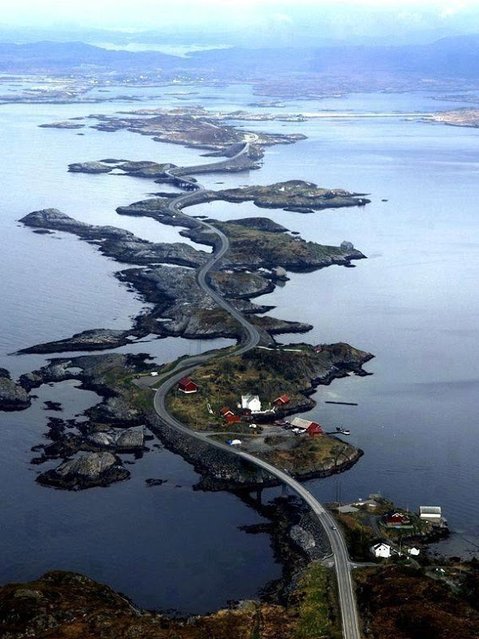
The Atlantic Road, Norway

The Atlantic Ocean Road or the Atlantic Road (Norwegian: Atlanterhavsveien) is a 8.3-kilometer (5.2 mi) long section of County Road 64 that runs through an archipelago in Eide and Averøy in Møre og Romsdal, Norway. It passes by Hustadvika, an unsheltered part of the Norwegian Sea, connecting the island of Averøy with the mainland and Romsdalshalvoya peninsula. It runs between the villages of Karvag on Averoy and Vevang in Eida. It is built on several small islands and skerries, which are connected by several causeways, viaducts and eight bridges – the most prominent being Storseisundet Bridge.
Details
18 Jan 2014 11:42:00
Arctic Fox. (Photo by Trond Eriksen)

“The arctic fox (Vulpes lagopus), also known as the white fox, polar fox, or snow fox, is a small fox native to the Arctic regions of the Northern Hemisphere and is common throughout the Arctic tundra biome. It is well adapted to living in cold environments. It has a deep thick fur which is brown in summer and white in winter. It averages in size at about 85.3 cm (33.6 in) in body length, with a generally rounded body shape to minimize the escape of body heat. – Wikipedia. (Photo by Trond Eriksen)
Details
26 May 2014 14:09:00