Loading...
Done
Kyrgyz girls pose in traditional costumes during the Nowruz celebration in Bishkek, Kyrgyzstan, 20 March 2024. Nowruz is the Persian New Year celebrated by various ethnic groups worldwide and it traditionally marks the first day of spring. (Photo by Igor Kovalenko/EPA/EFE)

Kyrgyz girls pose in traditional costumes during the Nowruz celebration in Bishkek, Kyrgyzstan, 20 March 2024. Nowruz is the Persian New Year celebrated by various ethnic groups worldwide and it traditionally marks the first day of spring. (Photo by Igor Kovalenko/EPA/EFE)
Details
20 Jun 2025 04:15:00
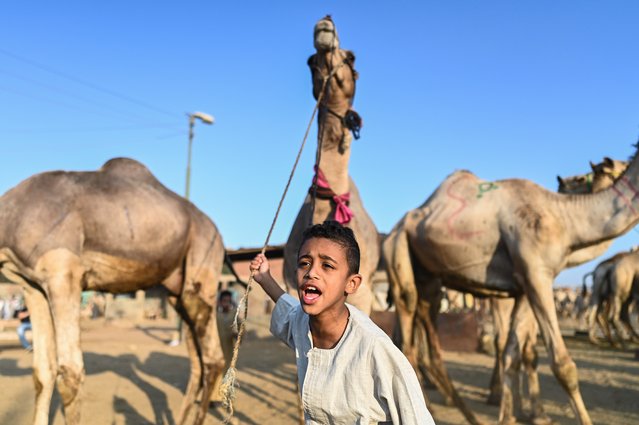
A child stands next to sacrificial camels at the camel market ahead of the Muslim festival of Eid al-Adha in the Birqash district, Giza, Egypt, 30 May 2025. Eid al-Adha is one of the holiest Muslim holidays, marking the annual Hajj pilgrimage to Mecca. (Photo by Mohamed Hossam/EPA/EFE)

A child stands next to sacrificial camels at the camel market ahead of the Muslim festival of Eid al-Adha in the Birqash district, Giza, Egypt, 30 May 2025. Eid al-Adha is one of the holiest Muslim holidays, marking the annual Hajj pilgrimage to Mecca. (Photo by Mohamed Hossam/EPA/EFE)
Details
24 Jun 2025 03:30:00
People in a variety of colorful costumes participate in the 43rd annual Mermaid Parade at Coney Island on June 21, 2025 in New York City. The annual Mermaid Parade marks the beginning of summer in NYC and pays tribute to Coney Island’s Mardi Gras celebrations in the early 1900’s. (Photo by Craig T. Fruchtman/Getty Images)

People in a variety of colorful costumes participate in the 43rd annual Mermaid Parade at Coney Island on June 21, 2025 in New York City. The annual Mermaid Parade marks the beginning of summer in NYC and pays tribute to Coney Island’s Mardi Gras celebrations in the early 1900’s. (Photo by Craig T. Fruchtman/Getty Images)
Details
02 Jul 2025 04:44:00
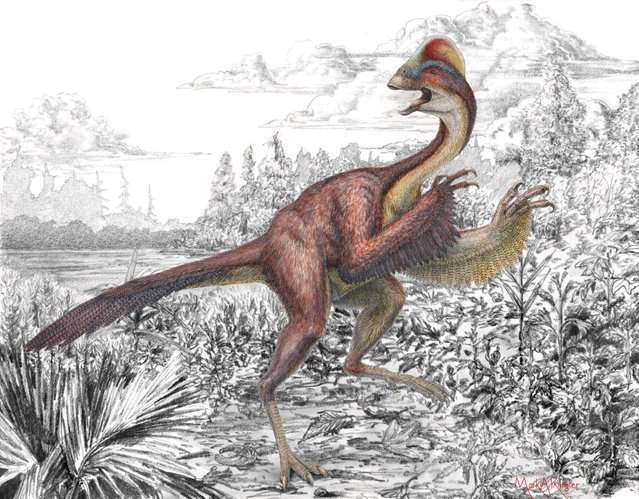
Life reconstruction of the new oviraptorosaurian dinosaur species Anzu wyliei in its 66 million-year-old environment in western North America as seen in an undated handout illustration by Mark A. Klinger, Carnegie Museum of Natural History. Some 18,000 species, great and small, were discovered in 2014, adding to the 2 million already known, scientists said on May 21, 2015 as they released a “Top 10” list that highlights the diversity of life. (Photo by Mark A. Klingler/Reuters/Carnegie Museum of Natural History)

Life reconstruction of the new oviraptorosaurian dinosaur species Anzu wyliei in its 66 million-year-old environment in western North America as seen in an undated handout illustration by Mark A. Klinger, Carnegie Museum of Natural History. Some 18,000 species, great and small, were discovered in 2014, adding to the 2 million already known, scientists said on May 21, 2015 as they released a “Top 10” list that highlights the diversity of life. Anzu wyliei, one of the top 10, dubbed “the chicken from hell”, is extinct. The feathered dinosaur whose partial skeletons were unearthed in the Dakotas was a contemporary of T. rex and Triceratops. (Photo by Mark A. Klingler/Reuters/Carnegie Museum of Natural History)

Details
22 May 2015 12:31:00
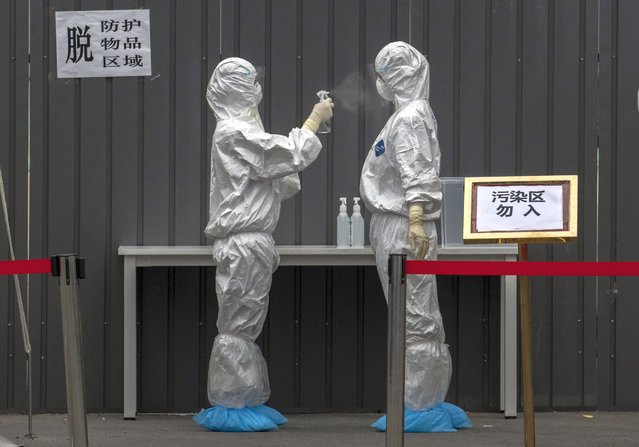
Chinese epidemic control workers wear protective suits as they disinfect each other after performing nucleic acid swab test for COVID-19 on citizens at a government testing site in Xicheng District during an organized tour on June 24, 2020 in Beijing, China. While Chinese government medical officials have said they believe they have controlled the spread, authorities are trying to contain the outbreak linked to the Xinfadi wholesale food market, Beijing's biggest supplier of produce and meat. More than 2.5 million people have undergone nucleic acid tests for COVID-19 at dozens of sites across the city in recent days, with officials using contact tracing to target high and middle risk areas and people who may have had contact with the market or food that came from there. Several neighborhoods have been locked down and a number of other food markets have been closed, The outbreak has triggered fears of a second wave of infection after 56 straight days with no domestically transmitted cases in the capital. (Photo by Kevin Frayer/Getty Images)

Chinese epidemic control workers wear protective suits as they disinfect each other after performing nucleic acid swab test for COVID-19 on citizens at a government testing site in Xicheng District during an organized tour on June 24, 2020 in Beijing, China. While Chinese government medical officials have said they believe they have controlled the spread, authorities are trying to contain the outbreak linked to the Xinfadi wholesale food market, Beijing's biggest supplier of produce and meat. (Photo by Kevin Frayer/Getty Images)
Details
26 Jun 2020 00:01:00
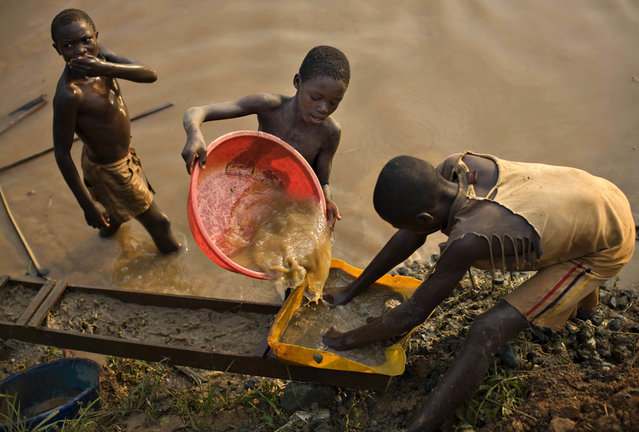
Boys pan for gold on a riverside at Iga Barriere, 25 km (15 miles) from Bunia, in the resource-rich Ituri region of eastern Congo February 16, 2009. Ituri is one of many areas of the country to have experienced bitter ethnic conflict between rival tribes in recent years. Massacres have left tens of thousands dead. It is this fighting that led U.S. authorities to take the unprecedented step of naming Congo in section 1502 of the Dodd-Frank financial regulation act, which says U.S.-listed companies that source gold, tungsten, tantalum and tin from Congo or its neighbours must assure the U.S. stock exchange regulator that their business is not helping fund conflict. (Photo by Finbarr O'Reilly/Reuters)

Boys pan for gold on a riverside at Iga Barriere, 25 km (15 miles) from Bunia, in the resource-rich Ituri region of eastern Congo February 16, 2009. Ituri is one of many areas of the country to have experienced bitter ethnic conflict between rival tribes in recent years. Massacres have left tens of thousands dead. It is this fighting that led U.S. authorities to take the unprecedented step of naming Congo in section 1502 of the Dodd-Frank financial regulation act, which says U.S.-listed companies that source gold, tungsten, tantalum and tin from Congo or its neighbours must assure the U.S. stock exchange regulator that their business is not helping fund conflict. (Photo by Finbarr O'Reilly/Reuters)
Details
12 Nov 2016 10:24:00
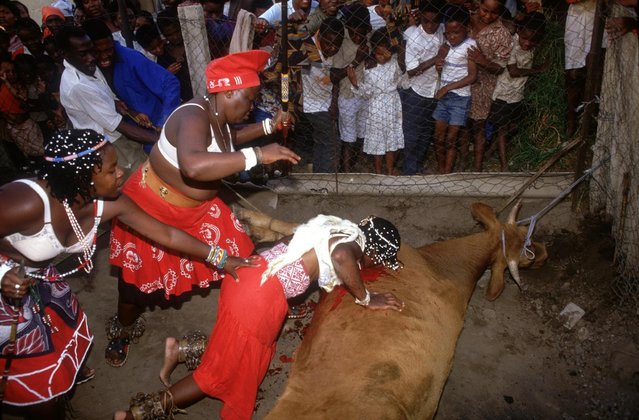
South African Sangomas are wizards and witches who are supposedly chosen by their ancestors to follow a traditional training and go through a rite of passage after which they become Sangomas and can cure and help people. They are so respected and trusted that western medical authorities have actually advised the government of South Africa to develop its cooperation with Sangomas in order to improve hygiene and health among the population. Today is graduation day for Trissa, 25, a Sangoma student in Tembisa, near Pretoria. Thanks to the help of the spirits of her ancestors, she has found a cow that had been hidden. The cow has then been killed by Sangoma Thelma and Trissa is now drinking its blood, thus becoming a Sangoma and changing her name to Nomadlozi. Location: Tembisa, near Pretoria, South Africa. (Photo by Patrick Durand/Sygma via Getty Images)

South African Sangomas are wizards and witches who are supposedly chosen by their ancestors to follow a traditional training and go through a rite of passage after which they become Sangomas and can cure and help people. They are so respected and trusted that western medical authorities have actually advised the government of South Africa to develop its cooperation with Sangomas in order to improve hygiene and health among the population. (Photo by Patrick Durand/Sygma via Getty Images)
Details
24 Feb 2017 00:05:00
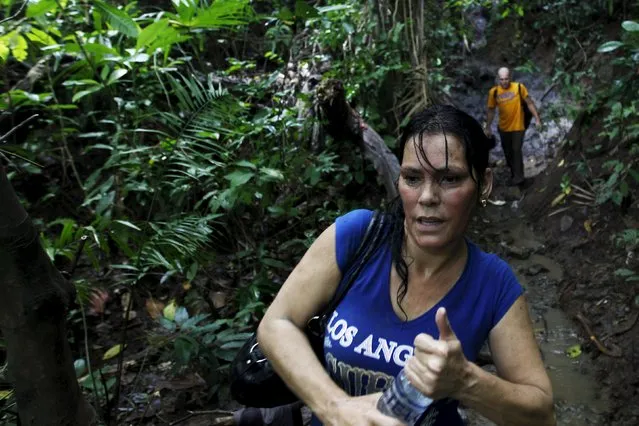
Cuban migrant Yamilen Arbelo, 40, walks down a hill as she crosses the border from Colombia through the jungle into La Miel, in the province of Guna Yala, Panama November 29, 2015. According to local authorities in La Miel, some 100 to 150 Cubans have been entering Panama from Colombia every day for the last three months. Scores of Cubans have come to Panama as they seek overland passage towards the United States fearing a recent detente between Washington and Havana could end their preferential treatment. (Photo by Carlos Jasso/Reuters)

Cuban migrant Yamilen Arbelo, 40, walks down a hill as she crosses the border from Colombia through the jungle into La Miel, in the province of Guna Yala, Panama November 29, 2015. According to local authorities in La Miel, some 100 to 150 Cubans have been entering Panama from Colombia every day for the last three months. Scores of Cubans have come to Panama as they seek overland passage towards the United States fearing a recent detente between Washington and Havana could end their preferential treatment. (Photo by Carlos Jasso/Reuters)
Details
01 Dec 2015 08:00:00