Loading...
Done


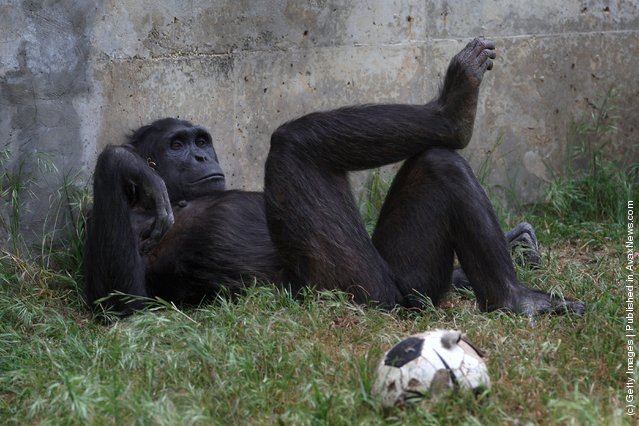
A chimpanzee relaxes in the shade at the Safari Park as the popular attraction prepares for the upcoming Jewish festival of Pesach (Passover) on April 14, 2008 in Ramat Gan near Tel Aviv, Israel. (Photo by David Silverman/Getty Images)
Details
25 May 2011 08:22:00


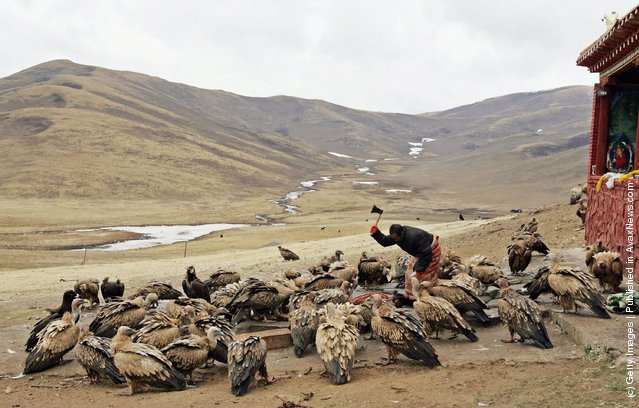
“Sky burial or ritual dissection was once a common funerary practice in Tibet wherein a human corpse is cut in specific locations and placed on a mountaintop, exposing it to the elements or the mahabhuta and animals – especially to birds of prey. The location of the sky burial preparation and place of execution are understood in the Vajrayana traditions as charnel grounds. In Tibet the practice is known as jhator, which literally means, «giving alms to the birds»”. – Wikipedia

Photo: A burial master chops bones of a body to feed vultures during a celestial burial ceremony on April 19, 2006 in Dari County of Guoluo Prefecture, Qinghai Province, northwest China. Celestial burial is a traditional funeral of Tibetan people, which began in the 7th century. (Photo by China Photos/Getty Images)

Details
18 Jun 2011 12:12:00
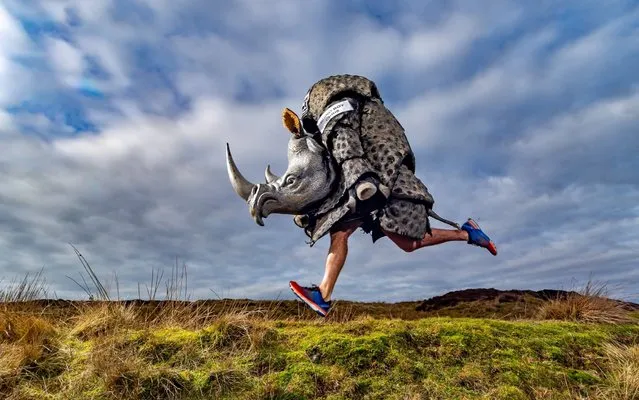
Children's author and charity fundraiser Chris Green, of Embsay, near Skipton, has been dubbed “Rhino Boy” as he has pledged to run 40 marathons and other events dressed as a Rhino to raise money for Save the Rhino on January 2020. (Photo by South West News Service/Yorkshire Post)

Children's author and charity fundraiser Chris Green, of Embsay, near Skipton, has been dubbed “Rhino Boy” as he has pledged to run 40 marathons and other events dressed as a Rhino to raise money for Save the Rhino on January 2020. (Photo by South West News Service/Yorkshire Post)
Details
26 May 2020 00:03:00
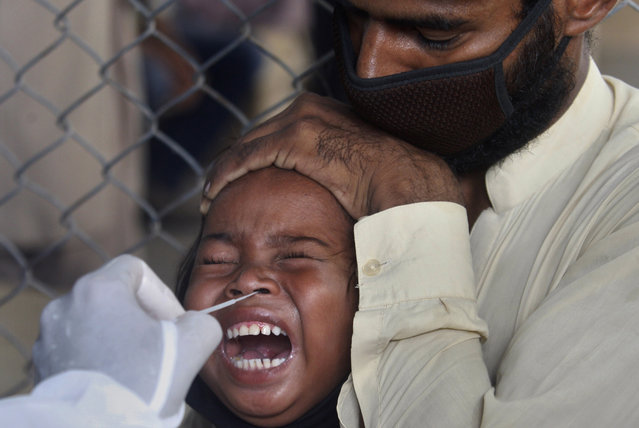
A girl reacts while getting a nasal swab sample at a testing and screening facility for the new coronavirus in a hospital in Karachi, Pakistan, Friday, July 17, 2020. (Photo by Fareed Khan/AP Photo)

A girl reacts while getting a nasal swab sample at a testing and screening facility for the new coronavirus in a hospital in Karachi, Pakistan, Friday, July 17, 2020. (Photo by Fareed Khan/AP Photo)
Details
19 Jul 2020 00:07:00
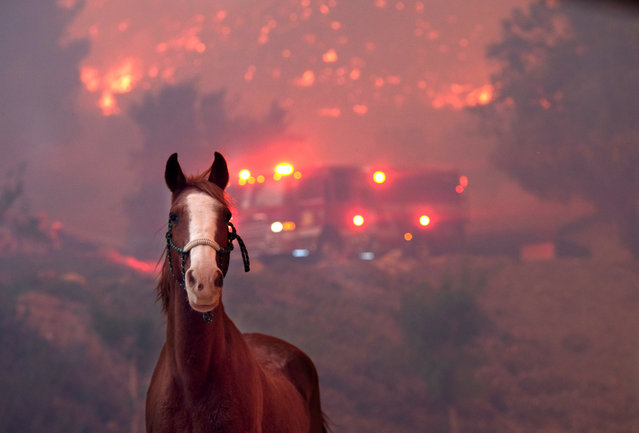
Horses are spooked as the Woolsey Fire moves through the property on Cornell Road near Paramount Ranch on November 9, 2018 inAgoura Hills, California. About 75,000 homes have been evacuated in Los Angeles and Ventura counties due to two fires in the region. (Photo by Matthew Simmons/Getty Images)

Horses are spooked as the Woolsey Fire moves through the property on Cornell Road near Paramount Ranch on November 9, 2018 inAgoura Hills, California. About 75,000 homes have been evacuated in Los Angeles and Ventura counties due to two fires in the region. (Photo by Matthew Simmons/Getty Images)
Details
11 Nov 2018 00:03:00
An orange oakleaf rests on a plant at the Taipei Zoo on November 26, 2020. (Photo by Sam Yeh/AFP Photo)

An orange oakleaf rests on a plant at the Taipei Zoo on November 26, 2020. (Photo by Sam Yeh/AFP Photo)
Details
10 Sep 2022 04:08:00
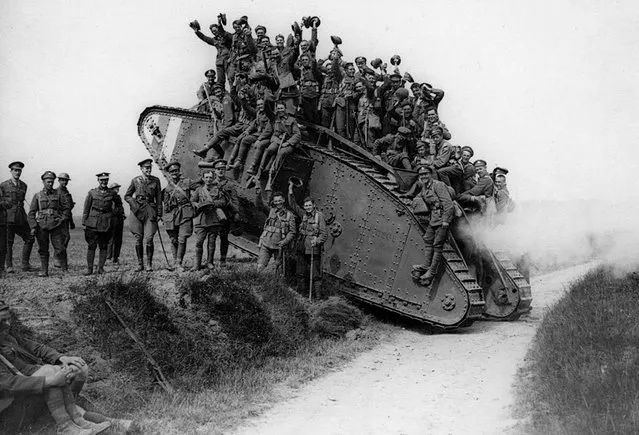
These black-and-white photos are taken from the new book “Armoured Warfare in the First World War 1916 – 1918” by Anthony Tucker-Jones and published by Pen & Sword Military. “Interestingly the British, French and Germans took completely different approaches with varying results”. The British military produced “Little Willie” in Autumn 1915 weighing 18 tonnes, which had a crew of two plus four gunners. “Inspired by a tracked artillery tractor “Little Willie” was referred to as a water tank – hence the name tank – to ensure secrecy”, said Anthony. “This led to the strange looking Mark I with its peculiar rhomboid shape, designed to cross trenches with guns in sponsons on either side. The Germans saw the tank as unchivalrous and were slow to grasp its utility. They favoured the Stormtrooper (specialist soldiers used to infiltrate enemy trenches) and artillery, not the tank”, said Anthony. “However, they didn’t hesitate to make use of captured British tanks. Although the tank helped secure victory and German soldiers dubbed it “Germany’s Downfall” the country was ultimately brought to its knees by the Allies blockade”. Here: British troops hitch a ride on a Mark IV after the massed tank fleet spearheading attack at Cambrai on November 20, 1917. (Photo by Anthony Tucker-Jones/Mediadrumworld.com)

These black-and-white photos are taken from the new book “Armoured Warfare in the First World War 1916 – 1918” by Anthony Tucker-Jones and published by Pen & Sword Military. Here: British troops hitch a ride on a Mark IV after the massed tank fleet spearheading attack at Cambrai on November 20, 1917. (Photo by Anthony Tucker-Jones/Mediadrumworld.com)
Details
23 Feb 2017 00:02:00
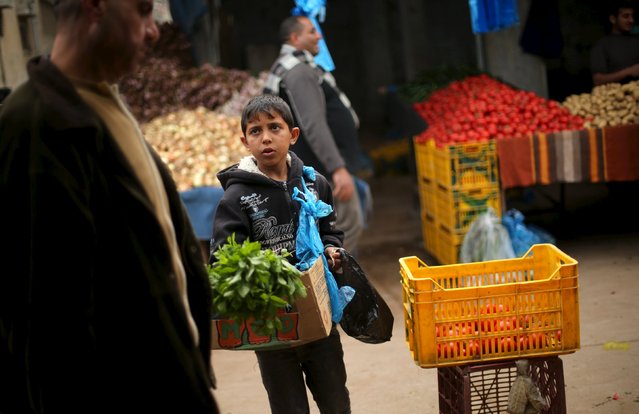
Palestinian boy Mohammad al-Bana, 10, sells mints at a market in Gaza City March 29, 2016. Bana, whose father is unemployed, earns around 10 Shekels ($2.5) per day. The boy starts working after finishing school. He hopes to continue education and become an engineer in the future. (Photo by Mohammed Salem/Reuters)

Palestinian boy Mohammad al-Bana, 10, sells mints at a market in Gaza City March 29, 2016. Bana, whose father is unemployed, earns around 10 Shekels ($2.5) per day. The boy starts working after finishing school. He hopes to continue education and become an engineer in the future. (Photo by Mohammed Salem/Reuters)
Details
31 Mar 2016 11:06:00