Loading...
Done
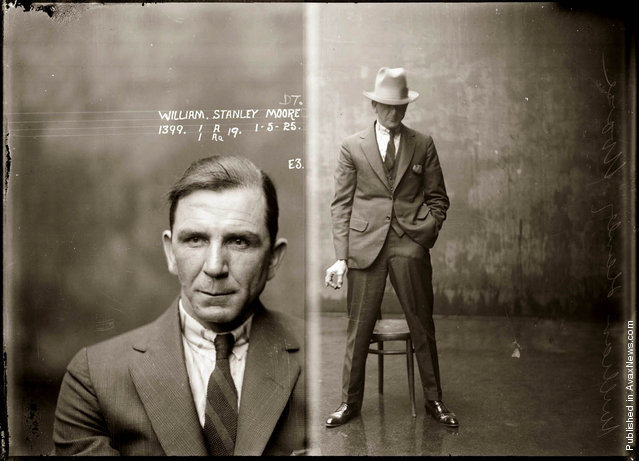
Mug shot of William Stanley Moore, 1 May 1925, Central Police Station, Sydney

Mug shot of William Stanley Moore, 1 May 1925, Central Police Station, Sydney. This picture appears in the Photo Supplement to the NSW Police Gazette, 28 July, 1926 captioned: “Opium dealer. Operates with large quantities of faked opium and cocaine. A wharf labourer; associates with water front thieves and drug traders”. (Photo by NSW Police Forensic Photography Archive, Justice & Police Museum, Histiric Houses Trust of NSW)
Details
24 Apr 2012 11:46:00
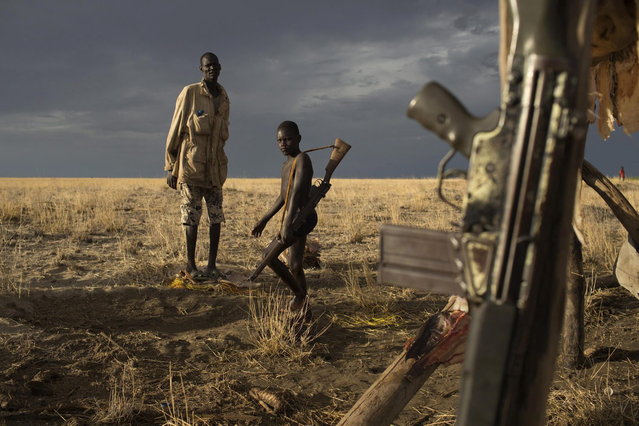
A Turkana man and a boy carrying a gun look on as a G3 battle rifle hangs from a structure used to dry fish at a fishing camp on the shores of Lake Turkana, some kilometres from Todonyang near the Kenya-Ethiopia border in northwestern Kenya October 12, 2013. (Photo by Siegfried Modola/Reuters)

A Turkana man and a boy carrying a gun look on as a G3 battle rifle hangs from a structure used to dry fish at a fishing camp on the shores of Lake Turkana, some kilometres from Todonyang near the Kenya-Ethiopia border in northwestern Kenya October 12, 2013The Turkana are traditionally nomadic pastoralists, but they have seen the pasture that they need to feed their herds suffer from recurring droughts and many have turned to fishing. However, Lake Turkana is overfished, and scarcity of food and pastureland is fuelling long-standing conflict with Ethiopian indigenous Dhaasanac, who have seen grazing grounds squeezed by large-scale government agricultural schemes in southern Ethiopia. The Dhaasanac now venture ever deeper into Kenyan territory in search of fish and grass, clashing with neighbours. Fighting between the communities has a long history, but the conflict has become ever more fatal as automatic weapons from other regional conflicts seep into the area. While the Turkana region is short of basics like grass and ground-water, it contains other resources including oil reserves and massive, newly discovered underground aquifers. (Photo by Siegfried Modola/Reuters)
Details
05 Dec 2013 12:08:00
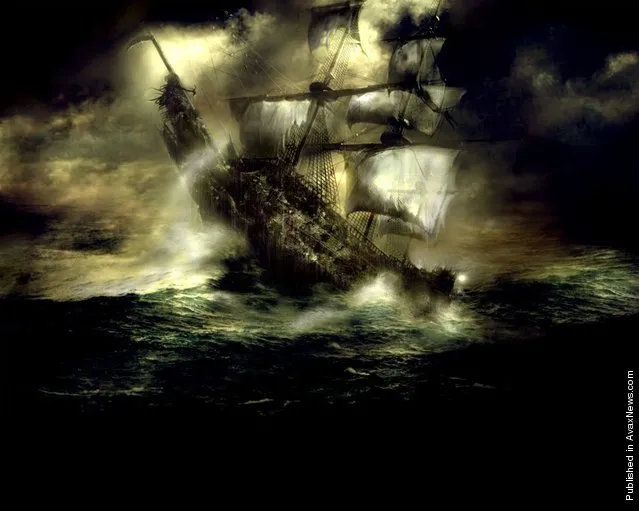
Ocean voyage

Do you think that history is a science? Well, not exactly. First, and foremost, history is the state's “legend of wars”, it’s official regalia. Of course, public historians are not interested in scientific truth – quite the opposite. In this respect, any attempt to present a state’s history as altruistic and benevolent as possible is welcomed and encouraged – as opposed to any revisionism attempts that may be more accurate. In this matter, Chinese have surpassed us all – they revised in highly creative manner (but rather shamelessly) the technology already invented by Europeans, a process that resulted in oldest state on the planet. Here is an interesting paradox: ask any sinologist about the Middle Kingdom during second century B.C., and he will describe it to you in such a vivid manner as if he has been living there all his life – but as soon as you will ask him to describe Chinese history in the 19-20th centuries… let's say, his eagerness will be greatly diminished. However, we will discuss China in a different article, and in the meantime we will try to understand how exactly historic “legend of wars” is formed and functions – based on a specific and well-known example. A great example is Ferdinand Magellan's first voyage around the world.

Details
14 Nov 2011 09:11:00
Buddhist novice poses for a picture while monks gather to receive alms at Wat Phra Dhammakaya temple, in what organizers said was a meeting of over 100,000 monks, in Pathum Thani, outside Bangkok April 22, 2016. (Photo by Jorge Silva/Reuters)

Buddhist novice poses for a picture while monks gather to receive alms at Wat Phra Dhammakaya temple, in what organizers said was a meeting of over 100,000 monks, in Pathum Thani, outside Bangkok April 22, 2016. (Photo by Jorge Silva/Reuters)
Details
23 Apr 2016 13:27:00
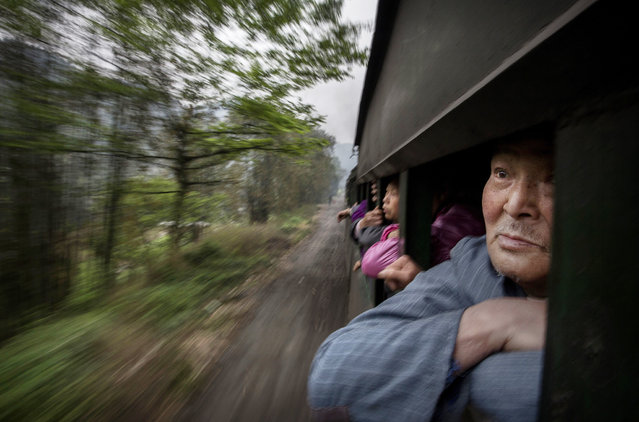
Local villagers ride a local coal powered steam train on March 27, 2015 at a station in the town of Shixi , Sichuan Province, in Southern China. While China boasts the world's most extensive high-speed rail infrastructure. (Photo by Kevin Frayer/Getty Images)

Local villagers ride a local coal powered steam train on March 27, 2015 at a station in the town of Shixi , Sichuan Province, in Southern China. While China boasts the world's most extensive high-speed rail infrastructure with over 16,000 kilometers of track, the Shixi-Bagou railway is still a primary connection for local villagers between towns and is kept alive by tourist cars carrying passengers for ten times the price. The rail line came into service in the late 1950s and the train was initially used to transport coal from a now-shuttered mine before passenger carriages were added. (Photo by Kevin Frayer/Getty Images)
Details
12 May 2015 12:00:00
A young woman cools herself in a fountain in Budapest, Hungary July 6, 2015. (Photo by Laszlo Balogh/Reuters)

A young woman cools herself in a fountain in Budapest, Hungary July 6, 2015. Over the weekend, a heat wave has reached Hungary with temperatures topping 38 degrees Celsius (100.4 degrees Fahrenheit). (Photo by Laszlo Balogh/Reuters)
Details
07 Jul 2015 12:30:00
The entire cast perform during a production media call for Singin' In The Rain at Her Majesty's Theatre on May 12, 2016 in Melbourne, Australia. (Photo by Robert Cianflone/Getty Images)

The entire cast perform during a production media call for Singin' In The Rain at Her Majesty's Theatre on May 12, 2016 in Melbourne, Australia. (Photo by Robert Cianflone/Getty Images)
Details
13 May 2016 12:15:00
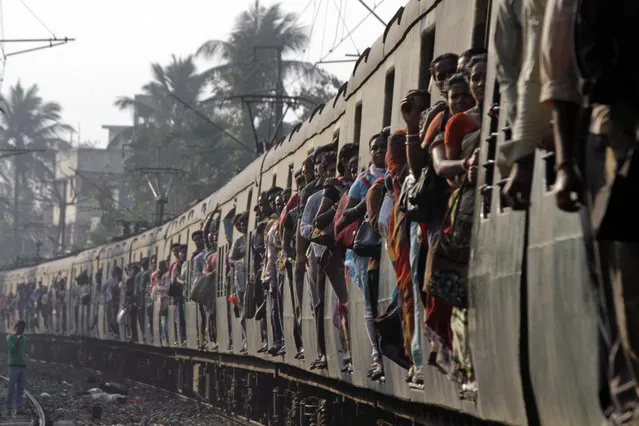
Indian commuters travel in a local train in Kolkata, India, Tuesday, Feb. 26, 2013. Indian Railway Minister Pawan Kumar Bansal is presenting the country's rail budget for next fiscal year in the parliament Tuesday, Feb. 26, 2013. Indian railway network is one of the world's largest, with some 14 million passengers daily and some 64,000 kilometers (40,000 miles) of railway track cut through some of the most densely populated cities. (Photo by Bikas Das/AP Photo)

Indian commuters travel in a local train in Kolkata, India, Tuesday, February 26, 2013. Indian Railway Minister Pawan Kumar Bansal is presenting the country's rail budget for next fiscal year in the parliament Tuesday, Feb. 26, 2013. Indian railway network is one of the world's largest, with some 14 million passengers daily and some 64,000 kilometers (40,000 miles) of railway track cut through some of the most densely populated cities. (Photo by Bikas Das/AP Photo)
Details
05 Mar 2013 12:57:00