Loading...
Done
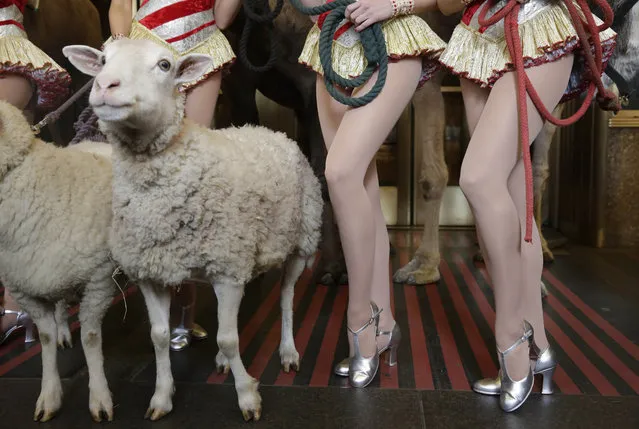
The legs of camel and sheep for the “Living Nativity” scene, and Rockettes, of the “Radio City Christmas Special”, are juxtaposed as they pose for photos outside New York's Radio City Music Hall, Tuesday, October 28, 2014. The show is scheduled to open Friday, November 7, 2014 and continue through Wednesday, December 31, 2014. The “Living Nativity” has been part of the Christmas Spectacular since its inception in 1933. (Photo by Richard Drew/AP Photo)

The legs of camel and sheep for the “Living Nativity” scene, and Rockettes, of the “Radio City Christmas Special”, are juxtaposed as they pose for photos outside New York's Radio City Music Hall, Tuesday, October 28, 2014. The show is scheduled to open Friday, November 7, 2014 and continue through Wednesday, December 31, 2014. The “Living Nativity” has been part of the Christmas Spectacular since its inception in 1933. (Photo by Richard Drew/AP Photo)
Details
01 Nov 2014 14:53:00
A Syrian boy plays with the head of a sacrificed sheep at a DIP camp for Interally Displaced Persons near the town of Aqrabat in Syria's northern Idlib province on August 12, 2019. Known as the “big” festival, Eid Al-Adha is celebrated each year by Muslims sacrificing various animals according to religious traditions, including cows, camels, goats and sheep. The festival marks the end of the Hajj pilgrimage to Mecca and commemorates Prophet Abraham's readiness to sacrifice his son to show obedience to God. (Photo by Aaref Watad/AFP Photo)

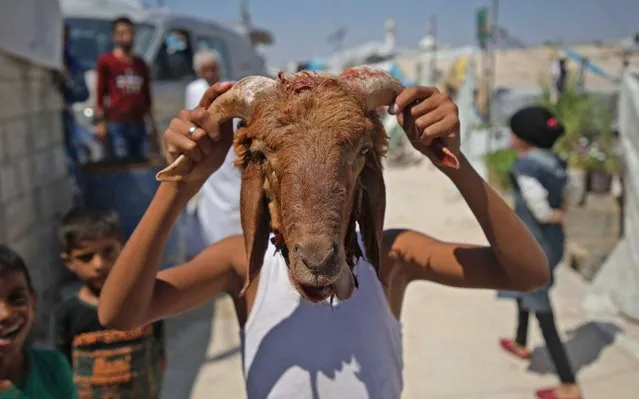
A Syrian boy plays with the head of a sacrificed sheep at a DIP camp for Interally Displaced Persons near the town of Aqrabat in Syria's northern Idlib province on August 12, 2019. Known as the “big” festival, Eid Al-Adha is celebrated each year by Muslims sacrificing various animals according to religious traditions, including cows, camels, goats and sheep. The festival marks the end of the Hajj pilgrimage to Mecca and commemorates Prophet Abraham's readiness to sacrifice his son to show obedience to God. (Photo by Aaref Watad/AFP Photo)
Details
15 Aug 2019 00:05:00
In this photo taken Thursday, January 16, 2020, a Samburu boy uses a wooden stick to try to swat a swarm of desert locusts filling the air, as he herds his camel near the village of Sissia, in Samburu county, Kenya. The most serious outbreak of desert locusts in 25 years is spreading across East Africa and posing an unprecedented threat to food security in some of the world's most vulnerable countries, authorities say, with unusual climate conditions partly to blame. (Photo by Patrick Ngugi/AP Photo)

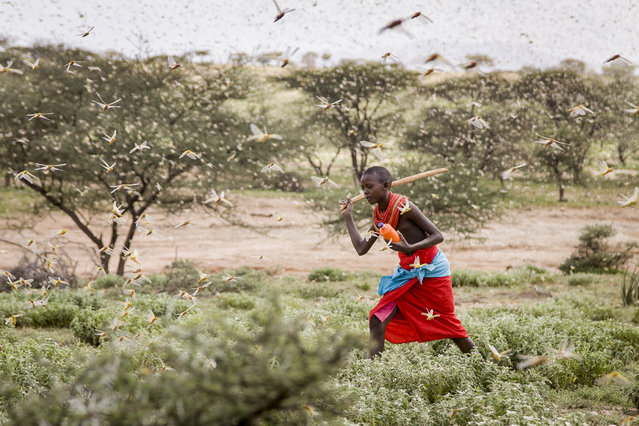
In this photo taken Thursday, January 16, 2020, a Samburu boy uses a wooden stick to try to swat a swarm of desert locusts filling the air, as he herds his camel near the village of Sissia, in Samburu county, Kenya. The most serious outbreak of desert locusts in 25 years is spreading across East Africa and posing an unprecedented threat to food security in some of the world's most vulnerable countries, authorities say, with unusual climate conditions partly to blame. (Photo by Patrick Ngugi/AP Photo)
Details
19 Jan 2020 00:07:00
Visitors enjoy a camel ride at Sea View beach in Karachi on June 16, 2023, after Cyclone Biparjoy made landfall. More than 180,000 people in the Indian state of Gujarat and Pakistan's neighbouring Sindh province fled the path of Biparjoy – which means “disaster” in Bengali – before it made landfall on June 15 evening. (Photo by Asif Hassan/AFP Photo)

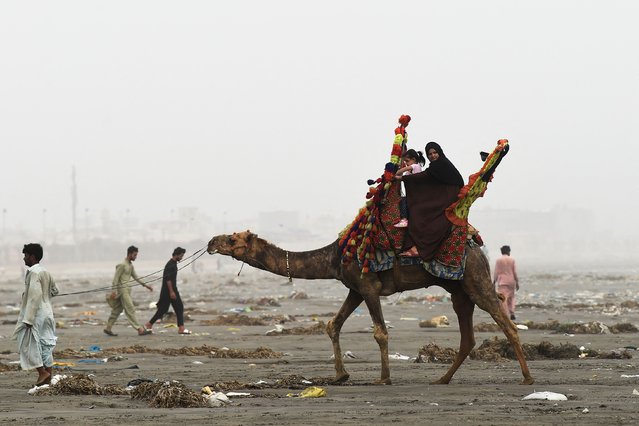
Visitors enjoy a camel ride at Sea View beach in Karachi on June 16, 2023, after Cyclone Biparjoy made landfall. More than 180,000 people in the Indian state of Gujarat and Pakistan's neighbouring Sindh province fled the path of Biparjoy – which means “disaster” in Bengali – before it made landfall on June 15 evening. (Photo by Asif Hassan/AFP Photo)
Details
30 Jun 2023 03:15:00
A camel is seen in front of the pyramids, which is one of the seven wonders of the world that was visited by 14.9 million tourists last year in Giza, Egypt on February 21, 2024. The pyramids were named after the tombs of fathers, sons and grandsons, including the largest pyramid Cheops (King Khufu), the middle pyramid Khafre (King Khafre) and the small pyramid Menkaure (King Menkaure). (Photo by Utku Ucrak/Anadolu via Getty Images)

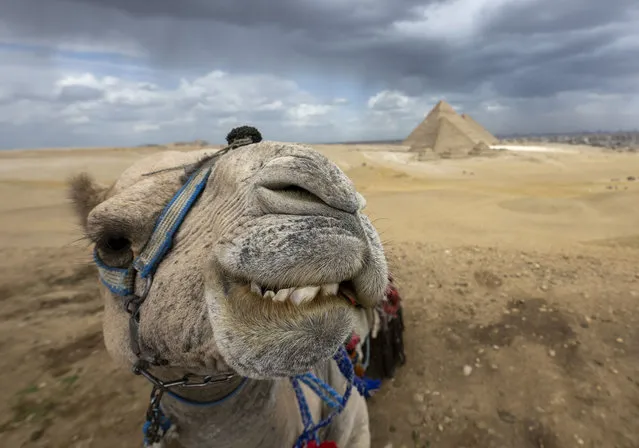
A camel is seen in front of the pyramids, which is one of the seven wonders of the world that was visited by 14.9 million tourists last year in Giza, Egypt on February 21, 2024. The pyramids were named after the tombs of fathers, sons and grandsons, including the largest pyramid Cheops (King Khufu), the middle pyramid Khafre (King Khafre) and the small pyramid Menkaure (King Menkaure). (Photo by Utku Ucrak/Anadolu via Getty Images)
Details
12 Apr 2024 00:06:00
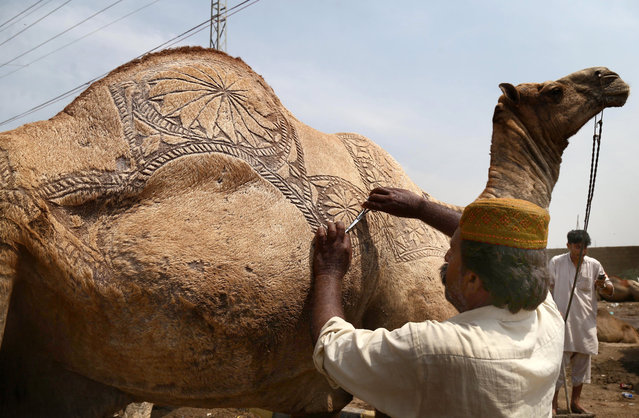
A vendor decorates a sacrificial camel ahead of the Eid al-Adha festival, in Karachi, Pakistan, 23 August 2016. Eid al-Adha is the holiest of the two Muslims holidays celebrated each year, with this year will be celebrated on 02nd September. Eid al-Adha marks the yearly Muslim pilgrimage (Hajj) to visit Mecca, the holiest place in Islam. Muslims slaughter a sacrificial animal and split the meat into three parts, one for the family, one for friends and relatives, and one for the poor and needy. (Photo by Rehan Khan/EPA)

A vendor decorates a sacrificial camel ahead of the Eid al-Adha festival, in Karachi, Pakistan, 23 August 2016. Eid al-Adha is the holiest of the two Muslims holidays celebrated each year, with this year will be celebrated on 02nd September. Eid al-Adha marks the yearly Muslim pilgrimage (Hajj) to visit Mecca, the holiest place in Islam. Muslims slaughter a sacrificial animal and split the meat into three parts, one for the family, one for friends and relatives, and one for the poor and needy. (Photo by Rehan Khan/EPA)
Details
28 Aug 2017 12:03:00
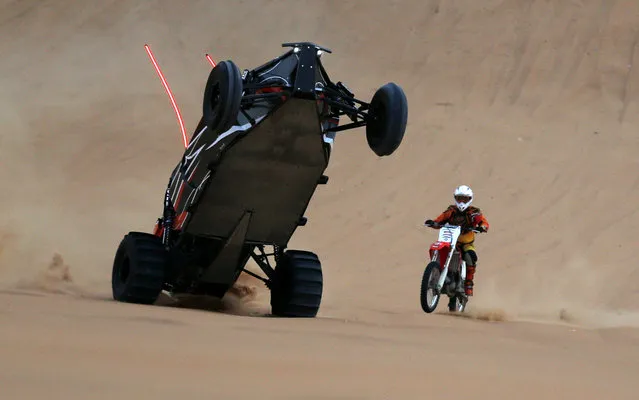
A dune buggy driver trains before competing in a sand dune drag racing event on January 8, 2016, as part of the Liwa 2016 Moreeb Dune Festival in the Liwa desert, some 250 kilometres southwest of Abu Dhabi. The festival, which attracts participants from around the Gulf region, includes a variety of races (cars, bikes, falcons, camels and horses) or other activities aimed at promoting the country's folklore. (Photo by Karim Sahib/AFP Photo)

A dune buggy driver trains before competing in a sand dune drag racing event on January 8, 2016, as part of the Liwa 2016 Moreeb Dune Festival in the Liwa desert, some 250 kilometres southwest of Abu Dhabi. The festival, which attracts participants from around the Gulf region, includes a variety of races (cars, bikes, falcons, camels and horses) or other activities aimed at promoting the country's folklore. (Photo by Karim Sahib/AFP Photo)
Details
09 Jan 2016 13:45:00
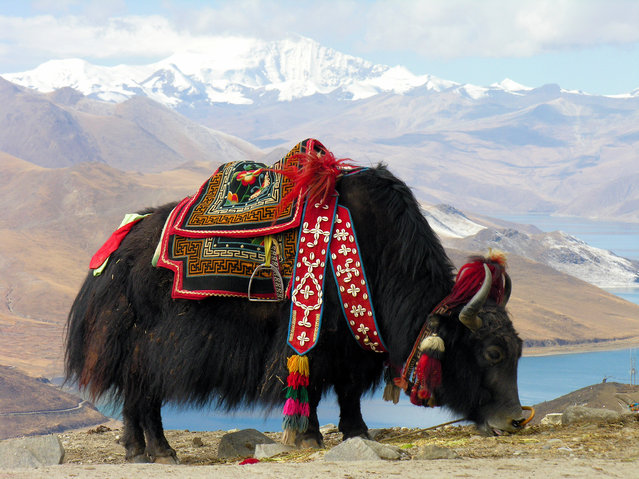
Yak near Yamdrok lake, Tibet. It is a long-haired bovinae found throughout the Himalayan region of south Central Asia, the Tibetan Plateau and as far north as Mongolia and Russia. The Tibetan economy is dominated by subsistence agriculture. Due to limited arable land, the primary occupation of the Tibetan Plateau is raising livestock, such as sheep, cattle, goats, camels, yaks, dzo, and horses. The Tibetan yak is an integral part of Tibetan life. (Photo by Dennis Jarvis)

Yak near Yamdrok lake, Tibet. It is a long-haired bovinae found throughout the Himalayan region of south Central Asia, the Tibetan Plateau and as far north as Mongolia and Russia. The Tibetan economy is dominated by subsistence agriculture. Due to limited arable land, the primary occupation of the Tibetan Plateau is raising livestock, such as sheep, cattle, goats, camels, yaks, dzo, and horses. The Tibetan yak is an integral part of Tibetan life. (Photo by Dennis Jarvis)
Details
10 Jun 2015 10:48:00