Loading...
Done
Salar de Uyuni

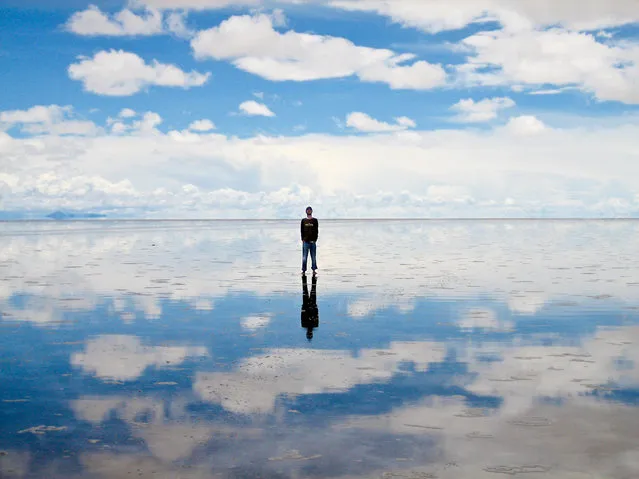
Salar de Uyuni (or Salar de Tunupa) is the world's largest salt flat at 10,582 square kilometers (4,086 sq mi). It is located in the Potosí and Oruro departments in southwest Bolivia, near the crest of the Andes, and is elevated 3,656 meters (11,995 ft) above mean sea level. The Salar was formed as a result of transformations between several prehistoric lakes. It is covered by a few meters of salt crust, which has an extraordinary flatness with the average altitude variations within one meter over the entire area of the Salar.
Details
04 Aug 2012 08:42:00
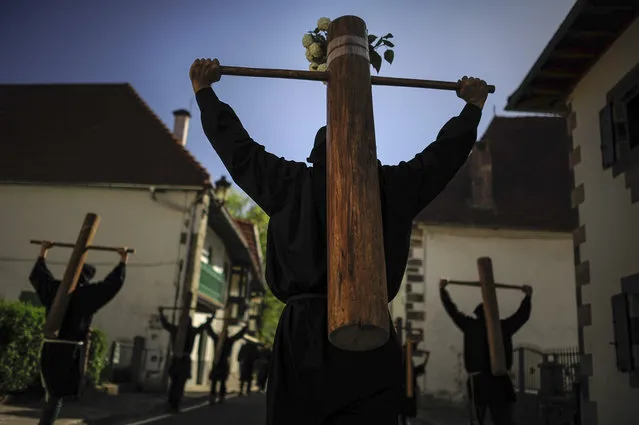
Masked penitents holds their crosses during spring “Romeria Cruceros de Arce”, in Roncesvalles, northern Spain, Sunday, May 10, 2015. (Photo by Alvaro Barrientos/AP Photo)

Masked penitents holds their crosses during spring “Romeria Cruceros de Arce”, in Roncesvalles, northern Spain, Sunday, May 10, 2015. Every year on the second Sunday in spring, people with crosses march from their small Pyrenees towns to Roncesvalles Church in tribute of the Virgin. (Photo by Alvaro Barrientos/AP Photo)
Details
12 May 2015 12:50:00
A Rafale fighter jet flies over France's Charles de Gaulle aircraft carrier as it makes its way in the Gulf, January 28, 2016. (Photo by Philippe Wojazer/Reuters)

A Rafale fighter jet flies over France's Charles de Gaulle aircraft carrier as it makes its way in the Gulf, January 28, 2016. (Photo by Philippe Wojazer/Reuters)
Details
29 Jan 2016 12:32:00
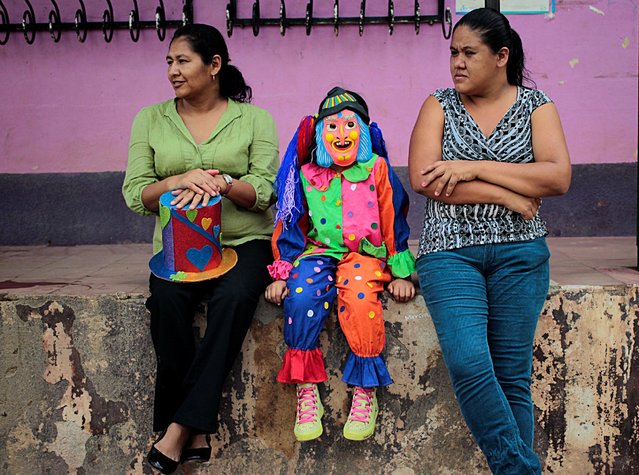
A child dressed as a clown takes part in the celebration of the Virgen de los Desamparados, or Our Lady of the Abandoned, at Diria town, Nicaragua May 14, 2016. (Photo by Oswaldo Rivas/Reuters)

A child dressed as a clown takes part in the celebration of the Virgen de los Desamparados, or Our Lady of the Abandoned, at Diria town, Nicaragua May 14, 2016. (Photo by Oswaldo Rivas/Reuters)
Details
16 May 2016 10:57:00
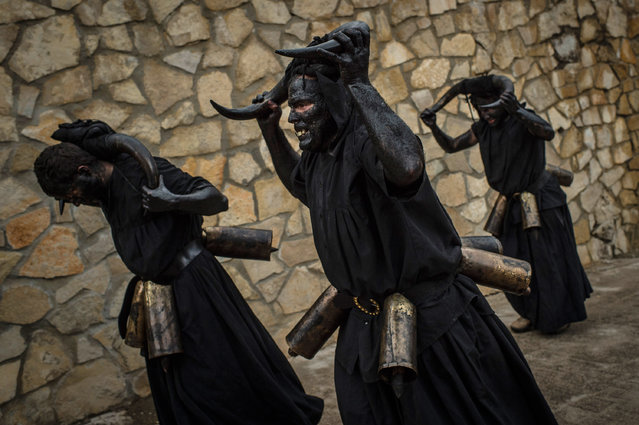
People with his face covered in oil and soot and carrying bull horns representing a devil join a carnival festival on February 14, 2015 in Luzon, Spain. (Photo by David Ramos/Getty Images)

People with his face covered in oil and soot and carrying bull horns representing a devil join a carnival festival on February 14, 2015 in Luzon, Spain. (Photo by David Ramos/Getty Images)
Details
15 Feb 2015 15:09:00
Revellers participate in a parade on the street during a carnival in the village of Vevcani, south of Skopje, Macedonia January 13, 2016. Vevcani village marks the annual Orthodox St. Vasilij Day with a carnival that features a 1,400-year-old celebration with pagan roots. The highlights of the carnival include a political satire where masked villagers act out current events. (Photo by Ognen Teofilovski/Reuters)

Revellers participate in a parade on the street during a carnival in the village of Vevcani, south of Skopje, Macedonia January 13, 2016. Vevcani village marks the annual Orthodox St. Vasilij Day with a carnival that features a 1,400-year-old celebration with pagan roots. The highlights of the carnival include a political satire where masked villagers act out current events. (Photo by Ognen Teofilovski/Reuters)
Details
15 Jan 2016 08:05:00
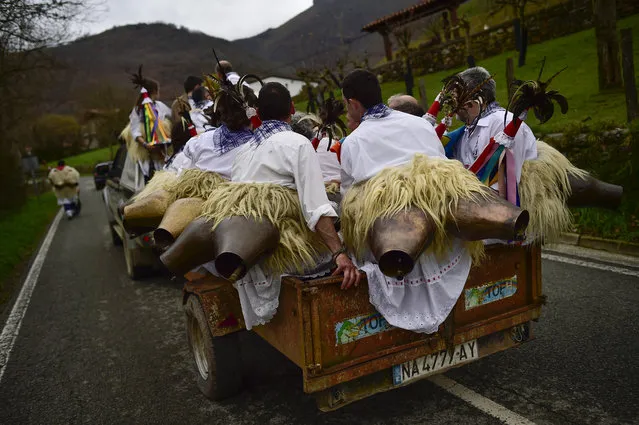
Joaldunaks return in a trailer to their town at the end of Carnival between of the Pyrenees villages of Ituren and Zubieta, northern Spain, Monday, February 1, 2016. In one of the most ancient carnivals in Europe, dating from before the Roman empire, companies of Joaldunak (cowbells) made up of residents of two towns, Ituren and Zubieta, parade the streets costumed in sandals, lace petticoats, sheepskins around the waist and shoulders, coloured neckerchiefs, conical caps with ribbons and a hyssop of horsehair in their right hands and cowbells hung across their lower back. (Photo by Alvaro Barrientos/AP Photo)

Joaldunaks return in a trailer to their town at the end of Carnival between of the Pyrenees villages of Ituren and Zubieta, northern Spain, Monday, February 1, 2016. In one of the most ancient carnivals in Europe, dating from before the Roman empire, companies of Joaldunak (cowbells) made up of residents of two towns, Ituren and Zubieta, parade the streets costumed in sandals, lace petticoats, sheepskins around the waist and shoulders, coloured neckerchiefs, conical caps with ribbons and a hyssop of horsehair in their right hands and cowbells hung across their lower back. (Photo by Alvaro Barrientos/AP Photo)
Details
02 Feb 2016 13:07:00
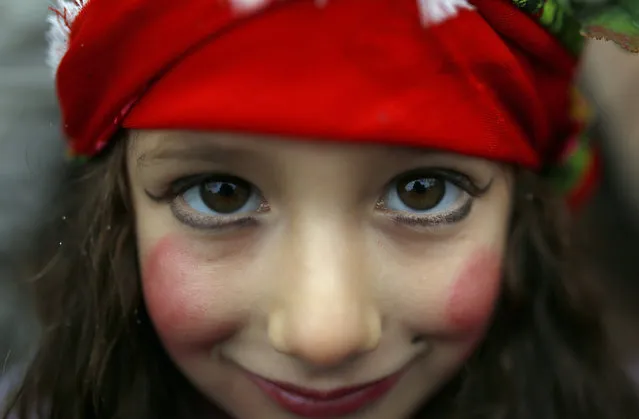
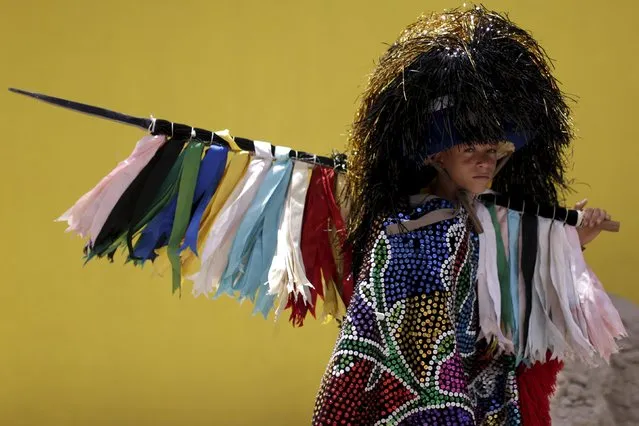
A reveller is photographed during a traditional Maracatu carnival in Olinda, Brazil February 8, 2016. (Photo by Ueslei Marcelino/Reuters)

A reveller is photographed during a traditional Maracatu carnival in Olinda, Brazil February 8, 2016. (Photo by Ueslei Marcelino/Reuters)
Details
10 Feb 2016 11:53:00