Loading...
Done
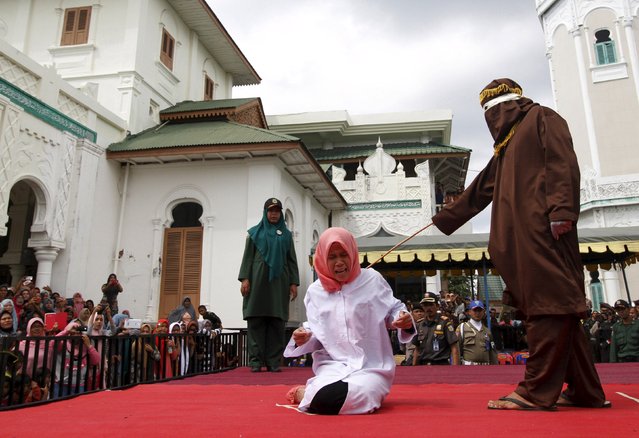
Nur Elita, an Acehnese woman, screams during caning as part of her sentence in the courtyard of Baiturrahman mosque in Banda Aceh, Indonesia's Aceh province December 28, 2015. Nur Elita  received five strokes of the cane for having pre-marital s*x with her boyfriend, according to local media. Aceh is the only province in Indonesia, the world's most populous Muslim country, where Islamic law is implemented, according to local media. (Photo by Junaidi Hanafiah/Reuters)

Nur Elita, an Acehnese woman, screams during caning as part of her sentence in the courtyard of Baiturrahman mosque in Banda Aceh, Indonesia's Aceh province December 28, 2015. Nur Elita received five strokes of the cane for having pre-marital s*x with her boyfriend, according to local media. Aceh is the only province in Indonesia, the world's most populous Muslim country, where Islamic law is implemented, according to local media. (Photo by Junaidi Hanafiah/Reuters)
Details
29 Dec 2015 13:27:00
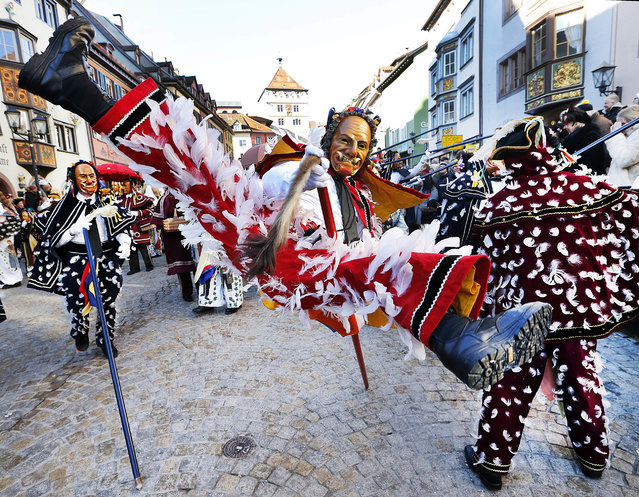
A “Federahannes”, a jester figure from Rottweil, participates in the “Narrensprung” (jester jump) parade in Rottweil, southern Germany, Monday, February 27, 2016. About 4000 jesters paraded through the city among thousands of spectators. The Rottweil Narrensprung is the highlight of the Swabian-Alemannic Fastnacht and one of the traditional pre-Lenten carnival parades in southwestern Germany. (Photo by Michael Probst/AP Photo)

A “Federahannes”, a jester figure from Rottweil, participates in the “Narrensprung” (jester jump) parade in Rottweil, southern Germany, Monday, February 27, 2016. About 4000 jesters paraded through the city among thousands of spectators. The Rottweil Narrensprung is the highlight of the Swabian-Alemannic Fastnacht and one of the traditional pre-Lenten carnival parades in southwestern Germany. (Photo by Michael Probst/AP Photo)
Details
04 Mar 2017 00:03:00
A woman spends her time outdoors to observe the ancient festival of Sizdeh Bedar, an annual public picnic day on the 13th day of the Iranian new year, at the Tochal mountainous area northern Tehran, Iran, Sunday, April, 2, 2017. Sizdeh Bedar, which comes from the Farsi words for “thirteen” and “day out”, is a legacy from Iran's pre-Islamic past that hard-liners in the Islamic Republic never managed to erase from calendars. (Photo by Ebrahim Noroozi/AP Photo)

A woman spends her time outdoors to observe the ancient festival of Sizdeh Bedar, an annual public picnic day on the 13th day of the Iranian new year, at the Tochal mountainous area northern Tehran, Iran, Sunday, April, 2, 2017. Sizdeh Bedar, which comes from the Farsi words for “thirteen” and “day out”, is a legacy from Iran's pre-Islamic past that hard-liners in the Islamic Republic never managed to erase from calendars. (Photo by Ebrahim Noroozi/AP Photo)
Details
21 Apr 2017 07:38:00
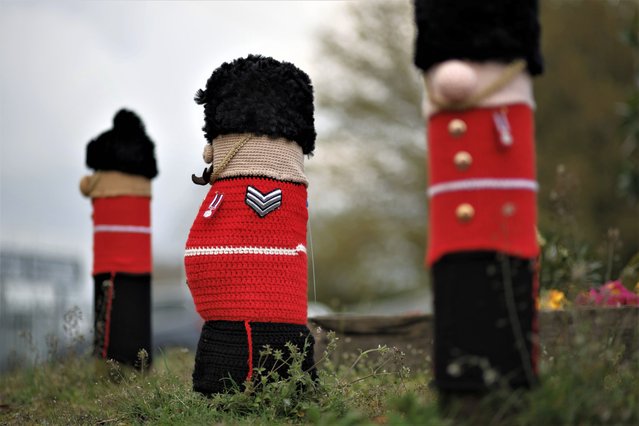
A view of knitted Grenadier Guards figures made by members of the 'Hurst Hookers' knitting group after their fitting to posts during a pre-coronation 'yarn bombing' in the village of Hurst, near Reading, England, Friday, April 21, 2023. Heather Howarth and her friends in the village of Hurst, a stone’s throw from Reading, west of London, have fashioned a woolly coronation procession to rival the pomp and circumstance that will take place when Charles is crowned on May 6 at Westminster Abbey. (Photo by David Cliff/AP Photo)

A view of knitted Grenadier Guards figures made by members of the 'Hurst Hookers' knitting group after their fitting to posts during a pre-coronation 'yarn bombing' in the village of Hurst, near Reading, England, Friday, April 21, 2023. Heather Howarth and her friends in the village of Hurst, a stone’s throw from Reading, west of London, have fashioned a woolly coronation procession to rival the pomp and circumstance that will take place when Charles is crowned on May 6 at Westminster Abbey. (Photo by David Cliff/AP Photo)
Details
25 Jul 2024 04:15:00
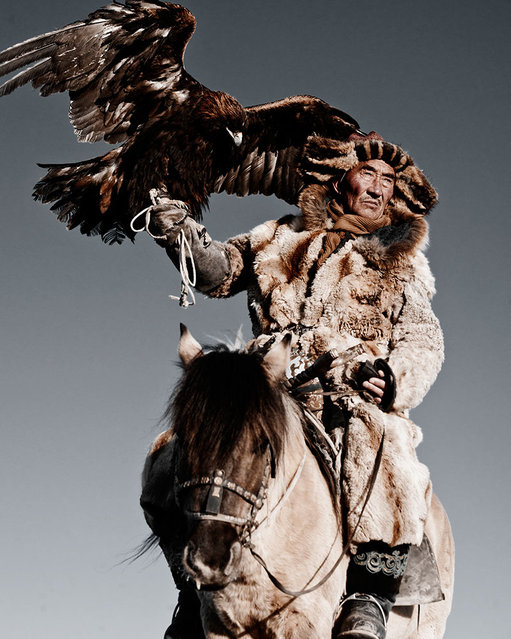
Fine Horses And Fierce Eagles Are The wings Of The Kazakh

The Kazakhs are the descendants of Turkic, Mongolic and Indo-Iranian tribes and Huns that populated the territory between Siberia and the Black Sea. They are a semi-nomadic people and have roamed the mountains and valleys of western Mongolia with their herds since the 19th century. The ancient art of eagle hunting is one of many traditions and skills that the Kazakhs have, in recent decades, been able to hold on to. They rely on their clan and herds, believing in pre-Islamic cults of the sky, the ancestors, fire and the supernatural forces of good and evil spirits.
Details
20 Feb 2014 12:12:00
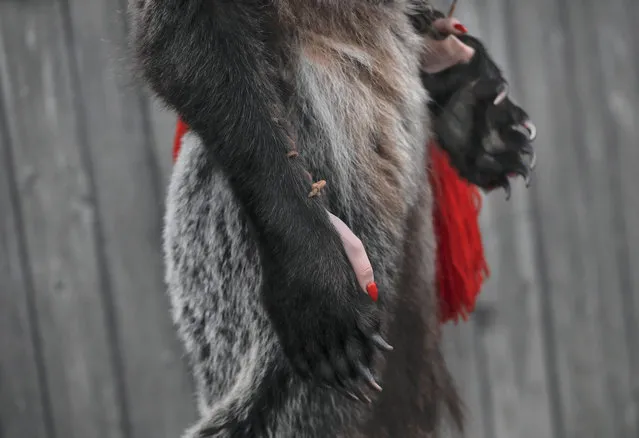
In this Saturday, December 30, 2017, picture a girl wearing a bear fur costume takes part in an annual bear parade in Comanesti, Romania. (Photo by Vadim Ghirda/AP Photo)

In this Saturday, December 30, 2017, picture a girl wearing a bear fur costume takes part in an annual bear parade in Comanesti, Romania. It's a tradition that originated in pre-Christian times, when dancers wearing colored costumes or animal furs went from house to house in villages, singing and dancing to ward off evil. (Photo by Vadim Ghirda/AP Photo)
Details
08 Jan 2018 07:05:00


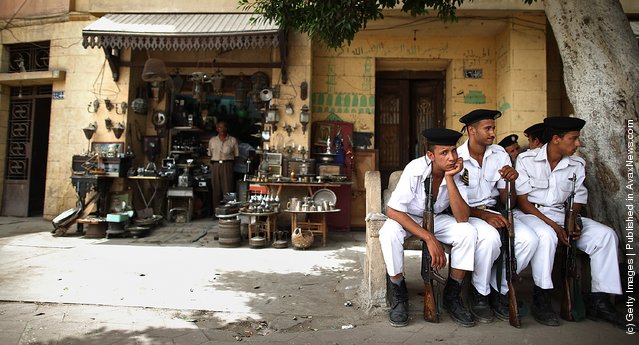
Tourist Police sit in the shade on a road leading to the Coptic Cairo area on May 27, 2011 in Cairo, Egypt. Protests in January and February brought an end to 30 years of autocratic rule by President Hosni Mubarak who will now face trial. Food prices have doubled and youth unemployment stands at 30%. Tourism is yet to return to pre-uprising levels. (Photo by Peter Macdiarmid/Getty Images)
Details
29 May 2011 11:42:00
A man dressed as a  “Trapajon”, representing entities of nature, poses for a picture after taking part in the Vijanera Festival in Silio, northern Spain, Sunday, Jan. 6, 2013. The Vijanera masquerade, of pre-Roman origin, is the first carnival of the year in Europe symbolizing the triumph of good over evil and involving the participation of crowds of residents wearing different masks, animal skins and brightly colored clothing with its own complex function and symbolism and becoming the living example of the survival of archaic cults to nature. (Photo by Daniel Ochoa de Olza/AP Photo)

A man dressed as a “Trapajon”, representing entities of nature, poses for a picture after taking part in the Vijanera Festival in Silio, northern Spain, Sunday, Jan. 6, 2013. The Vijanera masquerade, of pre-Roman origin, is the first carnival of the year in Europe symbolizing the triumph of good over evil and involving the participation of crowds of residents wearing different masks, animal skins and brightly colored clothing with its own complex function and symbolism and becoming the living example of the survival of archaic cults to nature. (Photo by Daniel Ochoa de Olza/AP Photo)
Details
19 Jan 2013 13:01:00