Loading...
Done
Bloodwood Tree

The bloodwood tree (Pterocarpus angolensis) is a deciduous tree with a high canopy, reaching about 15m in height and has dark bark. The red sap is used traditionally as a dye and in some areas mixed with animal fat to make a cosmetic for faces and bodies. It is also believed to have magical properties for the curing of problems concerning blood, apparently because of its close resemblance to blood. The name bloodwood for these trees stems from the dark red to brown sap that accumulates on wounds on the trunks.
Details
14 May 2014 12:44:00
 Flying Squirrel

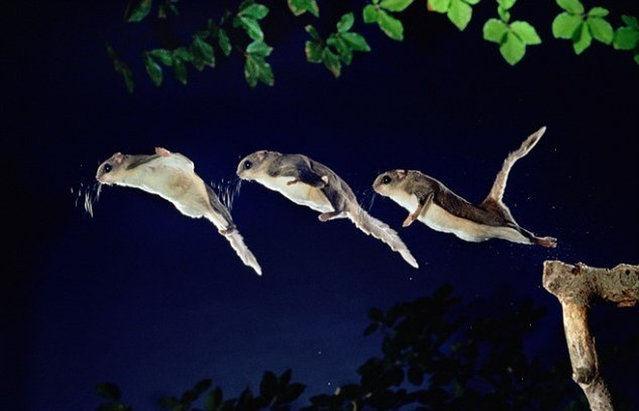
Flying squirrels are not capable of powered flight like birds or bats; instead, they glide between trees. They are capable of obtaining lift within the course of these flights, with flights recorded to 90 meters (295 ft). The direction and speed of the animal in midair is varied by changing the positions of its two arms and legs, largely controlled by small cartilaginous wrist bones. This changes the tautness of the patagium, a furry parachute-like membrane that stretches from wrist to ankle. It has a fluffy tail that stabilizes in flight. The tail acts as an adjunct airfoil, working as an air brake before landing on a tree trunk.
Details
07 Aug 2012 16:29:00
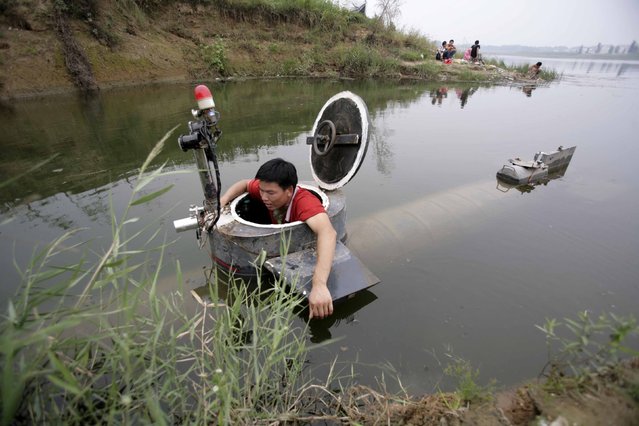
Tao Xiangli gets out of his homemade submarine after operating it in a lake on the outskirts of Beijing September 3, 2009. Amateur inventor Tao, 34,  made a fully functional submarine, which has a periscope, depth control tanks, electric motors, manometer, and two propellers, from old oil barrels and tools which he bought at a second-hand market. He took 2 years to invent and test the submarine which costs 30,000 yuan ($4,385). (Photo by Christina Hu/Reuters)

Tao Xiangli gets out of his homemade submarine after operating it in a lake on the outskirts of Beijing September 3, 2009. Amateur inventor Tao, 34, made a fully functional submarine, which has a periscope, depth control tanks, electric motors, manometer, and two propellers, from old oil barrels and tools which he bought at a second-hand market. He took 2 years to invent and test the submarine which costs 30,000 yuan ($4,385). (Photo by Christina Hu/Reuters)
Details
05 May 2013 12:06:00
A general view shows the Krasnoyarsk hydro-electric power station on the Yenisei River near the Siberian city of Krasnoyarsk, Russia, January 13, 2016. The power plant, owned by EuroSibEnergo company, part of En+ Group, with a generating capacity of 6,000 megawatt (MW), has a ferro-concrete dam 124-metres high and 1065-metres long and is the second largest Russian hydroelectric power station. About 85% of the energy generated is intended for the Rusal Krasnoyarsk aluminium smelter, according to representatives of the power station. (Photo by Ilya Naymushin/Reuters)

A general view shows the Krasnoyarsk hydro-electric power station on the Yenisei River near the Siberian city of Krasnoyarsk, Russia, January 13, 2016. The power plant, owned by EuroSibEnergo company, part of En+ Group, with a generating capacity of 6,000 megawatt (MW), has a ferro-concrete dam 124-metres high and 1065-metres long and is the second largest Russian hydroelectric power station. About 85% of the energy generated is intended for the Rusal Krasnoyarsk aluminium smelter, according to representatives of the power station. (Photo by Ilya Naymushin/Reuters)
Details
16 Jan 2016 08:03:00
Attendees look at Volkswagen's BUDD-e, a long distance electric vehicle,  displayed during a press event at CES 2016 at The Chelsea at The Cosmopolitan of Las Vegas on January 5, 2016 in Las Vegas, Nevada.  (Photo by David Becker/Getty Images)

Attendees look at Volkswagen's BUDD-e, a long distance electric vehicle, displayed during a press event at CES 2016 at The Chelsea at The Cosmopolitan of Las Vegas on January 5, 2016 in Las Vegas, Nevada. CES, the world's largest annual consumer technology trade show, runs from January 6-9 and is expected to feature 3,600 exhibitors showing off their latest products and services to more than 150,000 attendees. (Photo by David Becker/Getty Images)
Details
08 Jan 2016 08:01:00
Sabrina Crespo da Silva removes electrical tape from a client at her Sabrina Bronze rooftop salon, where she offers the service of taping on bikini tops which create crisp tan lines, in the Turano favela of Rio de Janeiro, Brazil, Thursday, January 27, 2022. Even though beaches reopened amid the COVID-19 pandemic, some clients using Sabrina's rooftop service say they are still anxious about returning to the crowded seashore and potentially catching the virus. (Photo by Silvia Izquierdo/AP Photo)

Sabrina Crespo da Silva removes electrical tape from a client at her Sabrina Bronze rooftop salon, where she offers the service of taping on bikini tops which create crisp tan lines, in the Turano favela of Rio de Janeiro, Brazil, Thursday, January 27, 2022. Even though beaches reopened amid the COVID-19 pandemic, some clients using Sabrina's rooftop service say they are still anxious about returning to the crowded seashore and potentially catching the virus. (Photo by Silvia Izquierdo/AP Photo)
Details
29 Jan 2022 07:06:00
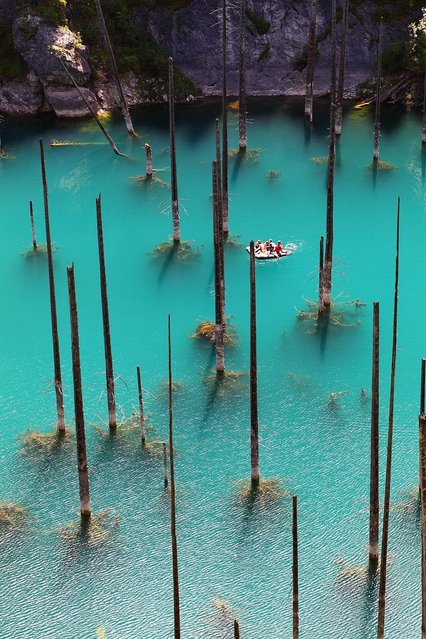
Kaindy Lake in Kazakhstan

Kaindy Lake (Kazakh: Қайыңды көлі, Qayındı köli) is a 400 metre long lake in Kazakhstan that reaches depths near 30 metres in some areas. It is located 129 km ESE of the city of Almaty and is 2,000 metres above sea level. It was created by the result of an enormous limestone landslide, triggered by the 1911 Kebin earthquake. The track to Kaindy lake has many scenic views to the Saty Gorge, the Chilik River valley and the Kaindy Gorge. Dried-out trunks of submerged Picea schrenkiana trees rise above the surface.
Details
06 Aug 2012 09:58:00
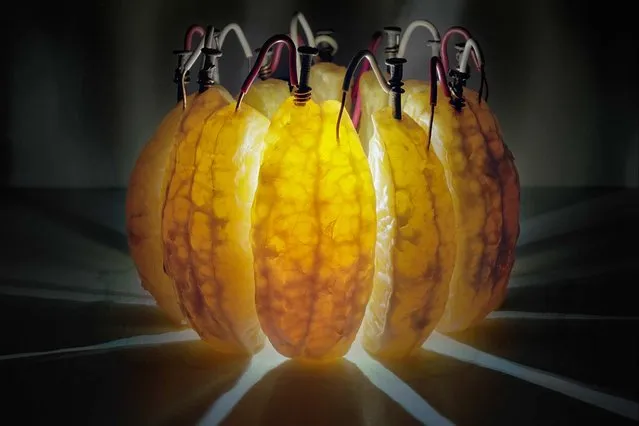
Wedges of an orange generate enough current and electrical juice – 3.5 volts – to power an LED. The fruit’s citric acid helps electrons flow from galvanized nails to copper wire in this 14-hour exposure. This image was published in September’s Visions of Earth, a trio of photos that appear in each issue of National Geographic. (Photo by Caleb Charland/National Geographic)

Wedges of an orange generate enough current and electrical juice – 3.5 volts – to power an LED. The fruit’s citric acid helps electrons flow from galvanized nails to copper wire in this 14-hour exposure. This image was published in September’s Visions of Earth, a trio of photos that appear in each issue of National Geographic. (Photo by Caleb Charland/National Geographic)
Details
06 Jan 2014 12:09:00