Loading...
Done
Light Painting By Trevor Williams

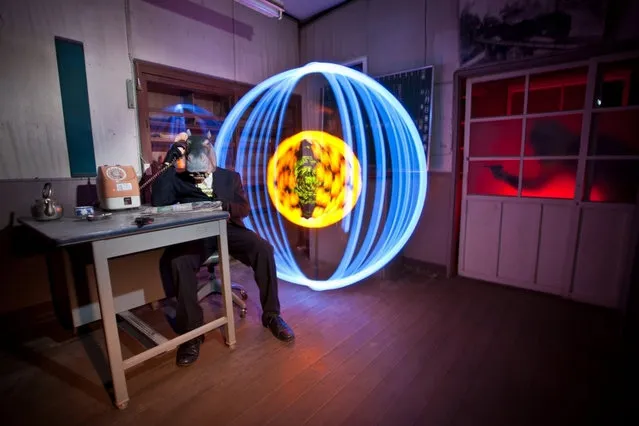
Light painting photographer Trevor Williams, also known as TDUB303, is a present day light painting pioneer. He creates some of his light painting imagery alone and also works with the group Fiz-iks, which he founded. Trevor is from Canada, he has lived in Japan since 2002 which is where he creates the majority of his work. His light painting images are produced with special attention to location, Trevor says, ““If you want to take an epic picture you need to go to an epic location.”
Details
16 Sep 2013 10:37:00
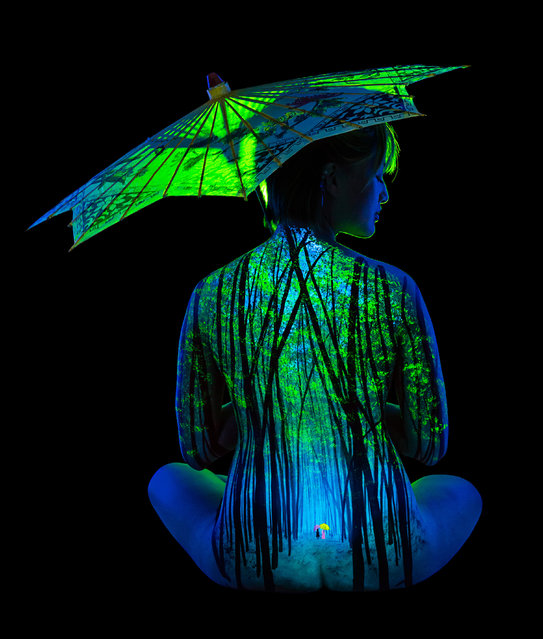
“Bamboo Mist”. (Photo by John Poppleton/Caters News)

A bodypainter uses UV paint to create electrifying masterpieces of stunning landscapes on models. John Poppletons vibrant Bodyscapes feature bright savannahs, lightning storms and vivid galaxies leaping from the bodies of his subjects. The artist, who lives in Wellsville in Utah, USA, uses a black light on his paintings to make them look as close to real life as possible. He predominantly uses female models and often paints across their backs to give him the largest surface area to work with. Here: “Bamboo Mist”. (Photo by John Poppleton/Caters News)
Details
17 Jul 2015 13:56:00
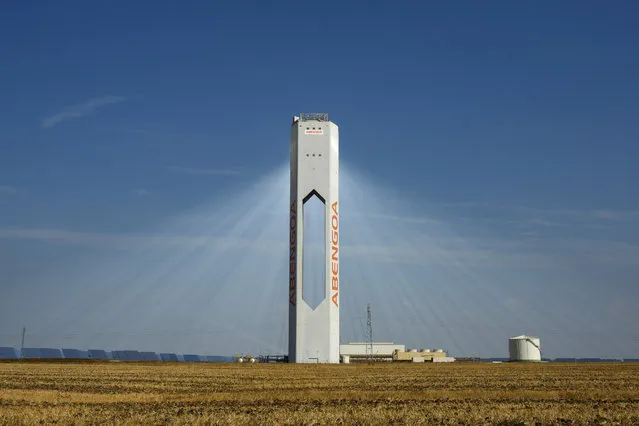
A tower belonging to the Abengoa solar plant at the Solucar solar park is seen in Sanlucar la Mayor, Spain on October 1, 2018. (Photo by Marcelo del Pozo/Reuters)

A tower belonging to the Abengoa solar plant at the Solucar solar park is seen in Sanlucar la Mayor, Spain on October 1, 2018. (Photo by Marcelo del Pozo/Reuters)
Details
04 Oct 2018 00:01:00
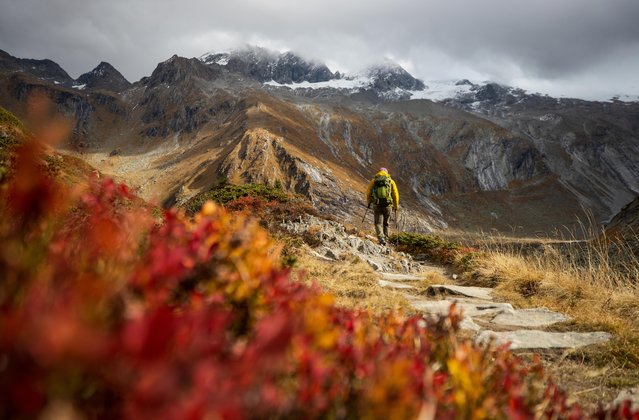
A hiker walks in the Zillertal Alps during an autumn day near the village of Ginzling, Austria, October 15, 2019. (Photo by Lisi Niesner/Reuters)

A hiker walks in the Zillertal Alps during an autumn day near the village of Ginzling, Austria, October 15, 2019. (Photo by Lisi Niesner/Reuters)
Details
11 Dec 2019 00:01:00
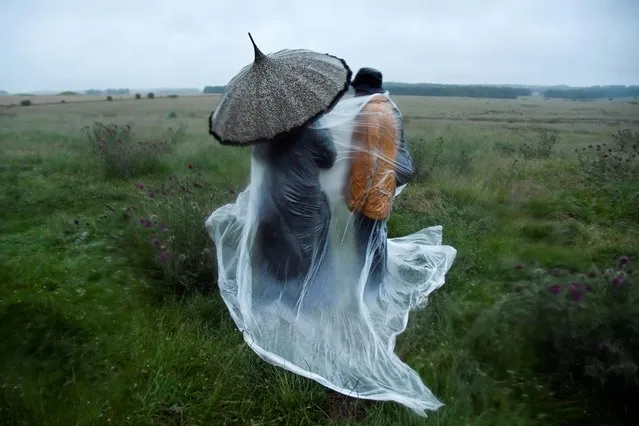
Revellers shield themselves as they celebrate in the rain near Stonehenge stone circle, despite official Summer Solstice celebrations being cancelled due to the spread of the coronavirus disease (COVID-19), near Amesbury, Britain, June 21, 2020. (Photo by Toby Melville/Reuters)

Revellers shield themselves as they celebrate in the rain near Stonehenge stone circle, despite official Summer Solstice celebrations being cancelled due to the spread of the coronavirus disease (COVID-19), near Amesbury, Britain, June 21, 2020. (Photo by Toby Melville/Reuters)
Details
19 Jul 2020 00:05:00
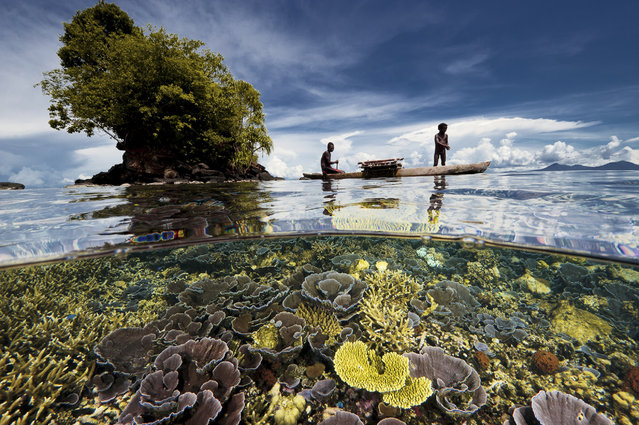
From the “Paradise Revisited” story in the November 2013 issue of National Geographic magazine, this image is a beautiful vision of father and son fishermen as they move through the multicolored coral gardens of Kembe Bay, Papua New Guinea, in a traditional outrigger canoe. (Photo by David Doubilet/National Geographic Creative)

From the “Paradise Revisited” story in the November 2013 issue of National Geographic magazine, this image is a beautiful vision of father and son fishermen as they move through the multicolored coral gardens of Kembe Bay, Papua New Guinea, in a traditional outrigger canoe. (Photo by David Doubilet/National Geographic Creative)
Details
29 Apr 2017 07:28:00
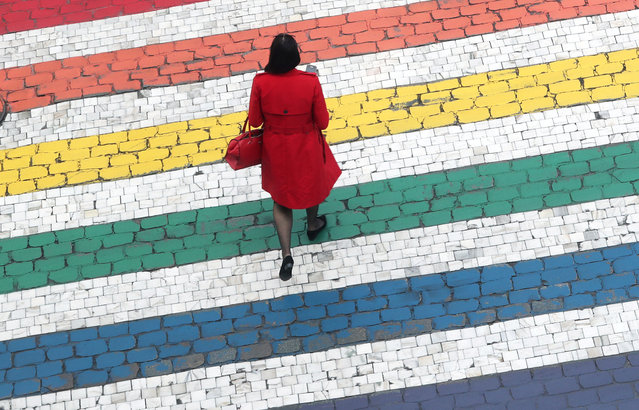
A woman crosses a road outside the EU Parliament ahead of the EU elections in Brussels, Belgium, May 22, 2019. (Photo by Yves Herman/Reuters)

A woman crosses a road outside the EU Parliament ahead of the EU elections in Brussels, Belgium, May 22, 2019. (Photo by Yves Herman/Reuters)
Details
01 Jun 2019 00:01:00
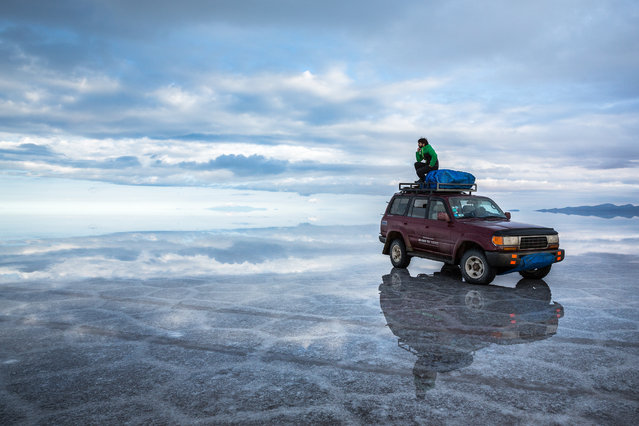
At 10,582 square kilometres, the Bolivian salt flats – otherwise known as Salar de Uyuni – are the largest on the planet and contain between 50 and 70% of the world’s lithium reserves. After exploring Chile and Argentina, photographer Joel Santos decided to travel to Bolivia in January 2017 to check the salt flats off his bucket list. With an electrical storm rolling in, Joel and his two travelling companions were the only souls left on the vast flats and captured the eerie flats without a person in sight. (Photo by Joel Santos/Barcroft Images)

At 10,582 square kilometres, the Bolivian salt flats – otherwise known as Salar de Uyuni – are the largest on the planet and contain between 50 and 70% of the world’s lithium reserves. After exploring Chile and Argentina, photographer Joel Santos decided to travel to Bolivia in January 2017 to check the salt flats off his bucket list. With an electrical storm rolling in, Joel and his two travelling companions were the only souls left on the vast flats and captured the eerie flats without a person in sight. (Photo by Joel Santos/Barcroft Images)
Details
12 Aug 2019 00:03:00