Loading...
Done
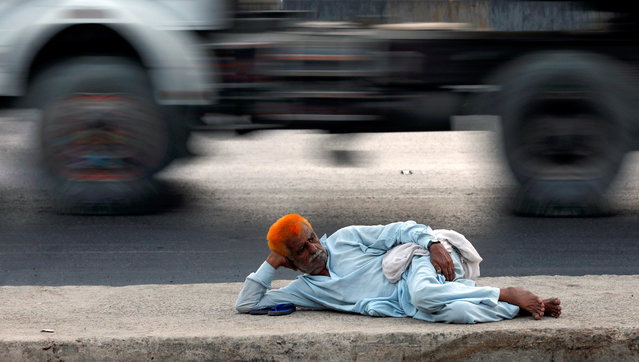
A man with henna-dyed hair rests on a road near the port area in Karachi, Pakistan on July 3, 2019. (Photo by Akhtar Soomro/Reuters)

A man with henna-dyed hair rests on a road near the port area in Karachi, Pakistan on July 3, 2019. (Photo by Akhtar Soomro/Reuters)
Details
13 Jul 2019 00:01:00
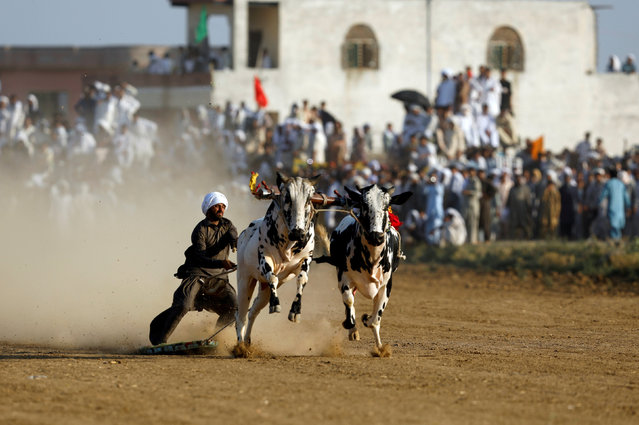
A bull savar (jockey) guides his bulls as he competes in a bull race on the outskirts of Islamabad, Pakistan July 1, 2018. (Photo by Faisal Mahmood/Reuters)

A bull savar (jockey) guides his bulls as he competes in a bull race on the outskirts of Islamabad, Pakistan July 1, 2018. (Photo by Faisal Mahmood/Reuters)
Details
24 Jul 2018 00:03:00
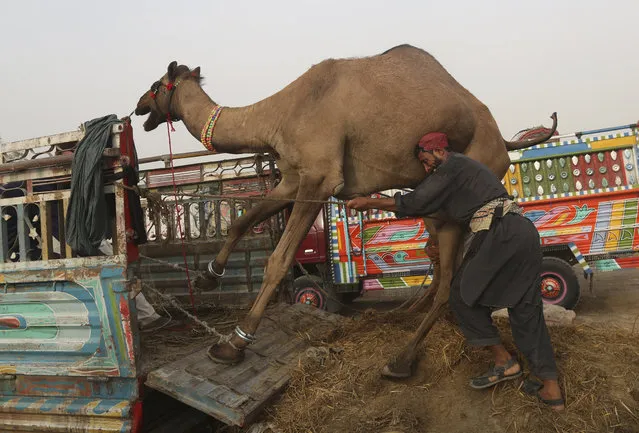
A Pakistani owner tries to load camel on a truck at a cattle market set up for the upcoming Muslim festival Eid al-Adha in Karachi, Pakistan, Friday, August 17, 2018. Eid al-Adha, or Feast of Sacrifice, most important Islamic holiday marks the willingness of the Prophet Ibrahim (Abraham to Christians and Jews) to sacrifice his son. (Photo by Shakil Adil/AP Photo)

A Pakistani owner tries to load camel on a truck at a cattle market set up for the upcoming Muslim festival Eid al-Adha in Karachi, Pakistan, Friday, August 17, 2018. Eid al-Adha, or Feast of Sacrifice, most important Islamic holiday marks the willingness of the Prophet Ibrahim (Abraham to Christians and Jews) to sacrifice his son. (Photo by Shakil Adil/AP Photo)
Details
20 Sep 2018 00:01:00
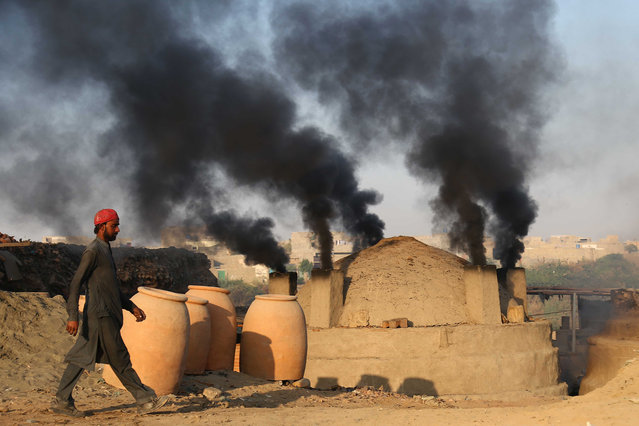
A man stands near smoke billowing from a brick kiln in Karachi, Pakistan, 14 December 2018. According to the UN report, carbon dioxide (CO2) emissions have increased for the first time in four years. The United Nations Conference COP24, held in Katowice, Poland, until 14 December 2018, searches for a common position in the fight against climate change. (Photo by Shahzaib Akber/EPA/EFE)

A man stands near smoke billowing from a brick kiln in Karachi, Pakistan, 14 December 2018. According to the UN report, carbon dioxide (CO2) emissions have increased for the first time in four years. The United Nations Conference COP24, held in Katowice, Poland, until 14 December 2018, searches for a common position in the fight against climate change. (Photo by Shahzaib Akber/EPA/EFE)
Details
29 Jan 2019 00:05:00
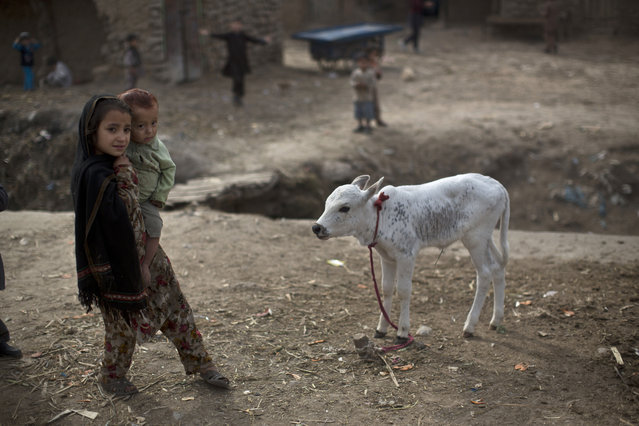
An Afghan refugee girl shows her younger brother a calf in a slum on the outskirts of Islamabad, Pakistan, Friday, February 6, 2015. (Photo by Muhammed Muheisen/AP Photo)

An Afghan refugee girl shows her younger brother a calf in a slum on the outskirts of Islamabad, Pakistan, Friday, February 6, 2015. (Photo by Muhammed Muheisen/AP Photo)
Details
12 Feb 2015 13:04:00
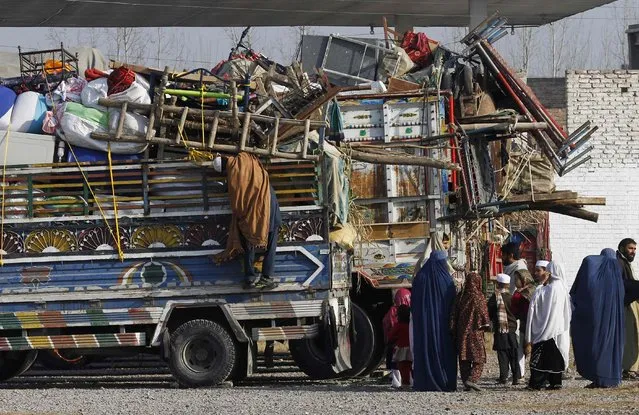
An Afghan refugee family stands by trucks loaded with their belongings as they wait to go back to Afghanistan with others, at the United Nations High Commissioner for Refugees (UNHCR) office on the outskirts of Peshawar February 13, 2015. (Photo by Fayaz Aziz/Reuters)

An Afghan refugee family stands by trucks loaded with their belongings as they wait to go back to Afghanistan with others, at the United Nations High Commissioner for Refugees (UNHCR) office on the outskirts of Peshawar February 13, 2015. Afghan immigrants ordered out of Pakistan in what officials say is a bid to root out militants are, some analysts say, scapegoats being used to distract attention from the authorities' failure to end violence. (Photo by Fayaz Aziz/Reuters)
Details
20 Feb 2015 12:27:00
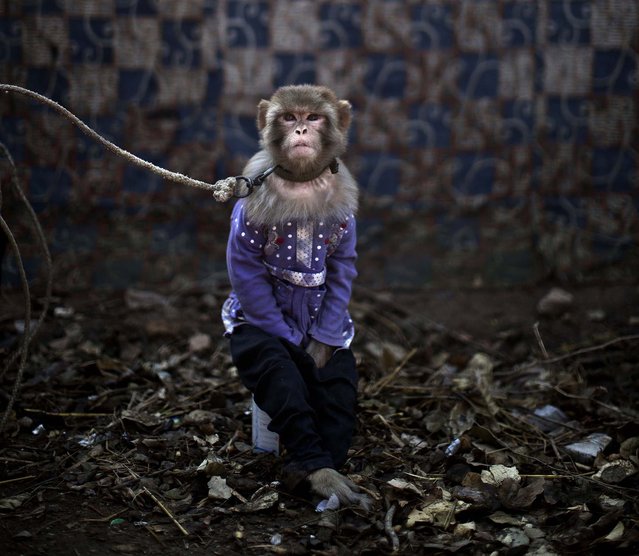
In this Tuesday, February 11, 2014, photo, a trained monkey, that makes a living for her Pakistani owner by performing to a crowd in public and private places, sits held by a leash, in Rawalpindi, Pakistan. For Pakistanis who raise and train the monkeys they are an important source of income in an impoverished country, and they form a strong bond with the animals. The monkeys are usually captured in the wild when they are babies and then trained. A trained monkey can fetch 20,000 to 30,000 rupees ($190 to $285). (Photo by Muhammed Muheisen/Associated Press)

In this Tuesday, February 11, 2014, photo, a trained monkey, that makes a living for her Pakistani owner by performing to a crowd in public and private places, sits held by a leash, in Rawalpindi, Pakistan. For Pakistanis who raise and train the monkeys they are an important source of income in an impoverished country, and they form a strong bond with the animals. The monkeys are usually captured in the wild when they are babies and then trained. A trained monkey can fetch 20,000 to 30,000 rupees ($190 to $285). (Photo by Muhammed Muheisen/Associated Press)
Details
23 Feb 2014 09:50:00
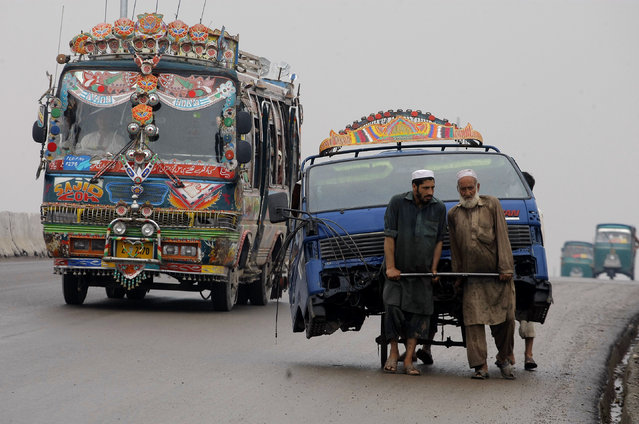
Pakistani laborers transport the front portion of a vehicle using a handcart at a road in Peshawar, Pakistan, Monday, August 3, 2015. (Photo by Mohammad Sajjad/AP Photo)

Pakistani laborers transport the front portion of a vehicle using a handcart at a road in Peshawar, Pakistan, Monday, August 3, 2015. (Photo by Mohammad Sajjad/AP Photo)
Details
04 Aug 2015 12:09:00