Loading...
Done
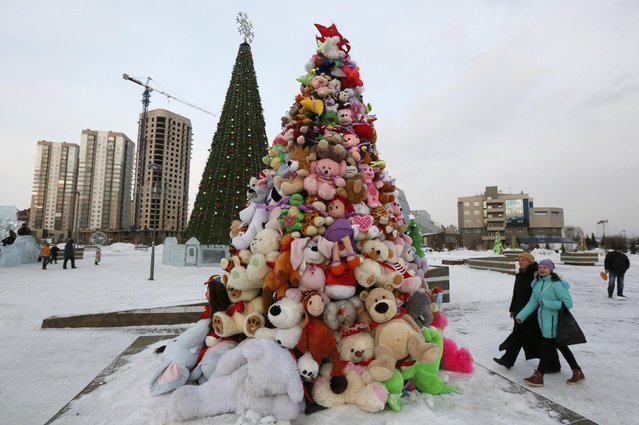
People walk past a New Year fir tree made of toys at a park in Krasnoyarsk, Siberia, Russia January 2, 2017. (Photo by Ilya Naymushin/Reuters)

People walk past a New Year fir tree made of toys at a park in Krasnoyarsk, Siberia, Russia January 2, 2017. (Photo by Ilya Naymushin/Reuters)
Details
03 Jan 2017 11:31:00
Beautiful World By Artem Rhads Cheboha (video)

Russian illustrator from South West of Siberia Artem Chebokha creates surreal digital paintings that have a peaceful yet grandiose feel to them.
Details
07 Nov 2016 02:58:00
Beautiful World By Artem Rhads Cheboha

Russian illustrator from South West of Siberia Rhads (Artem Chebokha) creates surreal digital paintings that have a peaceful yet grandiose feel to them.
Details
22 Jul 2014 11:29:00
An engineer (L) talks to a driver of a dump truck loaded with gold-bearing soil at the Vostochny opencast of the Olimpiada gold operation, owned by Polyus Gold International company, in Krasnoyarsk region, Eastern Siberia, Russia, June 30, 2015. (Photo by Ilya Naymushin/Reuters)

An engineer (L) talks to a driver of a dump truck loaded with gold-bearing soil at the Vostochny opencast of the Olimpiada gold operation, owned by Polyus Gold International company, in Krasnoyarsk region, Eastern Siberia, Russia, June 30, 2015. Polyus Gold International is the largest gold producer in Russia and one of the top 10 gold miners globally by ounces produced, according to the official web site of the company. Olimpiada is Polyus Gold's largest operation. (Photo by Ilya Naymushin/Reuters)
Details
04 Jul 2015 11:12:00


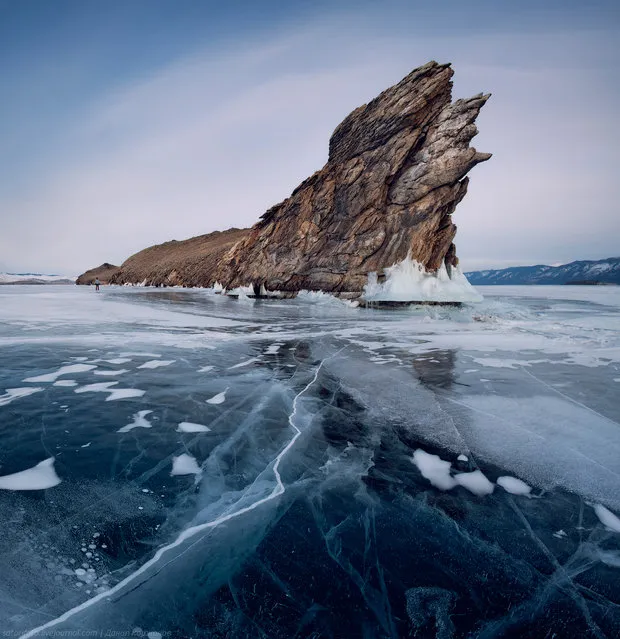
Lake Baikal is the world's oldest lake, at 25 million years (possibly older), and deepest, averaging 744.4 metres (2,442 ft).

Located in the south of the Russian region of Siberia, between Irkutsk Oblast to the northwest and the Buryat Republic to the southeast, it is the most voluminous freshwater lake in the world, containing roughly 20% of the world's unfrozen surface fresh water.
Details
08 May 2012 02:00:00
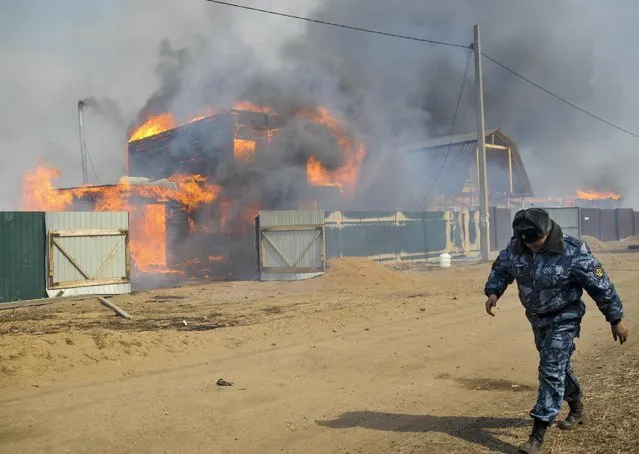
A police officer walks along a street of the burning village of Smolenka near Chita on Monday, April 13, 2015. Russian authorities say out-of-control agricultural fires have killed at least 15 people, injured hundreds more and destroyed or damaged more than 1,000 homes in Siberia. The fires were started by farmers burning the grass in their fields, but spread quickly because of strong winds. (Photo by Evgeny Yepanchintsev/AP Photo)

A police officer walks along a street of the burning village of Smolenka near Chita on Monday, April 13, 2015. Russian authorities say out-of-control agricultural fires have killed at least 15 people, injured hundreds more and destroyed or damaged more than 1,000 homes in Siberia. The fires were started by farmers burning the grass in their fields, but spread quickly because of strong winds. (Photo by Evgeny Yepanchintsev/AP Photo)
Details
14 Apr 2015 11:04:00
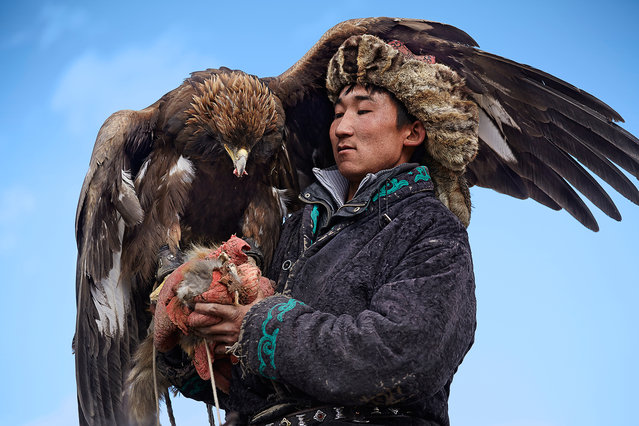
In one of the planet’s most desolate and harsh terrains, the Altai Mountains which run from Siberia in Russia down to Mongolia’s Gobi Desert, hunting with eagles is currently only practiced by a handful of Kyrgyz and Kazakhs. This form of falconry, the practice of hunting with the aid of birds of prey, can be traced back as far as 4,000 years in Central Asia. (Photo by Tariq Zaidi/The Washington Post)

In one of the planet’s most desolate and harsh terrains, the Altai Mountains which run from Siberia in Russia down to Mongolia’s Gobi Desert, hunting with eagles is currently only practiced by a handful of Kyrgyz and Kazakhs. This form of falconry, the practice of hunting with the aid of birds of prey, can be traced back as far as 4,000 years in Central Asia. Here: after a successful hunt, a proud hunter rewards his eagle by feeding it the lungs of the prey, which is considered the most highly prized part of the animal. (Photo by Tariq Zaidi/The Washington Post)
Details
22 Aug 2015 12:46:00
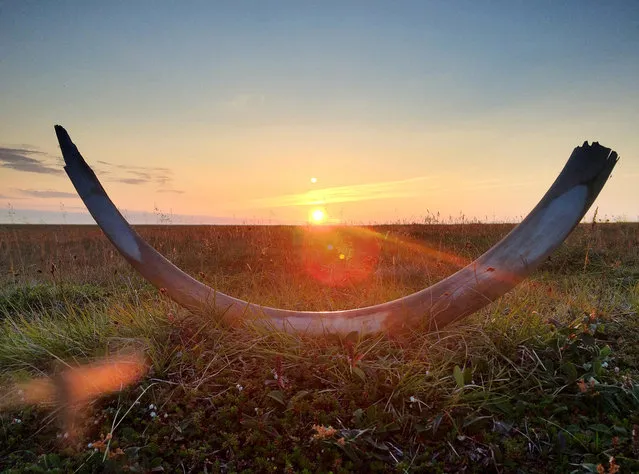
The tusk of a woolly mammoth that lived some 18,000 years ago, from which researchers sequenced the extinct mammal's entire genome, is seen in northeastern Siberia in this photo from 2015. (Photo by Love Dalen/Handout via Reuters)

The tusk of a woolly mammoth that lived some 18,000 years ago, from which researchers sequenced the extinct mammal's entire genome, is seen in northeastern Siberia in this photo from 2015. (Photo by Love Dalen/Handout via Reuters)
Details
09 Jun 2023 02:57:00