Loading...
Done
Residents (R to L) Luiza, Janubie, Leiticia and Lucas sit beneath an overpass near their houses in an impoverished area in the unpacified Complexo da Mare slum complex, one of the largest “favela” complexes in Rio de Janeiro. (Photo by Mario Tama/Getty Images)

Residents (R to L) Luiza, Janubie, Leiticia and Lucas sit beneath an overpass near their houses in an impoverished area in the unpacified Complexo da Mare slum complex, one of the largest “favela” complexes in Rio, on March 18, 2014 in Rio de Janeiro, Brazil. (Photo by Mario Tama/Getty Images)
Details
21 Mar 2014 06:07:00
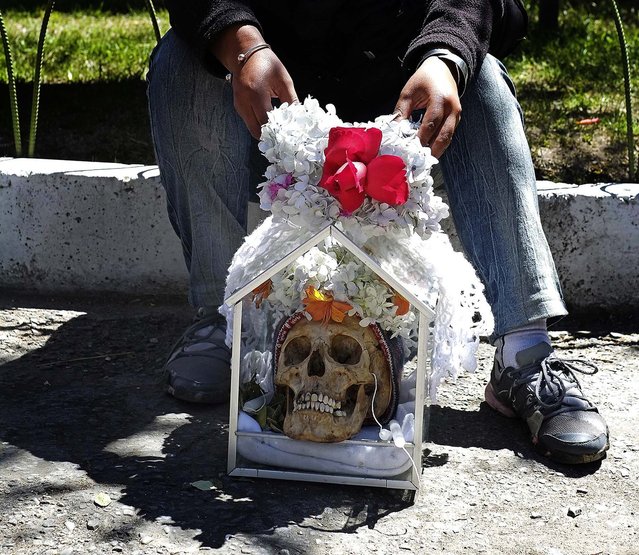
A woman holds a skull during a “Dia de los natitas” (Day of the Skull) ceremony at the Cementerio General of La Paz. (Photo by David Mercado/Reuters)

A woman holds a skull during a “Dia de los natitas” (Day of the Skull) ceremony at the Cementerio General of La Paz. (Photo by David Mercado/Reuters)
Details
10 Nov 2013 06:59:00
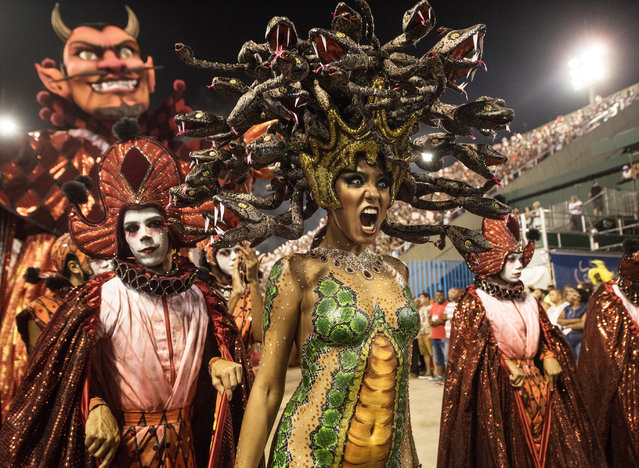
A performer dances during Salgueiro performance at the Rio de Janeiro Carnival at Sambodromo on February 26, 2017 in Rio de Janeiro, Brazil. (Photo by Raphael Dias/Getty Images)

A performer dances during Salgueiro performance at the Rio de Janeiro Carnival at Sambodromo on February 26, 2017 in Rio de Janeiro, Brazil. (Photo by Raphael Dias/Getty Images)
Details
01 Mar 2017 00:06:00
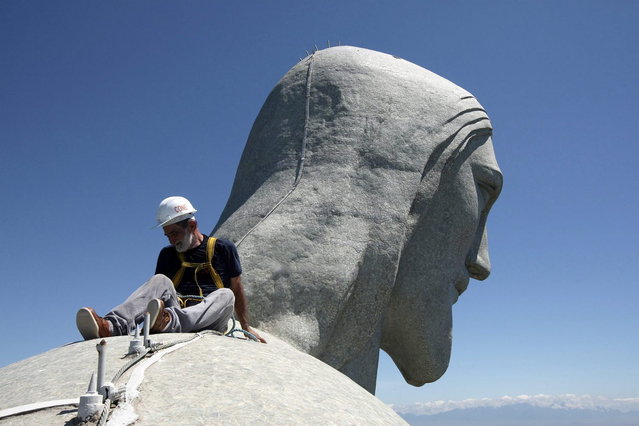
A worker inspects the Christ the Redeemer statue which was damaged during lightning storms in Rio de Janeiro January 21, 2014. (Photo by Severino Silva/Reuters/Agência o Dia)

A worker inspects the Christ the Redeemer statue which was damaged during lightning storms in Rio de Janeiro January 21, 2014. (Photo by Severino Silva/Reuters/Agência o Dia)
Details
22 Jan 2014 13:19:00
Spectators using virtual reality glasses at the “Los Ultimos Dias De Pompeia” Exhibition at Matadero on September 06, 2023 in Madrid, Spain. (Photo by Borja B. Hojas/Getty Images)

Spectators using virtual reality glasses at the “Los Ultimos Dias De Pompeia” Exhibition at Matadero on September 06, 2023 in Madrid, Spain. (Photo by Borja B. Hojas/Getty Images)
Details
09 Oct 2023 05:28:00
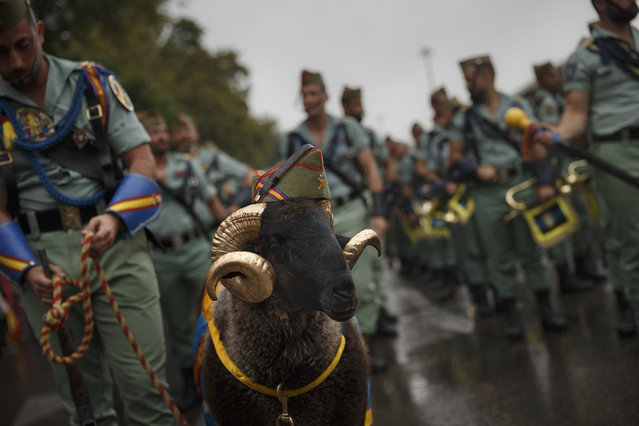
Members of La Legion, an elite unit of the Spanish Army, including a goat they use as a pet wait for the start of a military parade as they celebrate a holiday known as “Dia de la Hispanidad” or Hispanic Day in Madrid, Wednesday, October 12, 2016. (Photo by Daniel Ochoa de Olza/AP Photo)

Members of La Legion, an elite unit of the Spanish Army, including a goat they use as a pet wait for the start of a military parade as they celebrate a holiday known as “Dia de la Hispanidad” or Hispanic Day in Madrid, Wednesday, October 12, 2016. (Photo by Daniel Ochoa de Olza/AP Photo)
Details
13 Oct 2016 11:44:00
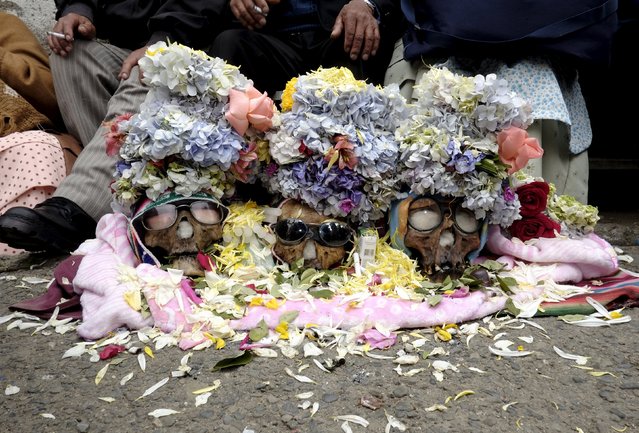
Skulls placed on the floor are seen during a ceremony held for the "Dia de las natitas" (Day of the Skull) celebrations at the General Cemetery of La Paz, November 8, 2015. (Photo by David Mercado/Reuters)

Skulls placed on the floor are seen during a ceremony held for the "Dia de las natitas" (Day of the Skull) celebrations at the General Cemetery of La Paz, November 8, 2015. Bolivians, who keep close relatives skulls at home as a macabre talisman, flock to the cemetery chapel once a year to have the craniums blessed and to bring themselves good luck in the future. (Photo by David Mercado/Reuters)
Details
12 Nov 2015 08:01:00
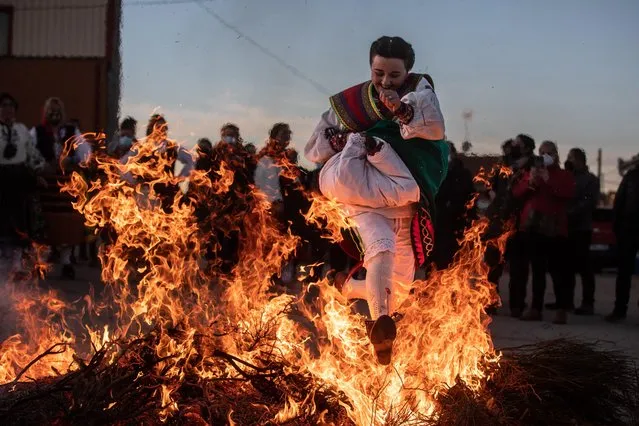
People celebrate the traditional Fiesta de las Aguedas on February 6, 2022 in Andavias, Zamora, Castilla y Leon, Spain. This celebration, also known as “El dia de las mujeres”, is a deep-rooted tradition in Castilla y Leon, especially in rural areas. The day of the Aguedas has its origin in the cult of Santa Agueda, and is celebrated every February 5. During this day, women are the protagonists and take over the city. For their part, the town councils give them the baton as a sign of authority. Around seven days of festivities are celebrated where the attendees dance, eat, sing, and even jump over a bonfire. (Photo By Emilio Fraile/Europa Press via Getty Images)

People celebrate the traditional Fiesta de las Aguedas on February 6, 2022 in Andavias, Zamora, Castilla y Leon, Spain. This celebration, also known as “El dia de las mujeres”, is a deep-rooted tradition in Castilla y Leon, especially in rural areas. The day of the Aguedas has its origin in the cult of Santa Agueda, and is celebrated every February 5. (Photo By Emilio Fraile/Europa Press via Getty Images)
Details
31 Mar 2022 06:18:00