Loading...
Done
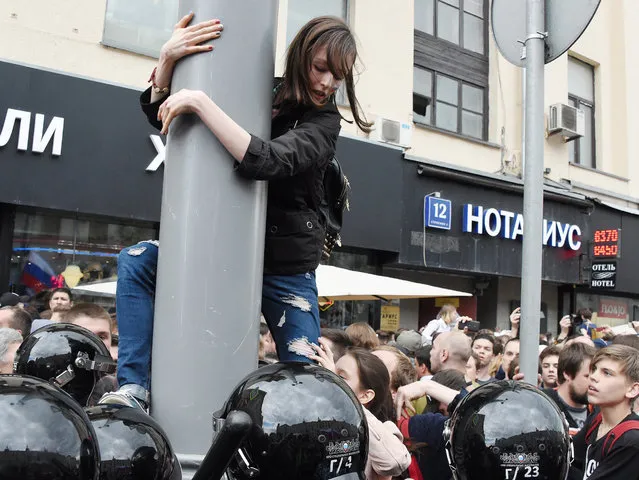
Participants of an unauthorized opposition rally gather in Tverskaya street in central Moscow on June 12, 2017. Authorities detained Russian opposition politician Alexei Navalny and hundreds of his supporters on Monday, as they mounted demonstrations across the nation against government corruption. Over 200 were detained in Moscow and Saint Petersburg an hour into the protest, according to an NGO that tracks arrests, with Navalny himself picked up by police in his building as he was headed to the event. (Photo by Vasily Maximov/AFP Photo)

Participants of an unauthorized opposition rally gather in Tverskaya street in central Moscow on June 12, 2017. Authorities detained Russian opposition politician Alexei Navalny and hundreds of his supporters on Monday, as they mounted demonstrations across the nation against government corruption. Over 200 were detained in Moscow and Saint Petersburg an hour into the protest, according to an NGO that tracks arrests, with Navalny himself picked up by police in his building as he was headed to the event. (Photo by Vasily Maximov/AFP Photo)
Details
13 Jun 2017 08:34:00
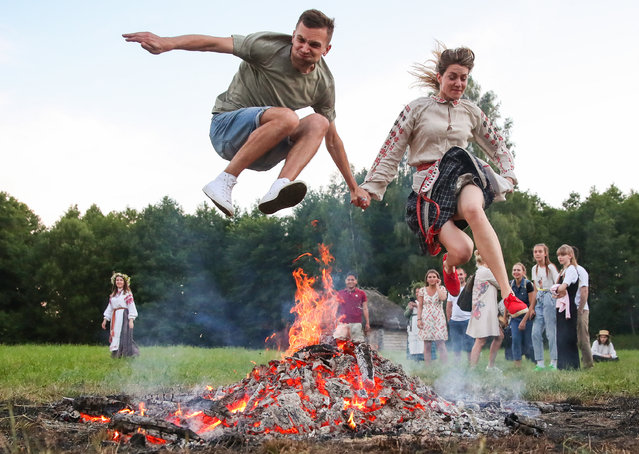
A man and a woman jump over a bonfire during Ivan Kupala Day celebrations held by the Belarusian State Museum of Folk Architecture and Rural Lifestyle in the village of Ozertso near Minsk, Belarus on July 4, 2020. Ivan Kupala Day, also known as Ivana-Kupala or Kupala Night, is a traditional pagan holiday celebrated in eastern Slavic cultures. Various rituals are traditionally performed on Kupala Night, including making flower wreaths, fortune-telling, jumping over bonfires, and burning a wheel-like effigy symbolizing the sun. (Photo by Natalia Fedosenko/TASS)

A man and a woman jump over a bonfire during Ivan Kupala Day celebrations held by the Belarusian State Museum of Folk Architecture and Rural Lifestyle in the village of Ozertso near Minsk, Belarus on July 4, 2020. Ivan Kupala Day, also known as Ivana-Kupala or Kupala Night, is a traditional pagan holiday celebrated in eastern Slavic cultures. Various rituals are traditionally performed on Kupala Night, including making flower wreaths, fortune-telling, jumping over bonfires, and burning a wheel-like effigy symbolizing the sun. (Photo by Natalia Fedosenko/TASS)
Details
23 Jan 2021 09:53:00
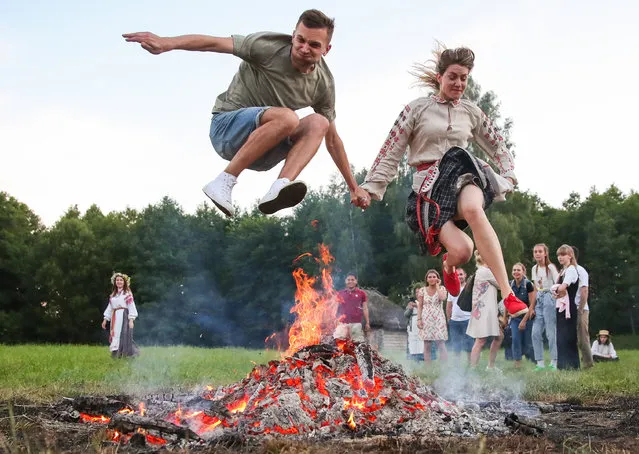
A man and a woman jump over a bonfire during Ivan Kupala Day celebrations held by the Belarusian State Museum of Folk Architecture and Rural Lifestyle in the village of Ozertso near Minsk, Belarus on July 4, 2020. Ivan Kupala Day, also known as Ivana-Kupala or Kupala Night, is a traditional pagan holiday celebrated in eastern Slavic cultures. Various rituals are traditionally performed on Kupala Night, including making flower wreaths, fortune-telling, jumping over bonfires, and burning a wheel-like effigy symbolizing the sun. (Photo by Natalia Fedosenko/TASS)

A man and a woman jump over a bonfire during Ivan Kupala Day celebrations held by the Belarusian State Museum of Folk Architecture and Rural Lifestyle in the village of Ozertso near Minsk, Belarus on July 4, 2020. Ivan Kupala Day, also known as Ivana-Kupala or Kupala Night, is a traditional pagan holiday celebrated in eastern Slavic cultures. Various rituals are traditionally performed on Kupala Night, including making flower wreaths, fortune-telling, jumping over bonfires, and burning a wheel-like effigy symbolizing the sun. (Photo by Natalia Fedosenko/TASS)
Details
07 Jul 2020 00:07:00
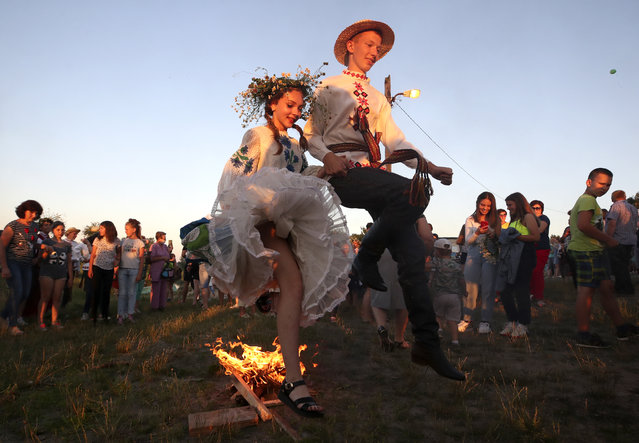
People in ethnic costumes jump over a bonfire during Ivan Kupala Day celebrations held by the Pripyat River in the town of Turauin Gomel Region, Belarus on July 6, 2020. Ivan Kupala Day, also known as Ivana-Kupala or Kupala Night, is a traditional pagan holiday celebrated in eastern Slavic cultures. Various rituals are traditionally performed on Kupala Night, including making flower wreaths, fortune-telling, jumping over bonfires, and burning a wheel-like effigy symbolizing the sun. (Photo by Natalia Fedosenko/TASS)

People in ethnic costumes jump over a bonfire during Ivan Kupala Day celebrations held by the Pripyat River in the town of Turauin Gomel Region, Belarus on July 6, 2020. Ivan Kupala Day, also known as Ivana-Kupala or Kupala Night, is a traditional pagan holiday celebrated in eastern Slavic cultures. Various rituals are traditionally performed on Kupala Night, including making flower wreaths, fortune-telling, jumping over bonfires, and burning a wheel-like effigy symbolizing the sun. (Photo by Natalia Fedosenko/TASS)
Details
19 Jul 2020 00:01:00
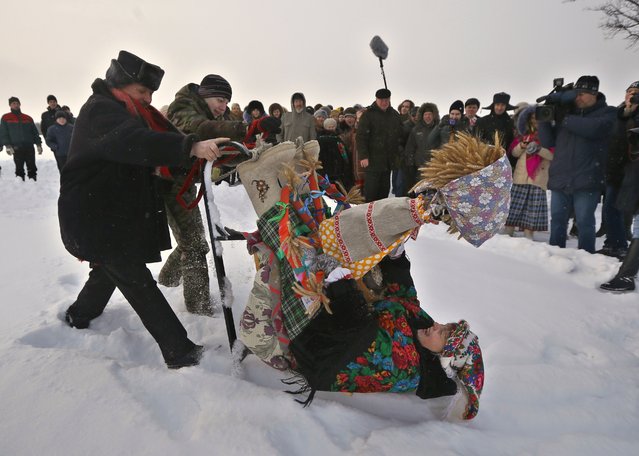
Belarusians wearing national costumes celebrate a Pull the Kolyada Up the Oak rite in the village of Martsiyanauka, some 77 km (48 miles) east of capital Minsk, Belarus, Thursday, January 21, 2016. (Photo by Sergei Grits/AP Photo)

Belarusians wearing national costumes celebrate a Pull the Kolyada Up the Oak rite in the village of Martsiyanauka, some 77 km (48 miles) east of capital Minsk, Belarus, Thursday, January 21, 2016. The merry ancient rite Pull the Kolyada Up the Oak marks the end of Orthodox Christmas celebrations in Belarus. On Jan. 21 a wheel, the so-called Kolyada, would be pulled up an oak or any old tree. The Belarusians believed that the ritual heralds a good harvest, luck and happiness for the entire year. (Photo by Sergei Grits/AP Photo)
Details
22 Jan 2016 10:13:00
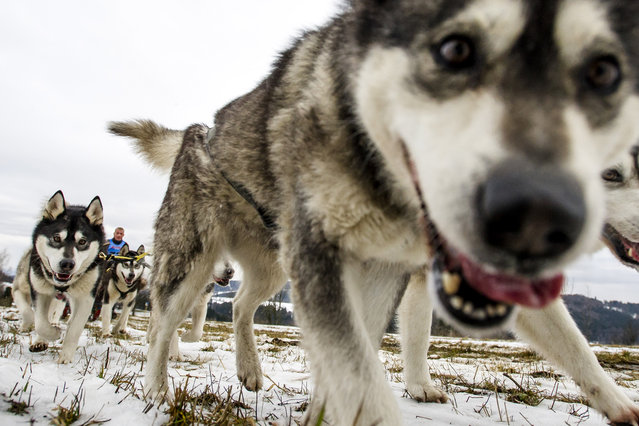
Mushers and theirs dog teams during the Sedivackuv long race, Orlicke Mountains, Czech Republic on January 28, 2016. (Photo by David Tanecek/CTK via ZUMA Press)

Mushers and theirs dog teams during the Sedivackuv long race, Orlicke Mountains, Czech Republic on January 28, 2016. The 240 Km (150 miles) race is a multi-day event, but was canceled today, two days early, because of poor snow conditions in the region. (Photo by David Tanecek/CTK via ZUMA Press)
Details
31 Jan 2016 09:34:00
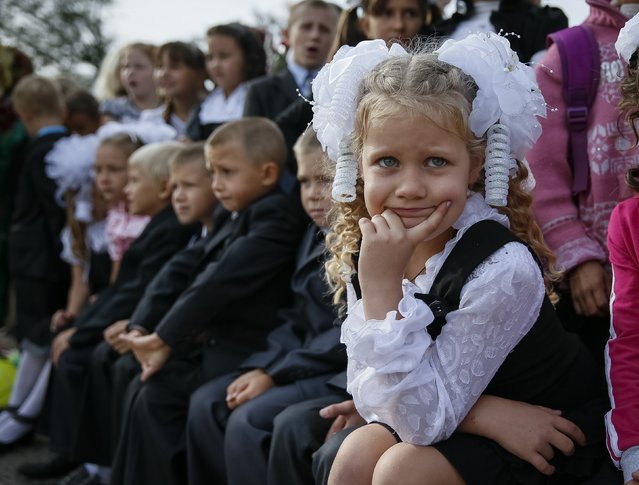
First graders attend a festive ceremony to mark the start of another school year in Slaviansk, September 1, 2014. (Photo by Gleb Garanich/Reuters)

First graders attend a festive ceremony to mark the start of another school year in Slaviansk, September 1, 2014. September 1 marks the start of a new academic year for students in Ukraine. (Photo by Gleb Garanich/Reuters)
Details
02 Sep 2014 12:38:00
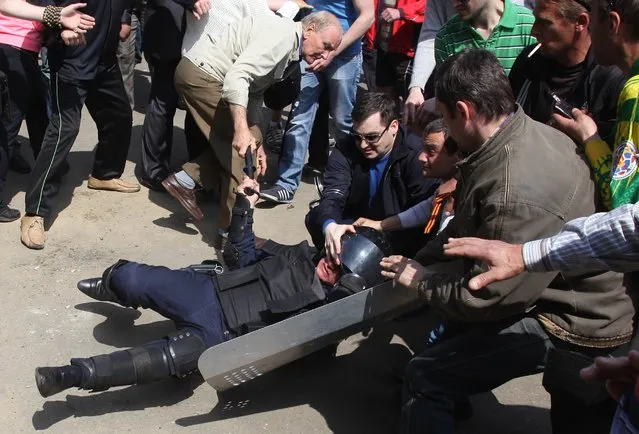
Pro-Russian activists attack policemen guarding the burned trade union building in the southern Ukrainian city of Odessa on May 3, 2014. More than 30 people were killed in a “criminal” blaze in Ukraine's southern city of Odessa, as violence spread across the country during the bloodiest day since Kiev's Western-backed government took power. (Photo by Anatolii Stepanov/AFP Photo)

Pro-Russian activists attack policemen guarding the burned trade union building in the southern Ukrainian city of Odessa on May 3, 2014. More than 30 people were killed in a “criminal” blaze in Ukraine's southern city of Odessa, as violence spread across the country during the bloodiest day since Kiev's Western-backed government took power. Ukraine's interior ministry said at least 31 people had died in the fire Friday, with local media reporting that pro-Russian militants were believed to have been in the burning building at the time. (Photo by Anatolii Stepanov/AFP Photo)
Details
04 May 2014 09:33:00