Loading...
Done
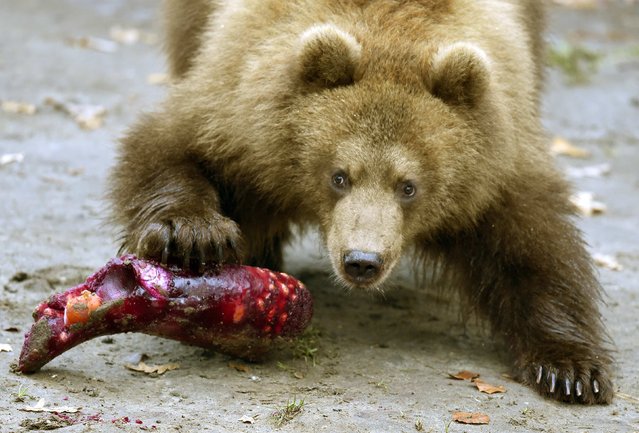
A Kamchatka Brown Bear cub eats frozen fruits during a Christmas feeding session at Hagenbecks zoo in Hamburg, northern Germany on December 5, 2014. (Photo by Fabian Bimmer/Reuters)

A Kamchatka Brown Bear cub eats frozen fruits during a Christmas feeding session at Hagenbecks zoo in Hamburg, northern Germany on December 5, 2014. (Photo by Fabian Bimmer/Reuters)
Details
07 Dec 2014 10:28:00
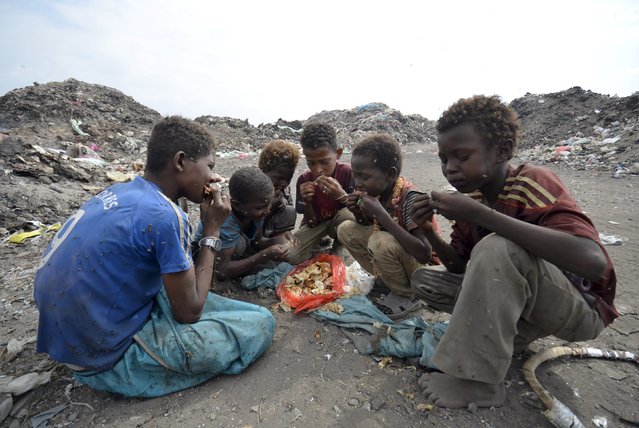
Boys eat at a rubbish dump where they are collecting recyclable waste outside Yemen's Red Sea port city of Houdieda January 20, 2016. (Photo by Abduljabbar Zeyad/Reuters)

Boys eat at a rubbish dump where they are collecting recyclable waste outside Yemen's Red Sea port city of Houdieda January 20, 2016. (Photo by Abduljabbar Zeyad/Reuters)
Details
21 Jan 2016 13:35:00
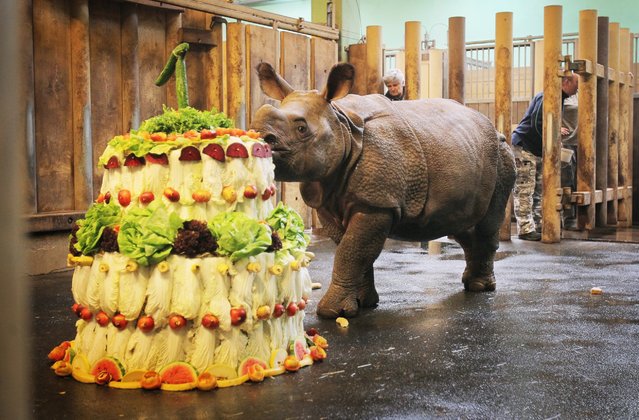
A female Indian rhinoceros called Maruska eats a vegetable birthday cake on her first birthday celebration at the Plzen Zoo on February 3, 2015 in Plzen, Czech Republic. (Photo by Ladislav Nemec/Isifa)

A female Indian rhinoceros called Maruska eats a vegetable birthday cake on her first birthday celebration at the Plzen Zoo on February 3, 2015 in Plzen, Czech Republic. (Photo by Ladislav Nemec/Isifa)
Details
07 Feb 2015 14:55:00
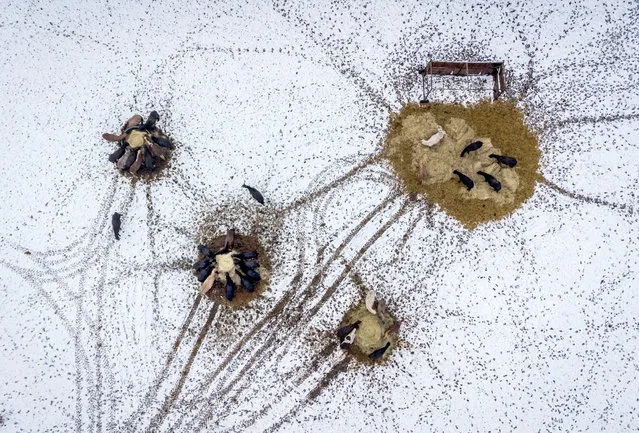
Horses eat hay and rest on straw at a stud farm in Wehrheim near Frankfurt, Germany, Tuesday, December 5, 2023. (Photo by Michael Probst/AP Photo)

Horses eat hay and rest on straw at a stud farm in Wehrheim near Frankfurt, Germany, Tuesday, December 5, 2023. (Photo by Michael Probst/AP Photo)
Details
08 Jan 2024 19:43:00
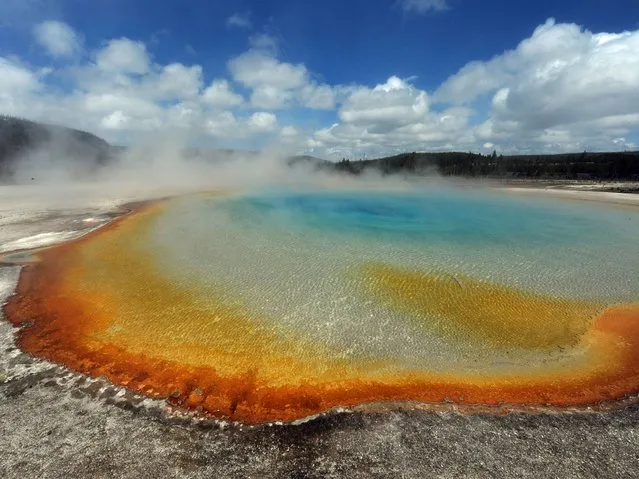
View of the “Sunset Lake” hot spring with it's unique colors caused by brown, orange and yellow algae-like bacteria called Thermophiles, that thrive in the cooling water turning the vivid aqua-blues to a murkier greenish brown, in the Yellowstone National Park, Wyoming on June 1, 2011. (Photo by Mark Ralston/AFP Photo)

View of the “Sunset Lake” hot spring with it's unique colors caused by brown, orange and yellow algae-like bacteria called Thermophiles, that thrive in the cooling water turning the vivid aqua-blues to a murkier greenish brown, in the Yellowstone National Park, Wyoming on June 1, 2011. Yellowstone National Park, was established by the U.S. Congress and signed into law by President Grant on March 1, 1872. The park is located primarily in the U.S. state of Wyoming, though it also extends into Montana and Idaho and was the first national park in the world. It is known for its wildlife and its many geothermal features, especially the Old Faithful Geyser. (Photo by Mark Ralston/AFP Photo)
Details
06 Apr 2014 08:02:00
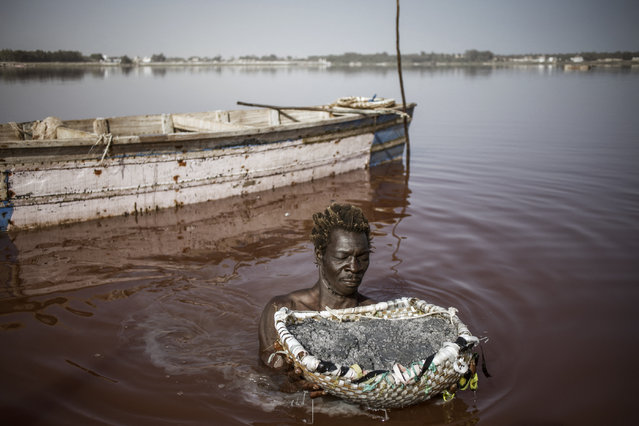
Toure, a Gambian salt harvester, holds a basket filled with  the salt collected from the crust of the bottom of the Lake Retba (Pink Lake) in Senegal on March 16, 2021. Lake Retba, divided from the Atlantic Ocean by a narrow corridor of dunes, owes its name to the pink waters caused by the Dunaliella salina algae and is known for its high salt content, up to 40% in some areas. (Photo by Marco Longari/AFP Photo)

Toure, a Gambian salt harvester, holds a basket filled with the salt collected from the crust of the bottom of the Lake Retba (Pink Lake) in Senegal on March 16, 2021. Lake Retba, divided from the Atlantic Ocean by a narrow corridor of dunes, owes its name to the pink waters caused by the Dunaliella salina algae and is known for its high salt content, up to 40% in some areas. (Photo by Marco Longari/AFP Photo)
Details
24 Mar 2021 10:29:00
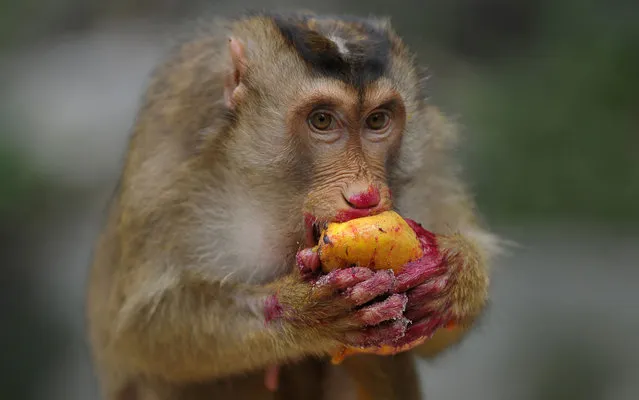
A wild macaque monkey eats fruit dropped by pedestrians in a suburb of Kuala Lumpur, Malaysia, on June 11, 2013. (Photo by Mohd Rasfan/AFP Photo)

A wild macaque monkey eats fruit dropped by pedestrians in a suburb of Kuala Lumpur, Malaysia, on June 11, 2013. (Photo by Mohd Rasfan/AFP Photo)
Details
15 Jun 2013 11:38:00
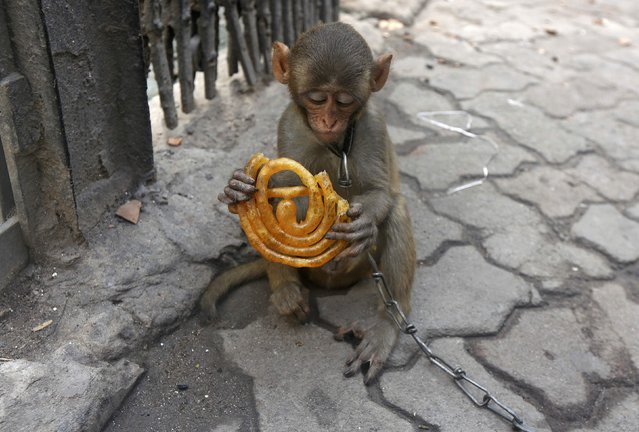
Musafir, a pet monkey, eats sweets on a pavement in Kolkata, India, June 9, 2016. (Photo by Rupak De Chowdhuri/Reuters)

Musafir, a pet monkey, eats sweets on a pavement in Kolkata, India, June 9, 2016. (Photo by Rupak De Chowdhuri/Reuters)
Details
11 Jun 2016 12:10:00