Loading...
Done
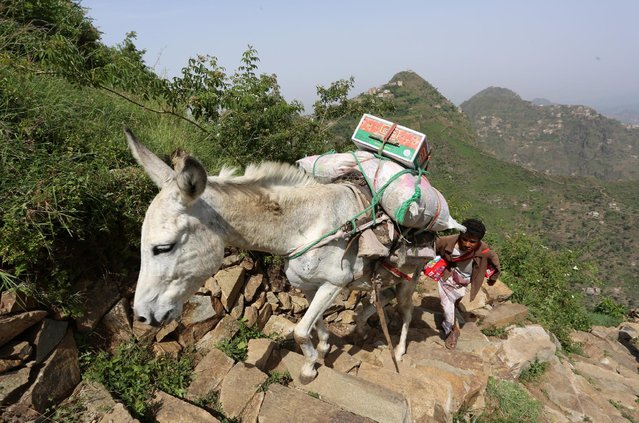
A man carries food supplies on a donkey to Dhalamlam Mountain in the Jafariya district of the western province of Raymah, Yemen June 2, 2016. (Photo by Abduljabbar Zeyad/Reuters)

A man carries food supplies on a donkey to Dhalamlam Mountain in the Jafariya district of the western province of Raymah, Yemen June 2, 2016. In villages perched high on a mountain in Western Yemen, residents are a safe distance from a conflict raging throughout most of the country but have had to turn the clock back on their lifestyles by centuries. (Photo by Abduljabbar Zeyad/Reuters)
Details
13 Sep 2016 09:23:00
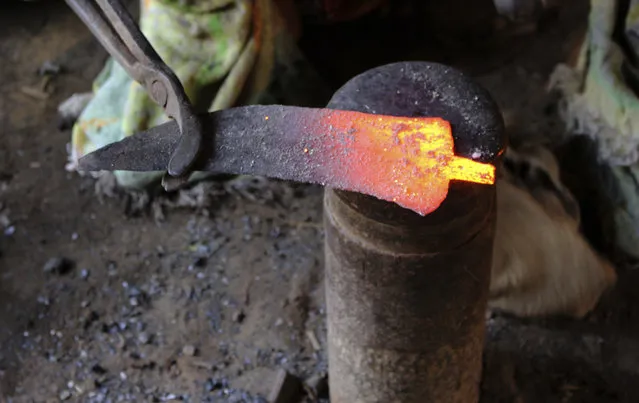
In this October 6, 2018, photo, a craftsman makes daggers or “Jambiyya” in Yemeni Arabic, made out of remains of missiles, at his workshop, in Hajjah, Yemen. (Photo by Hammadi Issa/AP Photo)

In this October 6, 2018, photo, a craftsman makes daggers or “Jambiyya” in Yemeni Arabic, made out of remains of missiles, at his workshop, in Hajjah, Yemen. Missiles raining on Yemen from the jets of the Saudi-led coalition fighting Houthi rebels are killing thousands of civilians and militiamen alike, but amid crashing economy, some Yemenis see the bright side of it: they make daggers out of the fragments of the missiles for ordinary men traditionally wear for prestige and a show of courage. (Photo by Hammadi Issa/AP Photo)
Details
10 Oct 2018 00:01:00
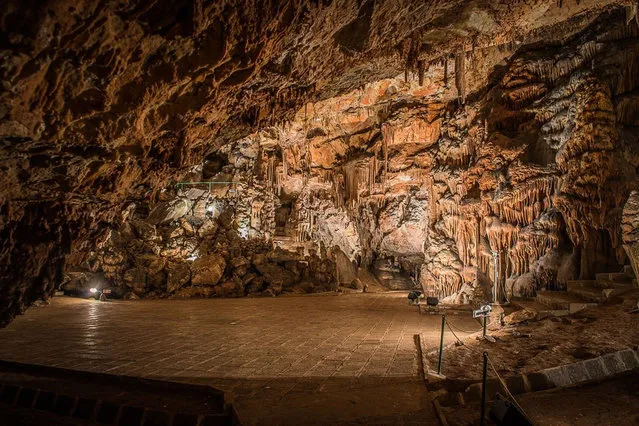
Saeva Dupka Cave

Saeva dupka (Bulgarian: Съева дупка) is a cave in Northern Bulgaria near the village of Brestnitsa, Lovech Province (43°2′N 24°11′E). Its five halls and 400 metres of corridors offer some of the most beautiful cave formations in the country. Besides that the cave has hosted many Choral music performances, thanks to the excellent acoustic conditions. Saeva dupka was named after two brothers Seyu and Sae who used it as a hiding place during the Ottoman occupation of Bulgaria. Recent excavations have showed the cave was inhabited since Roman times. Currently Saeva dupka is one of the 100 Tourist Sites of Bulgaria.
Details
20 Feb 2013 11:30:00
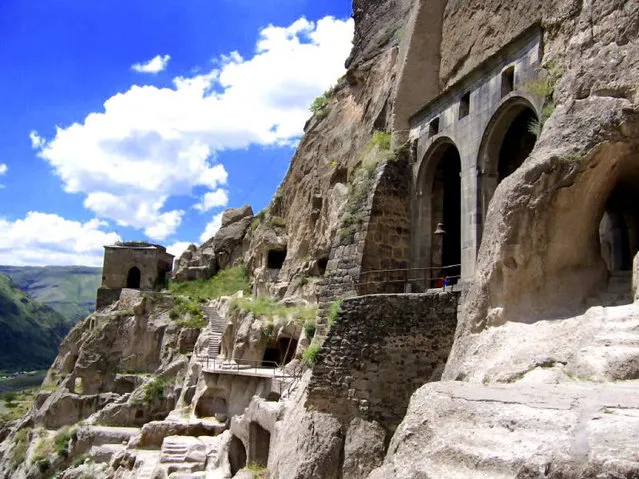
Vardzia Cave Monastery

Vardzia is a cave monastery site in southern Georgia, excavated from the slopes of the Erusheti Mountain on the left bank of the Mtkvari River, thirty kilometres from Aspindza. The main period of construction was the second half of the twelfth century. The caves stretch along the cliff for some five hundred metres and in up to nineteen tiers. The Church of the Dormition, dating to the 1180s during the golden age of Tamar and Rustaveli, has an important series of wall paintings. The site was largely abandoned after the Ottoman takeover in the sixteenth century. Now part of a state heritage reserve, the extended area of Vardzia-Khertvisi has been submitted for future inscription on the UNESCO World Heritage List
Details
04 Sep 2013 10:53:00
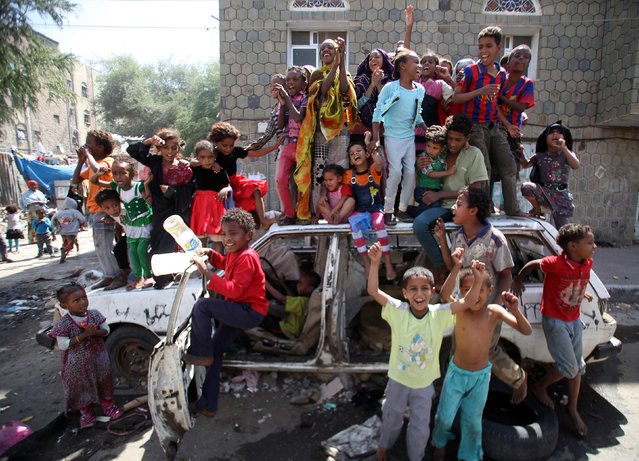
Children play on an abandoned car near a protest, which is against the dissolution of Yemen's parliament and the Shi'ite Muslim Houthi militia's tightening grip on power, in the southwestern city of Taiz, February 13, 2015. (Photo by Mohamed al-Sayaghi/Reuters)

Children play on an abandoned car near a protest, which is against the dissolution of Yemen's parliament and the Shi'ite Muslim Houthi militia's tightening grip on power, in the southwestern city of Taiz, February 13, 2015. (Photo by Mohamed al-Sayaghi/Reuters)
Details
19 Feb 2015 14:08:00
A woman is having a massage at the Lukacs Bath in Budapest, Hungary June 28, 2016. (Photo by Bernadett Szabo/Reuters)

A woman is having a massage at the Lukacs Bath in Budapest, Hungary June 28, 2016. Hungary's capital owes its popularity as a tourist destination partly to its numerous hot springs and bathing culture which have drawn visitors to the area since Roman times. Bath houses range from large, ornate 19th-century buildings like the Gellert and the Szechenyi to tiny Ottoman Turkish-era hamams, some of them more than 500 years old. (Photo by Bernadett Szabo/Reuters)
Details
20 Jul 2016 10:05:00
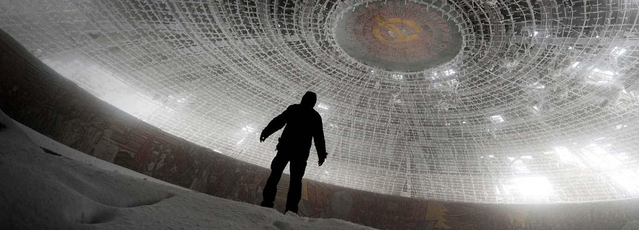
Monument of Buzludja

Buzludzha is a historical peak in the Central Stara Planina, Bulgaria and is 1441 metres high. In 1868 it was the place of the final battle between Bulgarian rebels led by Hadji Dimitar and Stefan Karadzha and the Ottoman Empire. The Buzludzha Monument on the peak was built by the Bulgarian communist regime to commemorate the events in 1891 when the socialists led by Dimitar Blagoev assembled secretly in the area to form an organised socialist movement with the founding of the Bulgarian Social Democratic Party, a fore-runner of the Bulgarian Communist Party. The Monument was opened in 1981. No longer maintained by the Bulgarian government, it has fallen into disuse. Buzludzha is reached by a 12 km side road from the Shipka Pass.
Details
12 Nov 2013 08:16:00
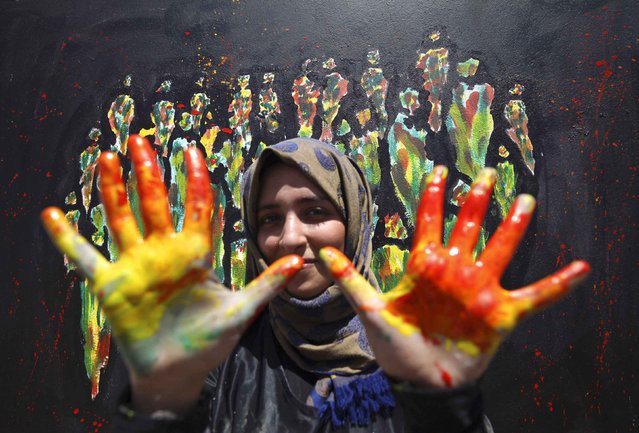
An artist shows her hands after working on a wall as part of a campaign to call for coexistence and the renouncement of violence through the painting of walls in Sanaa, Yemen March 15, 2015. (Photo by Mohamed al-Sayaghi/Reuters)

An artist shows her hands after working on a wall as part of a campaign to call for coexistence and the renouncement of violence through the painting of walls in Sanaa, Yemen March 15, 2015. (Photo by Mohamed al-Sayaghi/Reuters)
Details
21 Mar 2015 12:41:00