Loading...
Done
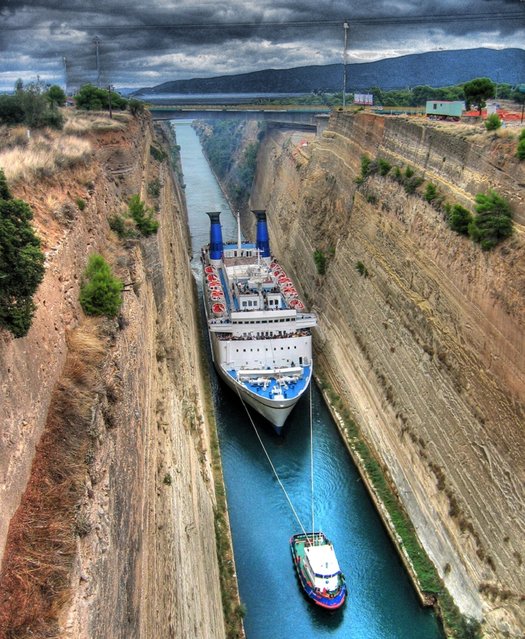
Corinth Canal

The Corinth Canal is a canal that connects the Gulf of Corinth with the Saronic Gulf in the Aegean Sea. It cuts through the narrow Isthmus of Corinth and separates the Peloponnesian peninsula from the Greek mainland, thus effectively making the former an island. The builders dug the canal through the Isthmus at sea level; no locks are employed. It is 6.4 kilometres (4.0 mi) in length and only 21.3 metres (70 ft) wide at its base, making it unpassable for most modern ships. It now has little economic importance.

Details
12 Mar 2013 12:21:00
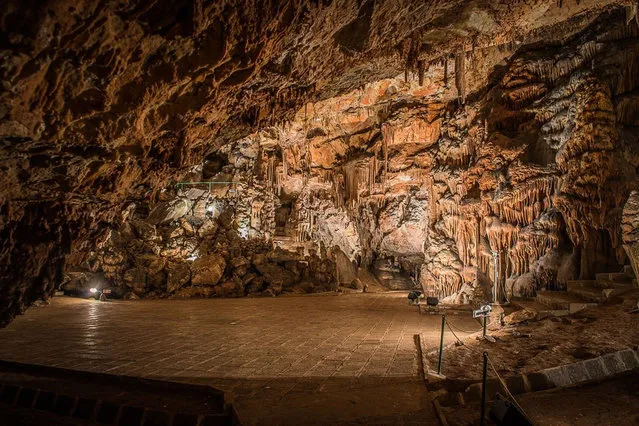
Saeva Dupka Cave

Saeva dupka (Bulgarian: Съева дупка) is a cave in Northern Bulgaria near the village of Brestnitsa, Lovech Province (43°2′N 24°11′E). Its five halls and 400 metres of corridors offer some of the most beautiful cave formations in the country. Besides that the cave has hosted many Choral music performances, thanks to the excellent acoustic conditions. Saeva dupka was named after two brothers Seyu and Sae who used it as a hiding place during the Ottoman occupation of Bulgaria. Recent excavations have showed the cave was inhabited since Roman times. Currently Saeva dupka is one of the 100 Tourist Sites of Bulgaria.
Details
20 Feb 2013 11:30:00
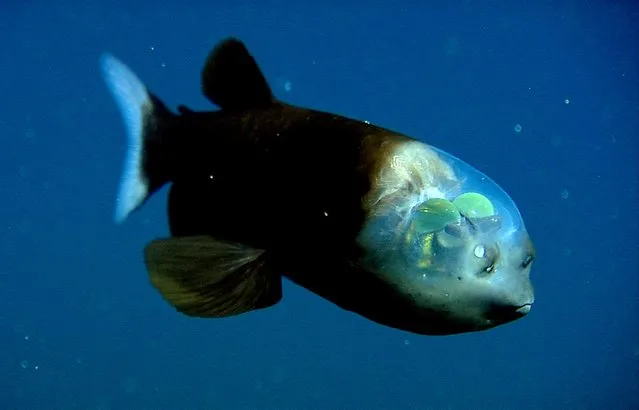
Macropinna Microstoma

Macropinna microstoma is the only species of fish in the genus Macropinna, belonging to Opisthoproctidae, the barreleye family. It is recognized for a highly unusual transparent, fluid-filled dome on its head, through which the lenses of its eyes can be seen. The eyes have a barrel shape and can be rotated to point either forward or straight up, looking through the fish's transparent dome. M. microstoma has a tiny mouth and most of its body is covered with large scales.
Details
08 Jan 2013 17:42:00
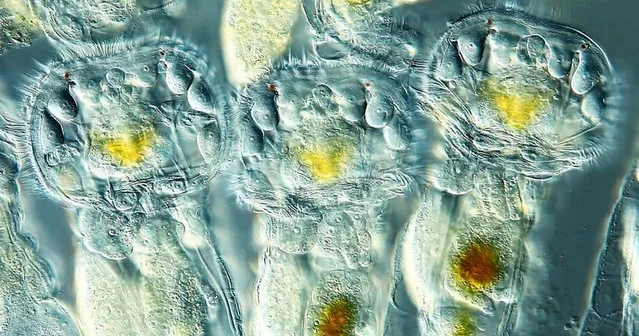
Olympus BioScapes Digital Imaging Competition 2012

Microscope images forge an extraordinary bond between science and art, said Hidenao Tsuchiya, Olympus America's Vice President and General Manager for the Scientific Equipment Group. We founded this competition to focus on the fascinating stories coming out of today's life science research laboratories. The thousands of images that people have shared with the competition over the years reflect some of the most exciting work going on in research today – work that can help shed light on the living universe and ultimately save lives. We look at BioScapes and these beautiful images as sources of education and inspiration to us and the world
Details
23 Dec 2012 15:57:00


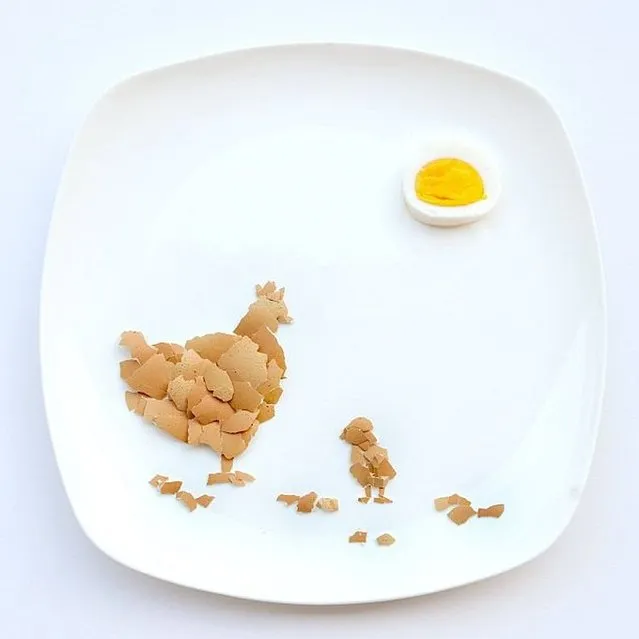
Hong Yi is a Malaysian architect and artist whose impressive portfolio includes work for Chicago’s Union Station, the Melbourne Hall of Music, and alternative medium portraits using coffee stains or tea bags. Her unorthodox approach to creation has led her to her most recent blog project. Over the course of 31 days, Hong Yi (who also goes by Red) will post art pieces made from food. So far, the pieces range from simpler ones of a watermelon sailboat to a complex recreation of Hokusai’s “The Great Wave.”
Details
29 Mar 2013 10:31:00
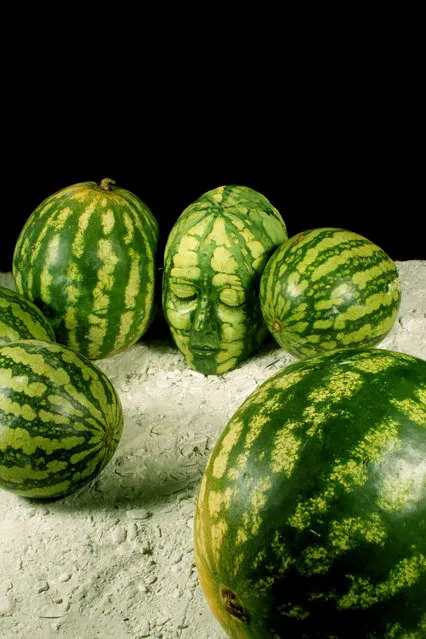
“Melon”. (Photo by Johannes Stötter)

Award winning Italian Bodypainter Johannes Stötter, paints his models to blend in to their backgrounds. The artist and musician based in Italy has created some of the most unique and life-like pieces of art we've ever seen. And yes, while some works like the ready-to-eat human melon heads creep us out, it's fair to say Stötter has owned his craft. Photo: “Melon”. (Photo by Johannes Stötter)
Details
02 Aug 2013 08:51:00
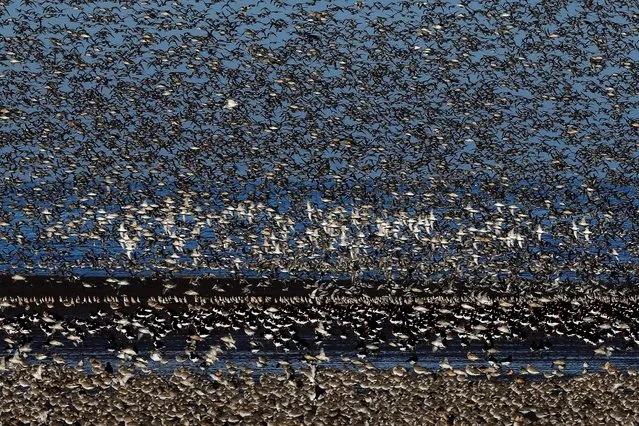
Waders flock together seeking new feeding grounds during the incoming tide. (Photo by Dan Kitwood/Getty Images via The Palm Beach Post)

“The RSPB’s Snettisham Nature Reserve lies on the edge of The Wash, one of the most important bird estuaries in the United Kingdom. The Wash, on England’s east coast, supports over 300,000 birds, and Snettisham sometimes holds more than a third of them”. – The Palm Beach Post. Photo: Waders flock together seeking new feeding grounds during the incoming tide. (Photo by Dan Kitwood/Getty Images via The Palm Beach Post)
Details
11 Sep 2013 11:18:00
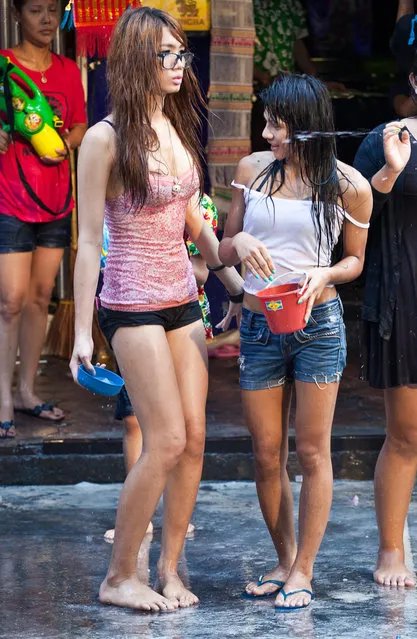
The Songkran festival

“The Songkran festival is celebrated in Thailand as the traditional New Year's Day from 13 to 15 April. It coincides with the New Year of many calendars of South and Southeast Asia. The most obvious celebration of Songkran is the throwing of water upon others. Thais roam the streets with containers of water or water guns. In addition, many Thais will have small bowls of beige colored talc sold cheaply and mixed with water which is then smeared on the faces and bodies of random passerbys as a blessing for the new year” – Wikipedia. (Photo by Seua Yai)
Details
23 Oct 2013 12:00:00