Loading...
Done
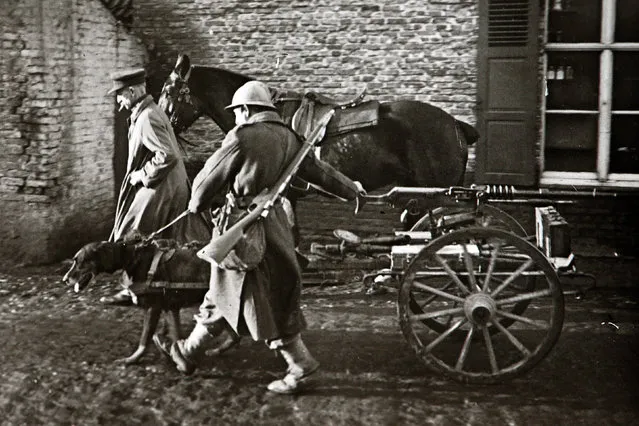
An undated archive picture shows a dog pulling a Belgian machine gun at an unknown location in northern France. (Photo by Collection Odette Carrez/Reuters)

An undated archive picture shows a dog pulling a Belgian machine gun at an unknown location in northern France. A Viscount in the Armoured Cavalry Branch of the French Army left behind a collection of hundreds of glass plates taken during World War One (WWI) that have never before been published. The images, by an unknown photographer, show the daily life of soldiers in the trenches, destruction of towns and military leaders. The year 2014 marks the 100th anniversary of the start of WWI. (Photo by Collection Odette Carrez/Reuters)
Details
23 May 2014 09:11:00
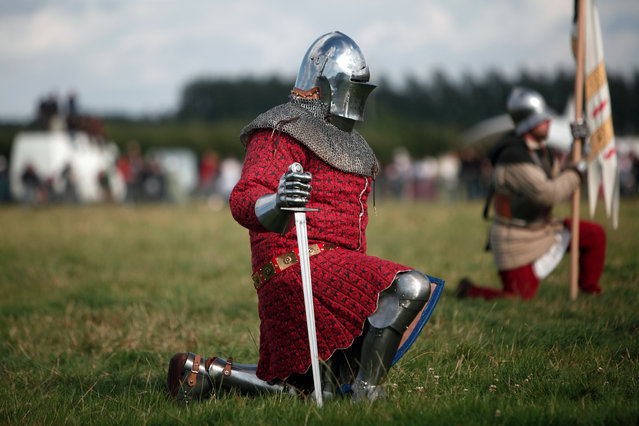
A man wearing an armor attends a reenactment of the Battle of Agincourt, in Agincourt, northern France, Saturday, July 25, 2015. (Photo by Thibault Camus/AP Photo)

A man wearing an armor attends a reenactment of the Battle of Agincourt, in Agincourt, northern France, Saturday, July 25, 2015. The French are hosting a reenactment of the clash with England this weekend. More than 800 people in Medieval garb are gathering at the site to commemorate the battle, which was a turning point in the Hundred Years' War. (Photo by Thibault Camus/AP Photo)
Details
27 Jul 2015 11:20:00

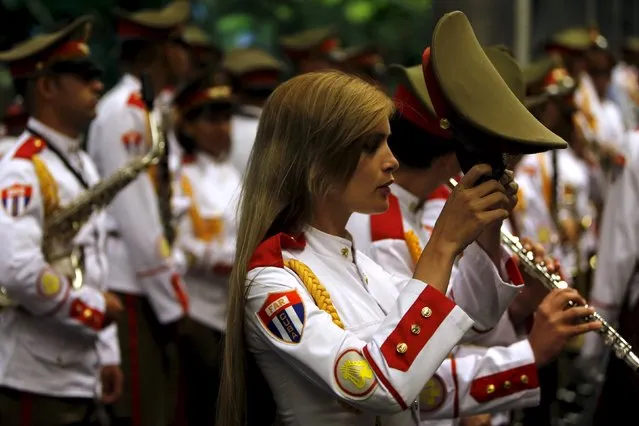
A military band prepares to play the national anthems before Cuban President Raul Castro welcomes U.S. President Barack Obama at the Palacio de la Revolucion in Havana March 21, 2016. (Photo by Jonathan Ernst/Reuters)

A military band prepares to play the national anthems before Cuban President Raul Castro welcomes U.S. President Barack Obama at the Palacio de la Revolucion in Havana March 21, 2016. Barack Obama on Sunday became the first US president in 88 years to visit Cuba, touching down in Havana for a landmark trip aimed at ending decades of Cold War animosity. (Photo by Jonathan Ernst/Reuters)
Details
22 Mar 2016 11:16:00
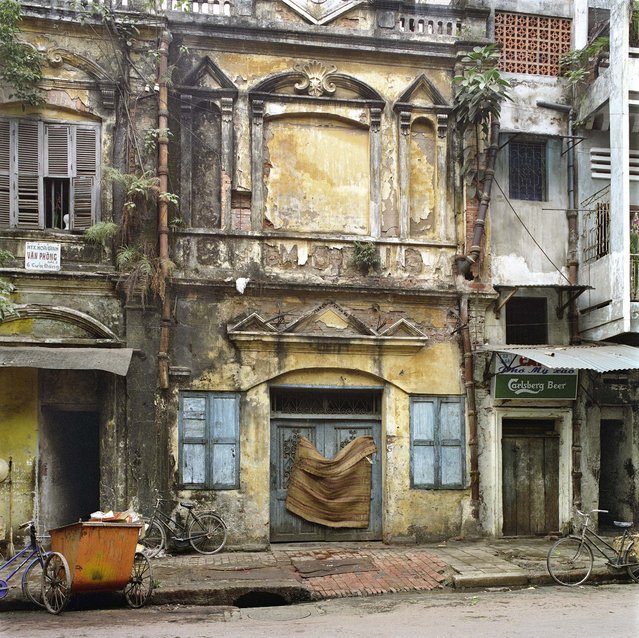
54 Hàng Ga (Chicken Street), 1994. (Photo by  William E. Crawford from the book “Hanoi Streets 1985-2015: In the Years of Forgetting”)

Documentary photographer William E. Crawford was one of the first Western photographers to gain access to North Vietnam after the war ended. He has photographed the capital, Hanoi, at regular intervals since 1985, concentrating on the colonial and indigenous architecture, urban details, landscapes and intimate portraits of people in their home settings, street scenes and the city’s surrounding countryside. Here: 54 Hàng Ga (Chicken Street), 1994. (Photo by William E. Crawford from the book “Hanoi Streets 1985-2015: In the Years of Forgetting”)
Details
27 Jun 2018 00:01:00
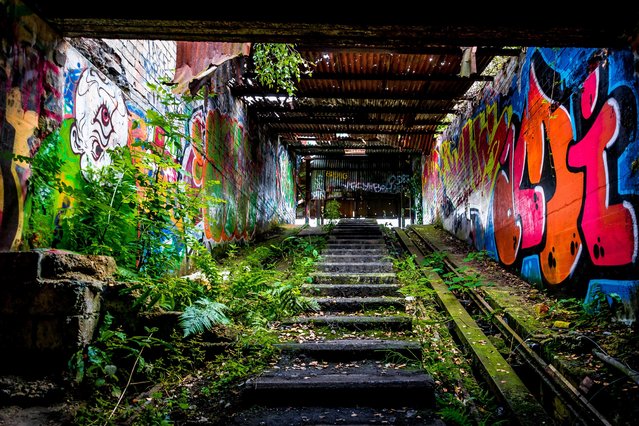
A railway siding in Wiltshire, UK where ammunition was transferred by tunnel to an underground storage facility. (Photo by MediaDrumWorld.com)

The series of shots show the bare steel infrastructure of the Bushfield army training camp near Winchester which was in operation during World War Two and was used to train Royal Green Jackets recruits in the sixties. The spectacular images were taken by an urban explorer who wished to remain anonymous. Here: A railway siding in Wiltshire, UK where ammunition was transferred by tunnel to an underground storage facility. (Photo by MediaDrumWorld.com)
Details
11 Jan 2017 14:18:00
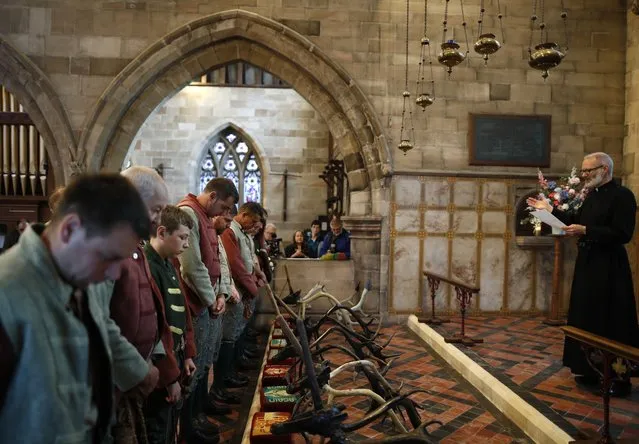
Reverend Simon Davis prays with the dancers before the Abbots Bromley Horn Dance in Abbots Bromley, Britain, September 12, 2016. The Abbots Bromley Horn Dance is an English folk dance dating back to the Middle Ages. The dance takes place each year in Abbots Bromley, a village in Staffordshire, England. The modern version of the dance involves reindeer antlers, a hobby horse, Maid Marian, and a Fool. According to some, the use of antlers suggests an Anglo-Saxon origin along with other native Anglo-Saxon traditions that have survived into modern times in various forms. (Photo by Darren Staples/Reuters)

Reverend Simon Davis prays with the dancers before the Abbots Bromley Horn Dance in Abbots Bromley, Britain, September 12, 2016. The Abbots Bromley Horn Dance is an English folk dance dating back to the Middle Ages. (Photo by Darren Staples/Reuters)
Details
13 Sep 2016 09:36:00
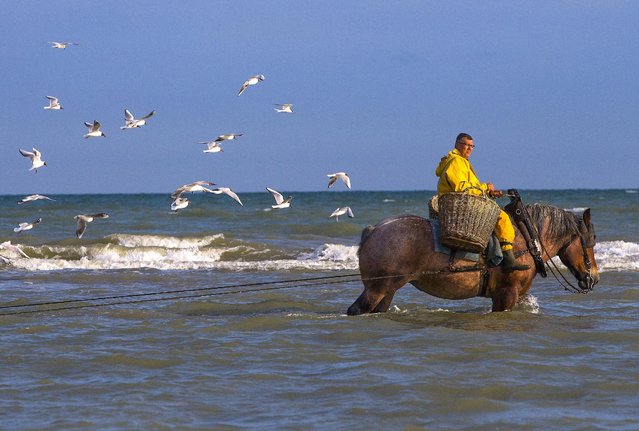
A Belgian shrimp fisherman rides a carthorse to haul a net out in the sea to catch shrimps during low tide at the coastal town of Oostduinkerke, Belgium July 3, 2015. (Photo by Yves Herman/Reuters)

A Belgian shrimp fisherman rides a carthorse to haul a net out in the sea to catch shrimps during low tide at the coastal town of Oostduinkerke, Belgium July 3, 2015. At the end of each fishing session, the fishermen and their mounts leave the water to empty the net's contents into two wicker baskets fixed on each side of the horse. This traditional method of catching shrimps along the North Sea coast, which dates back to some 500 years, attracts tourists every summer. In 2013, Unesco recognized shrimp fishing on horseback as an intangible cultural heritage. (Photo by Yves Herman/Reuters)
Details
04 Jul 2015 11:29:00
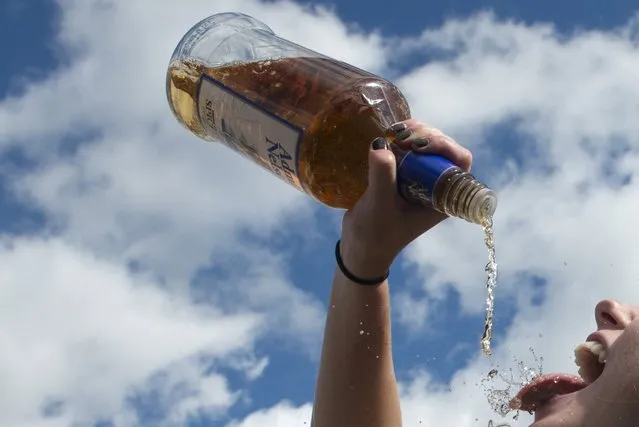
A woman pours alcohol from the bottle into her mouth at the Far Hills Race Day at Moorland Farms in Far Hills, New Jersey, October 17, 2015. (Photo by Stephanie Keith/Reuters)

A woman pours alcohol from the bottle into her mouth at the Far Hills Race Day at Moorland Farms in Far Hills, New Jersey, October 17, 2015. Young locals in New Jersey catch up with friends from school and college days at the Far Hills Race Day, which started as a fox-hunting event in the early 1900s. Many racegoers first went to the Hunt, as it's known locally, as children, but nowadays it's an alcohol-fuelled party for them. Makeshift bars are set up in cars, with the horses' efforts on the turf sometimes a backdrop to the main event. (Photo by Stephanie Keith/Reuters)
Details
26 Oct 2015 08:00:00