Loading...
Done
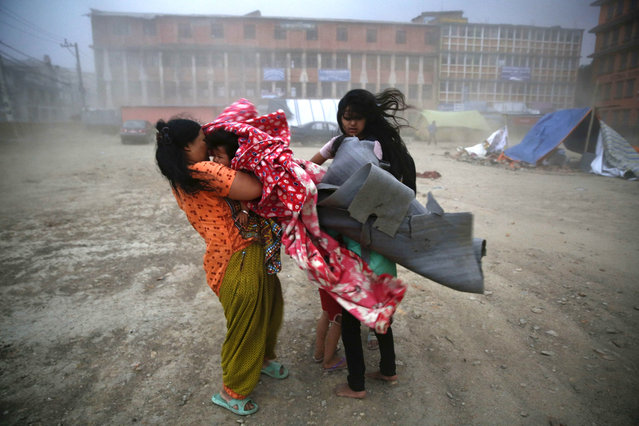
A storm whips through a tented area occupied by Nepalese earthquake survivors as a mother grabs her infant child and runs to find shelter in Kathmandu, Nepal 23 May 2015. Nepalese, who lost their homes in earthquake and fear aftershocks, have been living in temporary shelter in open ground which they had to flee because of the heavy rain and powerful wind. (Photo by Narendra Shrestha/EPA)

A storm whips through a tented area occupied by Nepalese earthquake survivors as a mother grabs her infant child and runs to find shelter in Kathmandu, Nepal 23 May 2015. Nepalese, who lost their homes in earthquake and fear aftershocks, have been living in temporary shelter in open ground which they had to flee because of the heavy rain and powerful wind. (Photo by Narendra Shrestha/EPA)
Details
25 May 2015 10:00:00
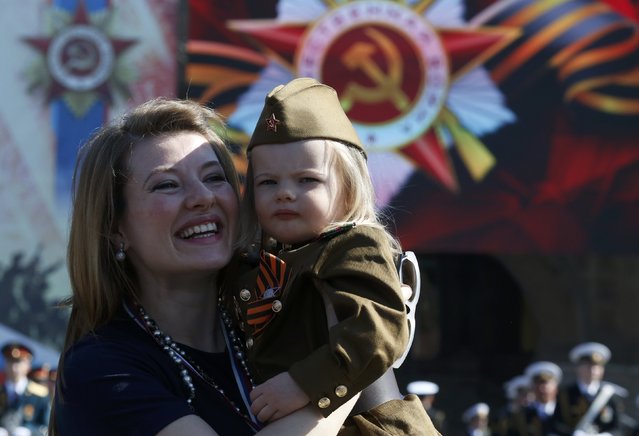
A woman and a girl dressed in historical Red Army uniform, wait before watching the Victory Day parade, marking the 71st anniversary of the victory over Nazi Germany in World War Two, at Red Square in Moscow, Russia, May 9, 2016. (Photo by Grigory Dukor/Reuters)

A woman and a girl dressed in historical Red Army uniform, wait before watching the Victory Day parade, marking the 71st anniversary of the victory over Nazi Germany in World War Two, at Red Square in Moscow, Russia, May 9, 2016. (Photo by Grigory Dukor/Reuters)
Details
10 May 2016 13:19:00
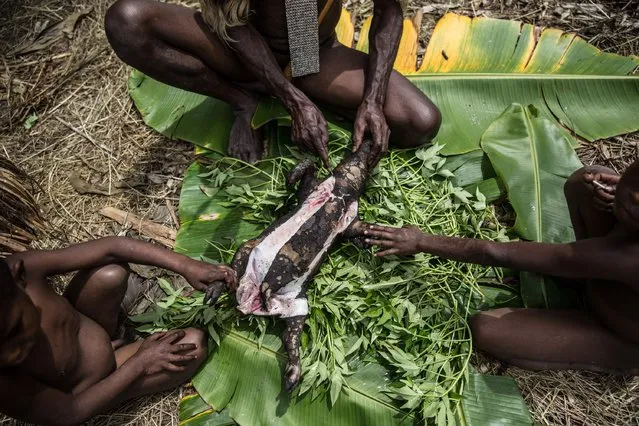
A man from the Dani tribe cuts the head of a pig after cooked by traditional way which is use burned hot stones at Obia Village on August 9, 2014 in Wamena, Papua, Indonesia. The stone-age Dani tribe live a traditional existence in the Baliem Valley, which is situated 1600 metres above sea level in the heart of the Cyclops Mountains. (Photo by Agung Parameswara/Getty Images)

A man from the Dani tribe cuts the head of a pig after cooked by traditional way which is use burned hot stones at Obia Village on August 9, 2014 in Wamena, Papua, Indonesia. The stone-age Dani tribe live a traditional existence in the Baliem Valley, which is situated 1600 metres above sea level in the heart of the Cyclops Mountains. (Photo by Agung Parameswara/Getty Images)
Details
14 Aug 2014 10:30:00


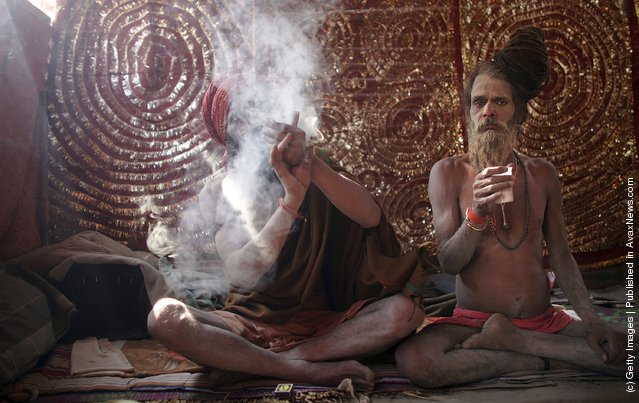
“Kumbh Mela is a mass Hindu pilgrimage in which Hindus gather at the Ganges river. The normal Kumbh Mela is celebrated every 3 years, the Ardh (half) Kumbh Mela is celebrated every six years at Haridwar and Prayag, the Purna (complete) Kumbh takes place every twelve years, at four places (Prayag (Allahabad), Haridwar, Ujjain, and Nashik). The Maha (great) Kumbh Mela which comes after 12 “Purna Kumbh Melas”, or 144 years, is held at Allahabad.

The last Ardh Kumbh Mela was held over a period of 45 days beginning in January 2007, more than 70 million Hindu pilgrims took part in the Ardh Kumbh Mela at Prayag, and on January 15, the most auspicious day of the festival of Makar Sankranti, more than 5 million participated. The previous Maha Kumbh Mela, held in 2001, was attended by around 60 million people, making it at the time the largest gathering anywhere in the world in recorded history”. – Wikipedia

Photo: Sadhus (holy men) smoke at their camp near the ritual site at Sangam, the confluence of the Ganges, Yamuna and mythical Saraswati rivers during the Ardh Kumbh Mela festival (Half Pitcher festival) January 18, 2007 in Allahabad, India. Millions of Hindu pilgrims have flocked to the largest religious gathering in the world which lasts for 45 days in northern India. The festival commemorates the mythical conflict between gods and demons over a pitcher filled with the “nectar of immortality”. Devotees believe that taking a holy dip in the Ganges at this time washes away their sins and paves the path to salvation. (Photo by Mario Tama/Getty Images)

Details
30 Jun 2011 10:27:00


Racegoers make their way home after Ladies Day on the second day of the Grand National meeting at Aintree Racecourse on April 9, 2010 in Aintree, England. Friday is traditionally Ladies day at the three-day meeting of the world famous Grand National, where fashion is as important as the racing. (Photo by Christopher Furlong/Getty Images)
Details
10 Apr 2011 08:45:00
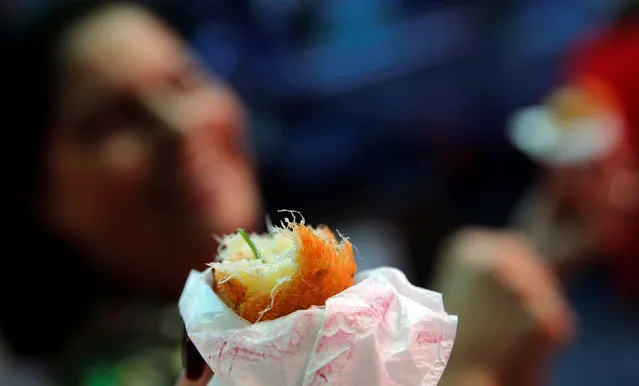
A view of traditional bolinhos de bacalhau (fried codfish balls) in Rio de Janeiro, Brazil, May 7, 2016. (Photo by Sergio Moraes/Reuters)

If the most popular foods of Rio de Janeiro have one thing in common, it is their informality. You can find fine restaurants in the city, but they do not set Rio apart from other places. What does set it apart, and what invariably brings its residents, known as "Cariocas," together is the unpretentious food they eat in bright, loud, crowded bars and restaurants, on busy street corners, or after a day at the beach. Here: A view of traditional bolinhos de bacalhau (fried codfish balls) in Rio de Janeiro, Brazil, May 7, 2016. (Photo by Sergio Moraes/Reuters)
Details
05 Aug 2016 13:20:00
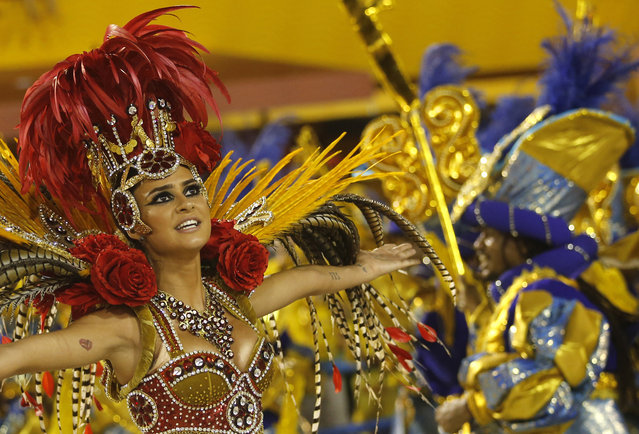
A performer from the Academicos do Grande Rio samba school dances during carnival celebrations at the Sambadrome in Rio de Janeiro, Brazil, early Monday, February 16, 2015. (Photo by Silvia Izquierdo/AP Photo)

A performer from the Academicos do Grande Rio samba school dances during carnival celebrations at the Sambadrome in Rio de Janeiro, Brazil, early Monday, February 16, 2015. (Photo by Silvia Izquierdo/AP Photo)
Details
19 Feb 2015 13:53:00
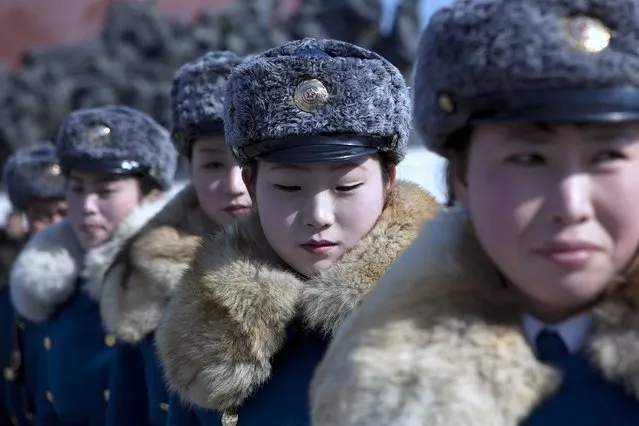
Female North Korean traffic police officers gather in front of bronze statues of the late leaders Kim Il Sung and Kim Jong Il to pay their respects in Pyongyang, North Korea on Saturday, February 16, 2013. North Koreans turned out to commemorate what would have been the 71th birthday of Kim Jong Il who died on December 17, 2011. (Photo by David Guttenfelder/AP Photo)

Female North Korean traffic police officers gather in front of bronze statues of the late leaders Kim Il Sung and Kim Jong Il to pay their respects in Pyongyang, North Korea on Saturday, February 16, 2013. North Koreans turned out to commemorate what would have been the 71th birthday of Kim Jong Il who died on December 17, 2011. (Photo by David Guttenfelder/AP Photo)
Details
31 Mar 2013 13:25:00