Loading...
Done
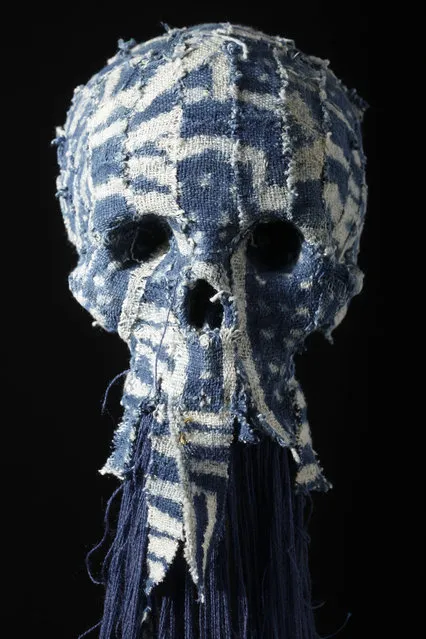
Skulls By Jim Skull

Inspired by personal experiences, a mix of cultures, rituals, and travelling the world, artist Jim Skull creates elaborate woven skull sculptures. He likes to be referred to as Jim Skull as a reflection of his interest in skulls; a symbol that he has been working with since the 1980s. He is currently living in France where he creates beautifully crafted sculptures out of rope, Papier-mâché, and other natural materials. He was born in New Caledonia and there’s no doubt that the influences of the tribal arts from Oceania, Africa, and North America are evident within his technique.
Details
11 Apr 2014 13:30:00
Labourers walk near trucks loaded with logs, which are trapped on a muddy road, near an unreserved forest in the village of Igbatoro, southwest Nigeria, August 28, 2014. (Photo by Akintunde Akinleye/Reuters)

Labourers walk near trucks loaded with logs, which are trapped on a muddy road, near an unreserved forest in the village of Igbatoro, southwest Nigeria, August 28, 2014. Wood, a form of biomass, is the sole source of energy for hundreds of millions of Africans who lack access to modern sources of power, and logging, both legal and illegal, remains a lucrative business that has contributed to the rapid shrinking of Africa's rainforests and woodlands. (Photo by Akintunde Akinleye/Reuters)
Details
21 Nov 2014 12:50:00
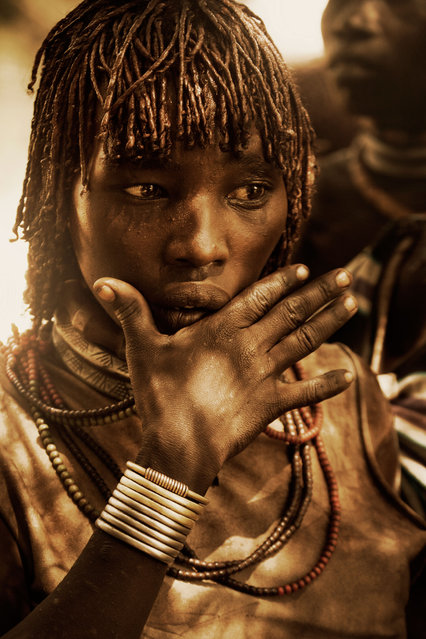
The Hamar people traditionally use red ocher clay to braid the hair of their women. (Photo by Diego Arroyo)

During his time in Ethiopia, New York-based art director and photographer Diego Arroyo spent time with the Hamar, Mursi, Dassanech, and Arbore Tribes. They, along with several others tribes, make up the 200,000 people situated in Africa’s Great Rift Valley. The people of the Omo Valley are still primarily herders and farmers, living an isolated and simple life. While they have yet to be truly touched by globalization, they could soon disappear. Their way of life is being threatened by a massive hydroelectric dam. (Photo by Diego Arroyo)
Details
13 Aug 2014 10:00:00
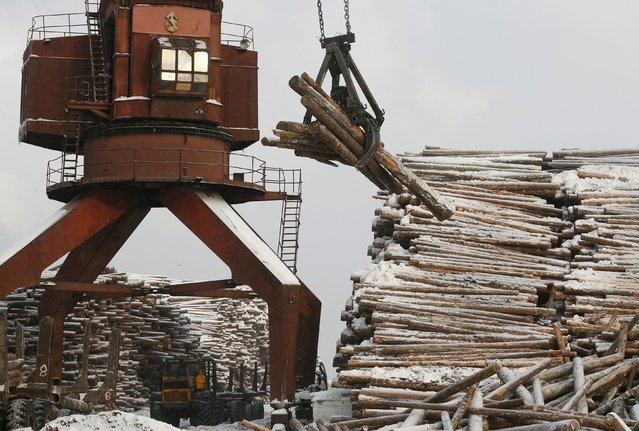
A crane loads logs at the Novoyeniseisk wood processing plant, with the air temperature at about minus 20 degrees Celsius (minus 4 degrees Fahrenheit), in the town of Lesosibirsk in Krasnoyarsk Region, Siberia, Russia, February 16, 2016. The plant exports timber to Europe, Northern Africa and Asia. The Taiga, also known as the boreal forest, on the coast of the Angara River and Yenisei River is one of the main areas for the industrial cutting of wood thanks to the high quality of the Angara pine. (Photo by Ilya Naymushin/Reuters)

A crane loads logs at the Novoyeniseisk wood processing plant, with the air temperature at about minus 20 degrees Celsius (minus 4 degrees Fahrenheit), in the town of Lesosibirsk in Krasnoyarsk Region, Siberia, Russia, February 16, 2016. The plant exports timber to Europe, Northern Africa and Asia. The Taiga, also known as the boreal forest, on the coast of the Angara River and Yenisei River is one of the main areas for the industrial cutting of wood thanks to the high quality of the Angara pine. Open air work continues all year around regardless to temperatures which can drop to minus 52 degrees Celsius (minus 61.6 degrees Fahrenheit), according to employees. (Photo by Ilya Naymushin/Reuters)
Details
18 Feb 2016 13:10:00
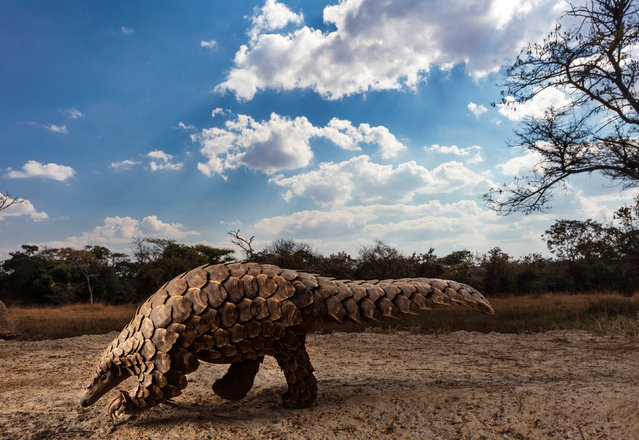
Pangolins in Crisis: Brent Stirton, South Africa; 1st place, Natural world and wildlife. “Pangolins are the world’s most illegally trafficked mammals, with an estimated one million trafficked to Asia in the last 10 years. Their scales are used in traditional Chinese and Vietnamese medicine, and their meat is sold as a high-priced delicacy. As a result, pangolins are listed as critically endangered and anyone who trades or consumes them is breaking the law. This body of work exposes the trade, while exploring aspects of illegality and celebrating the people who are trying to save these animals”. (Photo by Brent Stirton/Sony World Photography Awards 2020)

Pangolins in Crisis: Brent Stirton, South Africa; 1st place, Natural world and wildlife. “Pangolins are the world’s most illegally trafficked mammals, with an estimated one million trafficked to Asia in the last 10 years. Their scales are used in traditional Chinese and Vietnamese medicine, and their meat is sold as a high-priced delicacy. As a result, pangolins are listed as critically endangered and anyone who trades or consumes them is breaking the law. This body of work exposes the trade, while exploring aspects of illegality and celebrating the people who are trying to save these animals”. (Photo by Brent Stirton/Sony World Photography Awards 2020)
Details
11 Jun 2020 00:05:00
Undated image released Monday February 17, 2020, by Irish Coast Guard showing the abandoned cargo ship MV Alta, that has washed up on the coast of County Cork, near Ballycotton, southern Ireland. The MV Alta is believed to have had 10 crew members aboard who were rescued by the US Coast Guard. Since September 2018, the ship has been drifting with no crew aboard, and it was last seen off the coast of West Africa before being washed up in southern Ireland during Storm Dennis. (Photo by Irish Coast Guard via AP Photo)

Undated image released Monday February 17, 2020, by Irish Coast Guard showing the abandoned cargo ship MV Alta, that has washed up on the coast of County Cork, near Ballycotton, southern Ireland. The MV Alta is believed to have had 10 crew members aboard who were rescued by the US Coast Guard. Since September 2018, the ship has been drifting with no crew aboard, and it was last seen off the coast of West Africa before being washed up in southern Ireland during Storm Dennis. (Photo by Irish Coast Guard via AP Photo)
Details
05 Aug 2020 00:05:00
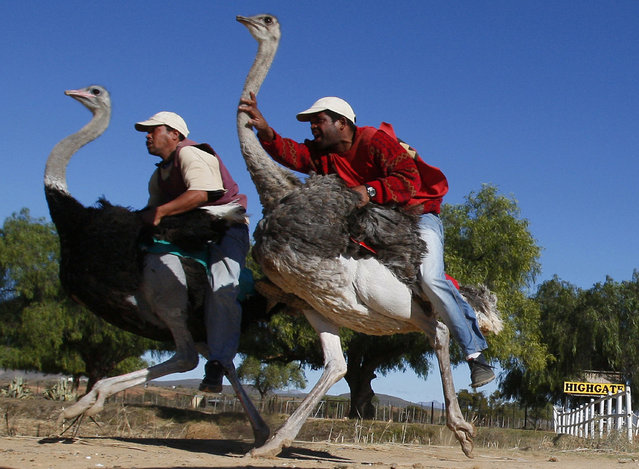
In this Sunday, June 27, 2010 file photo two men compete in an ostrich race at Highgate ostrich farm in Oudtshoorn, South Africa. Clambering onto an ostrich for a ride used to be popular among tourists in a South African town of  Oudtshoorn known of  as the  “ostrich capital of the world”. Not so much anymore. Two major ostrich farms in Oudtshoorn have stopped offering ostrich rides to tourists, responding to concerns about the birds’ welfare. A third farm is sticking with the feature, saying it is regulated and that ostriches do not experience discomfort.. The Highgate farm, however, continues to offer ostrich rides. (Photo by Shuji Kajiyama/AP Photo)

In this Sunday, June 27, 2010 file photo two men compete in an ostrich race at Highgate ostrich farm in Oudtshoorn, South Africa. Clambering onto an ostrich for a ride used to be popular among tourists in a South African town of Oudtshoorn known of as the “ostrich capital of the world”. Not so much anymore. Two major ostrich farms in Oudtshoorn have stopped offering ostrich rides to tourists, responding to concerns about the birds’ welfare. A third farm is sticking with the feature, saying it is regulated and that ostriches do not experience discomfort. The Highgate farm, however, continues to offer ostrich rides. (Photo by Shuji Kajiyama/AP Photo)
Details
20 Jun 2017 07:23:00
Humanoid robots of the children size league compete during the RoboCup 2006 football world championships

“RoboCup is an international robotics competition founded in 1997. The aim is to develop autonomous soccer robots with the intention of promoting research and education in the field of artificial intelligence. The name RoboCup is a contraction of the competition's full name, «Robot Soccer World Cup», but there are many other stages of the competition such as «Search and Rescue» and «Robot Dancing»”. – Wikipedia

Photo: Humanoid robots of the children size league compete during the RoboCup 2006 football world championships final at the Congress Centre on June 18, 2006 in Bremen, Germany. (Photo by Malte Christians/Bongarts/Getty Images)
Details
25 Oct 2011 13:22:00