Loading...
Done
In this November 2, 2018 photo, a voodoo believer who is supposed to be possessed with Gede spirit performs rituals near Baron Samedi's tomb during the annual Voodoo festival Fete Gede at Cite Soleil Cemetery in Port-au-Prince, Haiti. As a proof that they got into trance and their bodies got possessed by Gedes, they drink and wash their faces, their eyes and even their genitals with a mixture of raw rum and hot chili peppers that, according to believers, could burn the skin of any human alive. (Photo by Dieu Nalio Chery/AP Photo)

In this November 2, 2018 photo, a voodoo believer who is supposed to be possessed with Gede spirit performs rituals near Baron Samedi's tomb during the annual Voodoo festival Fete Gede at Cite Soleil Cemetery in Port-au-Prince, Haiti. As a proof that they got into trance and their bodies got possessed by Gedes, they drink and wash their faces, their eyes and even their genitals with a mixture of raw rum and hot chili peppers that, according to believers, could burn the skin of any human alive. (Photo by Dieu Nalio Chery/AP Photo)
Details
06 Nov 2018 00:05:00
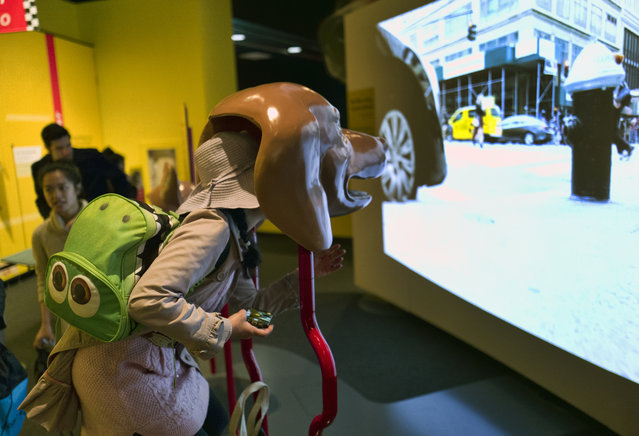
In this Tuesday, March 12, 2019 photo, a visitor takes part in an immersive experience showing visitors how dogs see from inside the head of a dog at the California Science Center in Los Angeles. A new exhibit at a Los Angeles museum examines the relationship between dogs and humans and explores why the two species seem to think so much alike and get along so well. “Dogs! A Science Tail” opens Saturday, March 16, 2019, at the California Science Center. (Photo by Richard Vogel/AP Photo)

In this Tuesday, March 12, 2019 photo, a visitor takes part in an immersive experience showing visitors how dogs see from inside the head of a dog at the California Science Center in Los Angeles. A new exhibit at a Los Angeles museum examines the relationship between dogs and humans and explores why the two species seem to think so much alike and get along so well. “Dogs! A Science Tail” opens Saturday, March 16, 2019, at the California Science Center. (Photo by Richard Vogel/AP Photo)
Details
15 Mar 2019 08:49:00
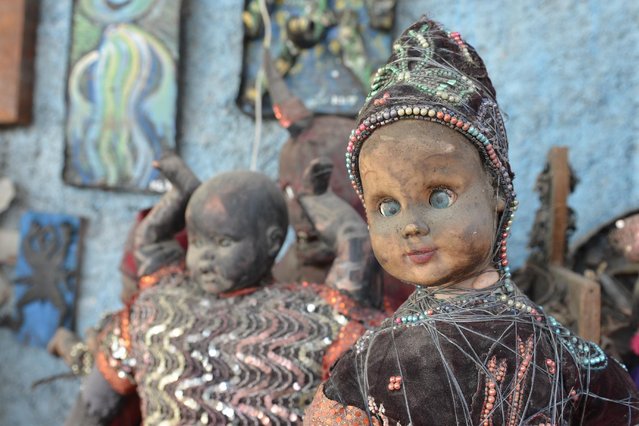
In this April 2, 2016 photo, dusty sculptures made of cast-off baby dolls sit in an open-air museum and art workshop off a trash-strewn street cutting through some of the poorest neighborhoods in Port-au-Prince, Haiti. They were created by Haitian artists called Atis Rezistans who have become celebrated in the international art world by creating sculptures out of scrapped car parts, old wood, discarded toys and even human skulls found scattered outside crumbling mausoleums. (Photo by David McFadden/AP Photo)

In this April 2, 2016 photo, dusty sculptures made of cast-off baby dolls sit in an open-air museum and art workshop off a trash-strewn street cutting through some of the poorest neighborhoods in Port-au-Prince, Haiti. They were created by Haitian artists called Atis Rezistans who have become celebrated in the international art world by creating sculptures out of scrapped car parts, old wood, discarded toys and even human skulls found scattered outside crumbling mausoleums. (Photo by David McFadden/AP Photo)
Details
12 Apr 2016 11:10:00
A petitioner with her grievances written on her clothes walks along a street in Beijing Tuesday, December 22, 2015. After months behind bars, Pu Zhiqiang, one of China's most prominent human rights lawyers, left a detention center Tuesday after receiving a suspended prison sentence in a case involving online comments critical of the ruling Communist Party. (Photo by Ng Han Guan/AP Photo)

A petitioner with her grievances written on her clothes walks along a street in Beijing Tuesday, December 22, 2015. After months behind bars, Pu Zhiqiang, one of China's most prominent human rights lawyers, left a detention center Tuesday after receiving a suspended prison sentence in a case involving online comments critical of the ruling Communist Party. (Photo by Ng Han Guan/AP Photo)
Details
26 Dec 2015 08:05:00
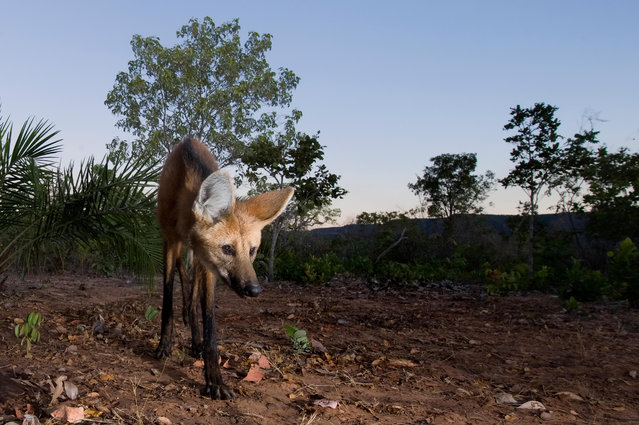
The maned wolf is among the large mammals in the Brazilian Cerrado that are threatened by the increasing conversion of grasslands into farmland for grazing and growing crops. (Photo by Ben Cranke/Nature Picture Library/Alamy Stock Photo)

Global wildlife populations will decline by 67% by 2020 unless urgent action is taken to reduce human impact on species and ecosystems, warns the biennial Living Planet Index report from WWF (World Wide Fund for Nature) and ZSL (Zoological Society of London). From elephants to eels, here are some of the wildlife populations most affected by human activity. Here: The maned wolf is among the large mammals in the Brazilian Cerrado that are threatened by the increasing conversion of grasslands into farmland for grazing and growing crops. (Photo by Ben Cranke/Nature Picture Library/Alamy Stock Photo)
Details
28 Oct 2016 10:47:00
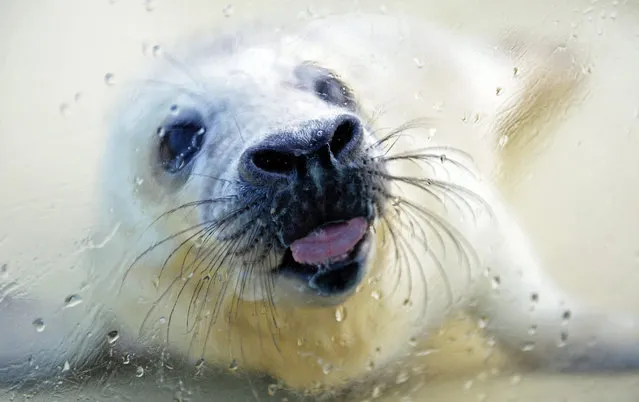
Grey seal pup “Nikolaus” licks a window at the seal enclosure in Friedrichskoog, Germany, 19 December 2014. The pup was abandoned by his mother and would not have a chance at survival without human help. Nikolaus will be fed at the enclosure for two to three months until he has reached the minimum weight of 45 kilograms for being released. (Photo by Daniel Reinhardt/EPA)

Grey seal pup “Nikolaus” licks a window at the seal enclosure in Friedrichskoog, Germany, 19 December 2014. The pup was abandoned by his mother and would not have a chance at survival without human help. Nikolaus will be fed at the enclosure for two to three months until he has reached the minimum weight of 45 kilograms for being released. (Photo by Daniel Reinhardt/EPA)
Details
20 Dec 2014 12:18:00
Caporal dancers perform during the carnival celebrations in Oruro, Bolivia, Saturday February 14, 2015. The Carnival of Oruro which is a religious festival dating back more than 2000 years in an ongoing pagan-catholic blend of religious practice in the region, and is one of UNESCO's Masterpieces of the Oral and Intangible Heritage of Humanity. (Photo by Juan Karita/AP Photo)

Caporal dancers perform during the carnival celebrations in Oruro, Bolivia, Saturday February 14, 2015. The Carnival of Oruro which is a religious festival dating back more than 2000 years in an ongoing pagan-catholic blend of religious practice in the region, and is one of UNESCO's Masterpieces of the Oral and Intangible Heritage of Humanity. (Photo by Juan Karita/AP Photo)
Details
17 Feb 2015 12:25:00
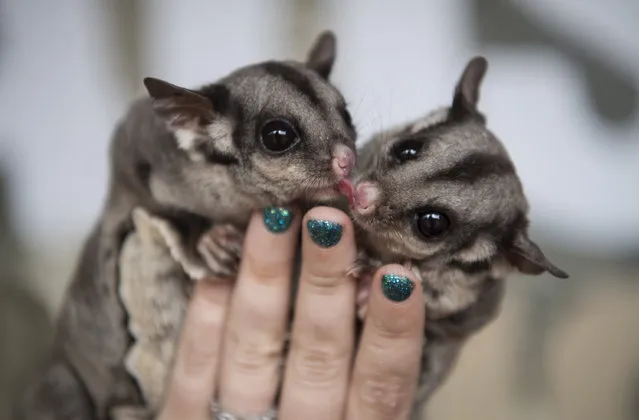
Sugar gliders, Candy and Popcorn, enjoy their favourite food, Nectar, at Wild Life Sydney Zoo on February 14, 2017 in Sydney, Australia. The treat made up of honey, high protein baby cereal and egg yolks is the human equivalent to chocolate to the Sugar Gliders. St. Valentine's Day or the Feast of Saint Valentine began as a celebration of the early Christian Saint Valentinus. From the 18th Century onwards it has steadily transformed into a celebration of romantic love and sentiment in many countries around the world. (Photo by James D. Morgan/Getty Images)

Sugar gliders, Candy and Popcorn, enjoy their favourite food, Nectar, at Wild Life Sydney Zoo on February 14, 2017 in Sydney, Australia. The treat made up of honey, high protein baby cereal and egg yolks is the human equivalent to chocolate to the Sugar Gliders. St. Valentine's Day or the Feast of Saint Valentine began as a celebration of the early Christian Saint Valentinus. From the 18th Century onwards it has steadily transformed into a celebration of romantic love and sentiment in many countries around the world. (Photo by James D. Morgan/Getty Images)
Details
19 Feb 2017 00:00:00