Loading...
Done
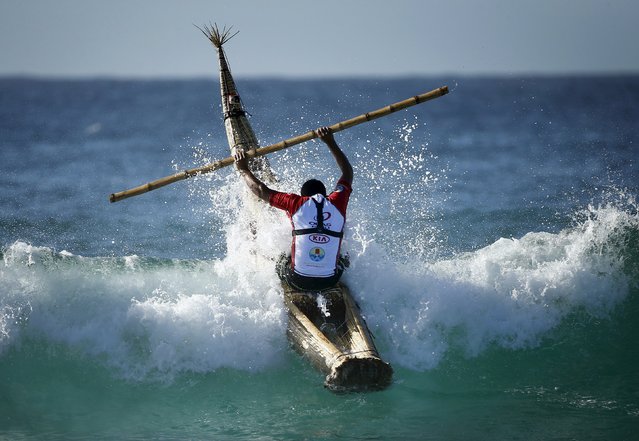
Peruvian surfer Carlos “Huevito” Areola rides a reed board, or “caballito” (little horse), into a wave at Sydney's Bondi Beach, February 24, 2016. (Photo by Jason Reed/Reuters)

Peruvian surfer Carlos “Huevito” Areola rides a reed board, or “caballito” (little horse), into a wave at Sydney's Bondi Beach, February 24, 2016. Areola is part of a group of Peruvian surfers touring Australia’s east coast to promote the use of the “caballito”. The “caballito” is thought to have been invented around 3,000 BC in northern Peru. (Photo by Jason Reed/Reuters)
Details
25 Feb 2016 11:46:00
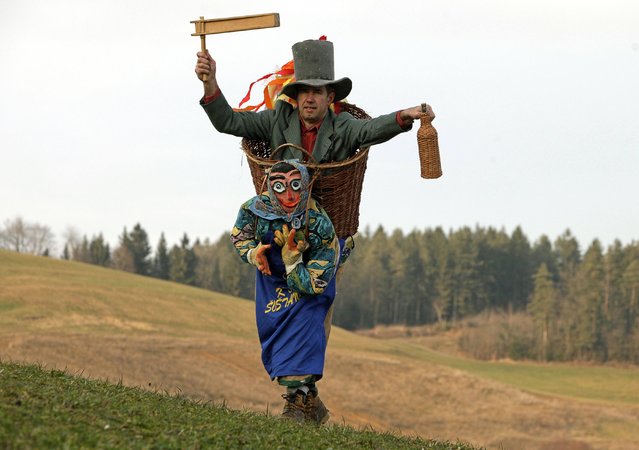
A man wearing a native costume named “Woman Carrying Husband” poses ahead of the Carnival in Sostanj January 15, 2015. (Photo by Srdjan Zivulovic/Reuters)

A man wearing a native costume named “Woman Carrying Husband” poses ahead of the Carnival in Sostanj January 15, 2015. Slovenians and members of various ethnological groups celebrate the annual carnival, also known locally as Pust, by wearing traditional masks and costumes to symbolically “chase away” the winter. Prust runs from February 7 to 17 this year. (Photo by Srdjan Zivulovic/Reuters)
Details
08 Feb 2015 12:07:00
The deadly fish were just one form on entertainment employed by the establishment in the Thai capital Bangkok. (Photo by SWNS.com)

Horrified animal welfare groups fear baby sharks kept as a bizarre attraction in a brothel have been eaten – by the landlord. Shocking videos show the the fish crammed into an aquarium illuminated with red lights hanging above s*x works at a seedy “gentlemen's club” in, Bangkok Thailand. Five exotic black tip sharks – which can grow up to 8.5ft – float in the filthy water while holidaymakers take their pick of women in skimpy dresses. The deadly fish were just one form on entertainment employed by the establishment in the Thai capital Bangkok. (Photo by SWNS.com)
Details
21 Sep 2016 10:14:00
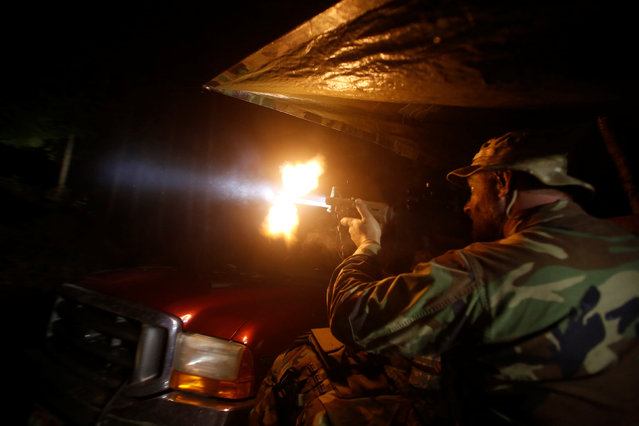
Members of the Oath Keepers and general public return fire during a simulated attack as they take part in a tactical training session in northern Idaho, U.S. October 1, 2016. (Photo by Jim Urquhart/Reuters)

Members of the Oath Keepers and general public return fire during a simulated attack as they take part in a tactical training session in northern Idaho, U.S. October 1, 2016. In April 2015 Reuters photographer Jim Urquhart was assigned to cover the Oath Keepers during a tour of the Sugar Pine gold mine in Oregon after the group of former cops, military, firefighters and other first responders had risen to prominence during a standoff in Nevada over land rights. (Photo by Jim Urquhart/Reuters)
Details
05 Nov 2016 12:05:00
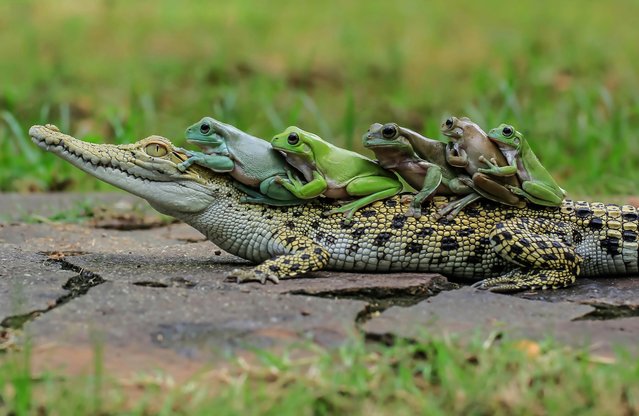
Clearly comfortable in the croc’s company the amphibians wait patiently for their chauffeur to move. But the bemused crocodile doesn’t appear to be going anywhere in a hurry. The hilarious images were captured by Tanto Yensen, 36, from Jakarta, Indonesia. (Photo by Tanto Yensen/Media Drum World Photo Agency)

A group of frogs hitched a lift on a passing crocodile. Clearly comfortable in the croc’s company the amphibians wait patiently for their chauffeur to move. But the bemused crocodile doesn’t appear to be going anywhere in a hurry. The hilarious images were captured by Tanto Yensen, 36, from Jakarta, Indonesia. (Photo by Tanto Yensen/Media Drum World Photo Agency)
Details
06 Nov 2016 11:12:00
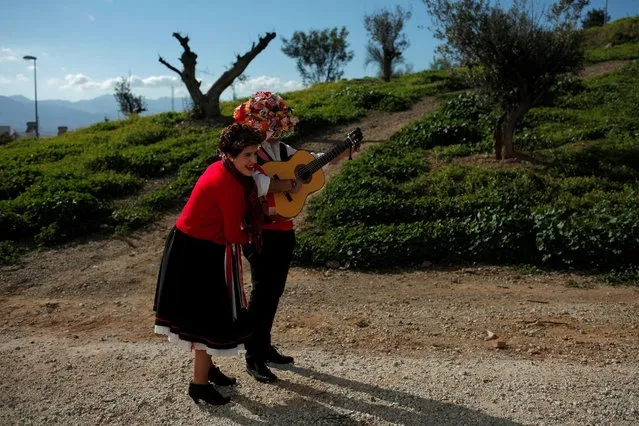
People in traditional costumes prepare before competing in the 55th Verdiales music contest in Malaga, southern Spain December 28, 2016. (Photo by Jon Nazca/Reuters)

People in traditional costumes prepare before competing in the 55th Verdiales music contest in Malaga, southern Spain December 28, 2016. Verdiales is a form of traditional Flamenco music, which is common in the province of Malaga. Members of singing groups, known as “pandas”, wear traditional costumes decked with flowers and other accessories as they perform in the contest, which is held annually on December 28. (Photo by Jon Nazca/Reuters)
Details
29 Dec 2016 07:33:00
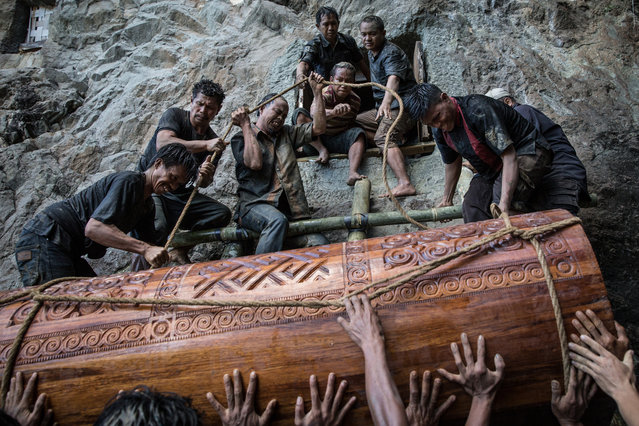
It is said that Torajans are people who “live to die”. For this Indonesian ethnic group, funerals are such extravagant events that they sometimes attract tourists. Families can postpone burials years (and the deceased are considered sick and hosted at home until the funeral) until the family can raise enough money and gather as many relatives as possible. And then it’s a jubilant multiday social event with a parade, dances and animal sacrifices. Agung Parameswara photographed these funerary practices when he traveled to South Sulawesi province, where the Torajans live. But often, their funeral isn’t the last time the dead are seen. In August, crypts are opened, coffins are slid back out and bodies delicately unsheathed. This tender ritual is known as Ma’Nene, which is customarily performed every few years. (Photo by Agung Parameswara/The Washington Post)

It is said that Torajans are people who “live to die”. For this Indonesian ethnic group, funerals are such extravagant events that they sometimes attract tourists. Families can postpone burials years (and the deceased are considered sick and hosted at home until the funeral) until the family can raise enough money and gather as many relatives as possible. And then it’s a jubilant multiday social event with a parade, dances and animal sacrifices. Agung Parameswara photographed these funerary practices when he traveled to South Sulawesi province, where the Torajans live. (Photo by Agung Parameswara/The Washington Post)
Details
06 Oct 2016 09:15:00
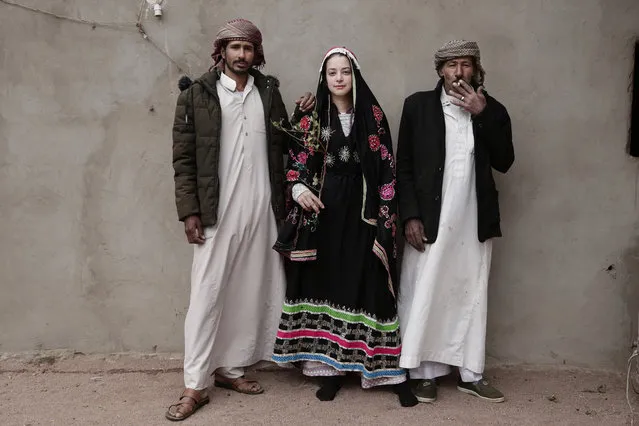
In this March 31, 2019 photo, an Egyptian student borrows a Bedouin wedding dress to pose for a photograph with Bedouin men from the Hamada tribe, in Wadi Sahw, Abu Zenima, in South Sinai, Egypt. Four Bedouin women are for the first time leading tours in Egypt’s Sinai Peninsula, breaking new ground in their deeply conservative community, where women almost never work outside the home or interact with outsiders.  The tourists can only be women, and the tours can’t go overnight. Each day before the sun sets, the group returns to the Hamada’s home village in Wadi Sahu, a narrow desert valley. (Photo by Nariman El-Mofty/AP Photo)

In this March 31, 2019 photo, an Egyptian student borrows a Bedouin wedding dress to pose for a photograph with Bedouin men from the Hamada tribe, in Wadi Sahw, Abu Zenima, in South Sinai, Egypt. Four Bedouin women are for the first time leading tours in Egypt’s Sinai Peninsula, breaking new ground in their deeply conservative community, where women almost never work outside the home or interact with outsiders. The tourists can only be women, and the tours can’t go overnight. Each day before the sun sets, the group returns to the Hamada’s home village in Wadi Sahu, a narrow desert valley. (Photo by Nariman El-Mofty/AP Photo)
Details
11 Apr 2019 00:01:00