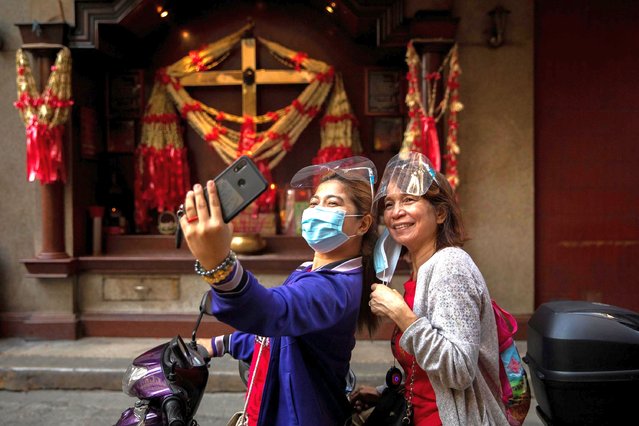
Women wearing masks and shields take a selfie in front of a praying altar during Lunar New Year in Chinatown in Manila, Philippines, February 12, 2021. (Photo by Eloisa Lopez/Reuters)
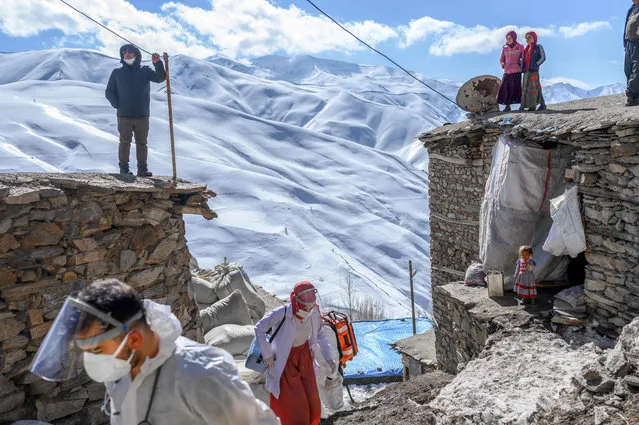
In this photograph taken on February 15, 2021, doctor Sergen Saracoglu (L) and nurse Yilzdiz Ayten (C) from the Bahcesaray public hospital vaccination team, arrive at the village of Guneyyamac in eastern Turkey, as part of an expedition to vaccinate residents of 65 years old or above with Sinovac's CoronaVac Covid-19 vaccine. (Photo by Bulent Kilic/AFP Photo)
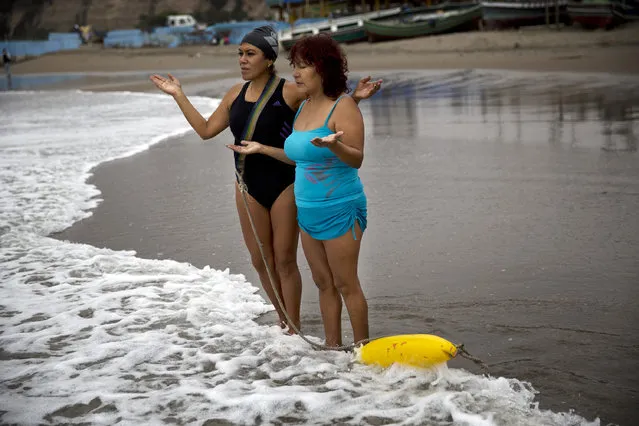
In this May 8, 2015 photo, sisters Zoraida Infante, left, and Graciela Trujillo pray on Fishermen's Beach before therapeutic swimming in the Pacific Ocean in Lima, Peru. Under overcast skies, the bathers practice thalassotherapy, which derives from the Greek “thalasso”, for “sea”, and draws on the ocean's healing properties. (Photo by Rodrigo Abd/AP Photo)
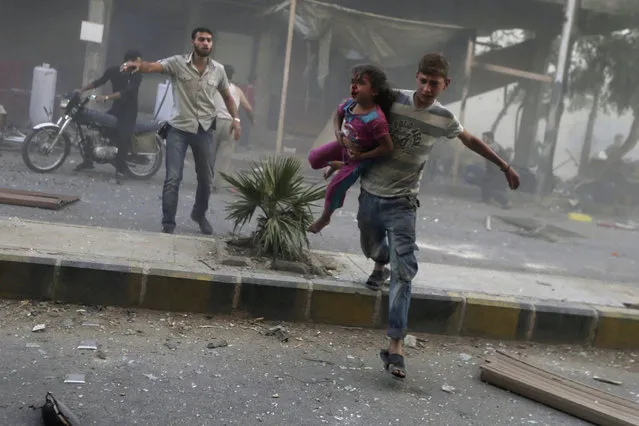
A man carries an injured girl after what activists said were five air strikes by forces loyal to Syria's President Bashar al-Assad in Douma, eastern al-Ghouta, near Damascus September 11, 2014. (Photo by Bassam Khabieh/Reuters)
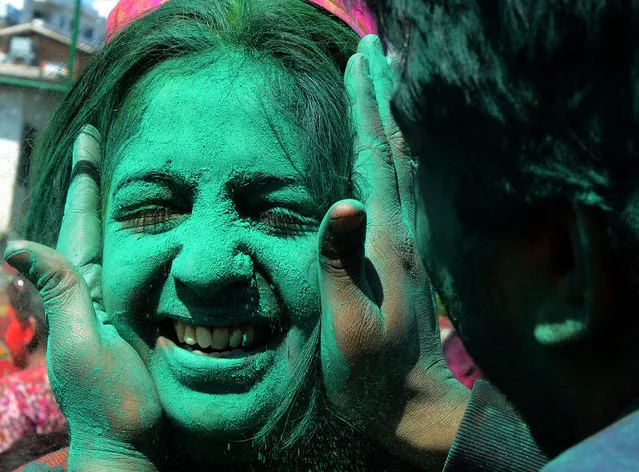
Members of the Nepalese ethnic Madhesi community daub each other's faces with coloured powders during Holi festival celebrations in Kathmandu on March 6, 2015. The Holi festival of colours is a riotous celebration of the coming of spring and falls on the day of the full moon in March every year. AFP PHOTO / PRAKASH MATHEMA (PRAKASH MATHEMA/AFP/Getty Images)
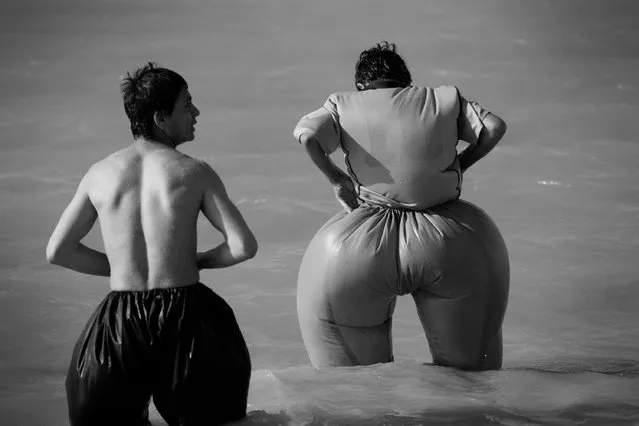
“Life in War” (FotoEvidence Press) by Iranian photographer Majid Saeedi is probably the only book about Afghanistan that doesn’t show images of war. For ten years his camera photographed daily life in the context of war. His photographs reveal the humanity of a people living through decades of war. Here: Afghan men escape increasing summer temperatures by wading in the Qarga reservoir on July 9, 2010 in a suburb of Kabul, Afghanistan. (Photo by Majid Saeedi/Getty Images)
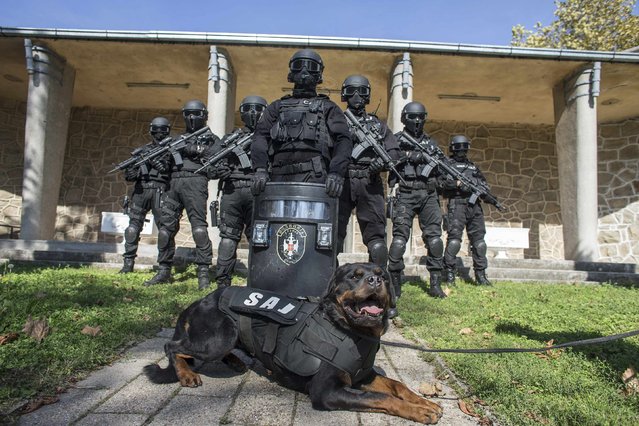
Serbian police officers of the Special Anti-Terrorist Unit pose for a picture in their base outside Belgrade October 8, 2014. When the killing of an unarmed black teenager by a white policeman in Ferguson, Missouri, in August sparked sometimes violent protests, the response of police in camouflage gear and armoured vehicles wielding stun grenades and assault rifles seemed more like a combat operation than a public order measure. Some U.S. police departments have recently acquired U.S. military-surplus hardware from wars abroad, but there are many law enforcers around the world whose rules of engagement also allow the use of lethal force with relatively few restrictions. But for every regulation that gives police wide scope to use firearms, there is another code that sharply limits their use. In Serbia, police may use measures ranging from batons to special vehicles, water cannon and tear gas on groups of people who have gathered illegally and are behaving in a way that is violent or could cause violence, but they may use firearms only when life is endangered. (Photo by Marko Djurica/Reuters)
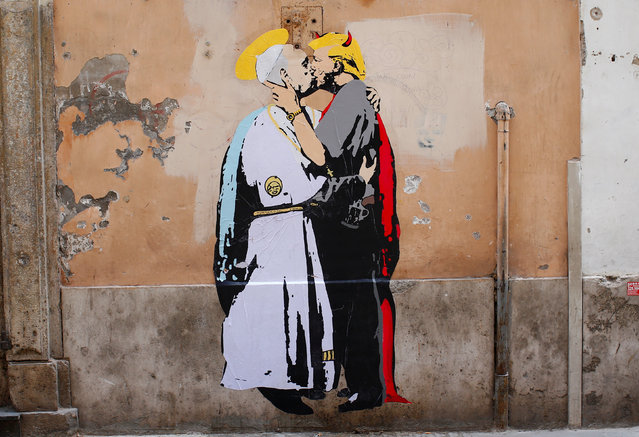
A mural signed by “TV Boy” and depicting Pope Francis and U.S. President Donald Trump kissing, is seen on a wall in downtown Rome, Italy on May 11, 2017. (Photo by Tony Gentile/Reuters)