Loading...
Done
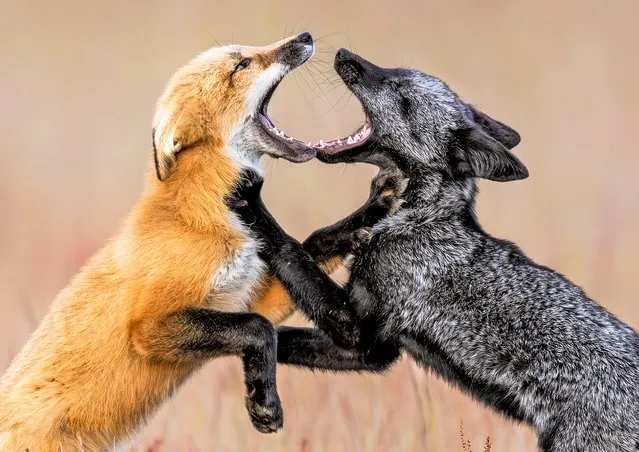
The rabbit population of San Juan Island, brought in to feed lighthouse keepers, got so big that in the 1930s foxes were introduced to kill them. Although they are red foxes, their coats can be orange, silver, black or multi-coloured. Picture date: September 2023. (Photo by Jun Zuo/Solent News)

The rabbit population of San Juan Island, brought in to feed lighthouse keepers, got so big that in the 1930s foxes were introduced to kill them. Although they are red foxes, their coats can be orange, silver, black or multi-coloured. Picture date: September 2023. (Photo by Jun Zuo/Solent News)
Details
08 Oct 2023 04:03:00
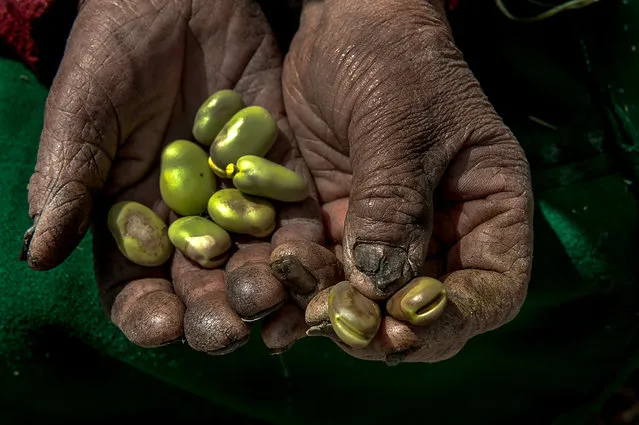
The hard-worked hands of Jacaba Coaquira, 80, holding the green beans she grew on her land. This year the production of her land was affected by lack of rain and early cold weather that froze the crops before they finished growing. Santiago de Okola, Bolivia. (Photo by Renée C. Byer/Living on a Dollar a Day)

The hard-worked hands of Jacaba Coaquira, 80, holding the green beans she grew on her land. This year the production of her land was affected by lack of rain and early cold weather that froze the crops before they finished growing. Santiago de Okola, Bolivia. (Photo by Renée C. Byer/Living on a Dollar a Day)
Details
16 Oct 2014 13:11:00
Indian folk dancers display ornaments during a break while participating in the first night of Navratri in Gandhinagar, some 30 km from Ahmedabad, on October 13, 2015. Navratri festivities, or Dance Festival of Nine Nights, takes place between October 13-21. (Photo by Sam Panthaky/AFP Photo)

Indian folk dancers display ornaments during a break while participating in the first night of Navratri in Gandhinagar, some 30 km from Ahmedabad, on October 13, 2015. Navratri festivities, or Dance Festival of Nine Nights, takes place between October 13-21. (Photo by Sam Panthaky/AFP Photo)
Details
23 Oct 2015 08:04:00
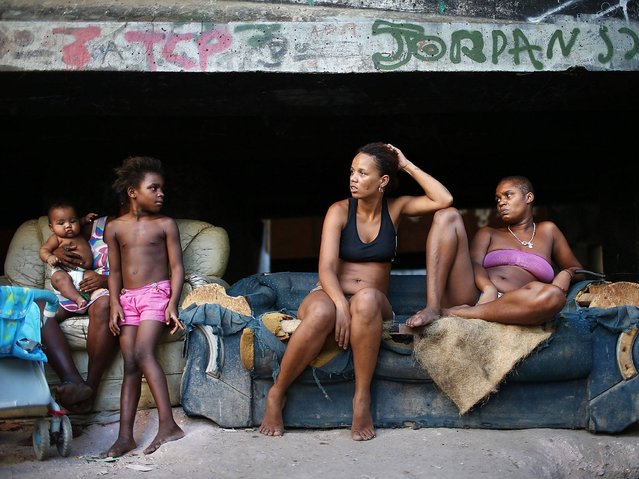
Residents (R to L) Luiza, Janubie, Leiticia and Lucas sit beneath an overpass near their houses in an impoverished area in the unpacified Complexo da Mare slum complex, one of the largest “favela” complexes in Rio de Janeiro. (Photo by Mario Tama/Getty Images)

Residents (R to L) Luiza, Janubie, Leiticia and Lucas sit beneath an overpass near their houses in an impoverished area in the unpacified Complexo da Mare slum complex, one of the largest “favela” complexes in Rio, on March 18, 2014 in Rio de Janeiro, Brazil. (Photo by Mario Tama/Getty Images)
Details
21 Mar 2014 06:07:00


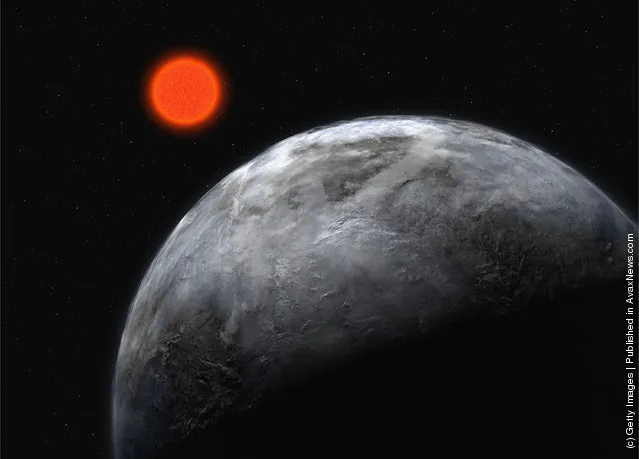
In this artist's impression supplied by the ESO (European Southern Observatory) on April 25, 2007, the planetary system around the red dwarf, Gliese 581, is pictured showing what astronomers believe is the most earth like planet found outside our solar system to date. Using the ESO 3.6-m telescope in Chile, astronomers have uncovered the planet which could have water running on its surface. The planet orbits the faint star Gliese 581, which is 20.5 light-years away in the constellation Libra. (Photo by ESO via Getty Images)
Details
12 Apr 2011 11:00:00
A swan is carried down the nave of the cathedral during the Procession of the Animals at the 31st annual Feast of Saint Francis and Blessing of the Animals at The Cathedral of St. John the Divine in the Manhattan borough of New York on October 4, 2015. (Photo by Elizabeth Shafiroff/Reuters)

A swan is carried down the nave of the cathedral during the Procession of the Animals at the 31st annual Feast of Saint Francis and Blessing of the Animals at The Cathedral of St. John the Divine in the Manhattan borough of New York on October 4, 2015. (Photo by Elizabeth Shafiroff/Reuters)
Details
08 Oct 2015 08:02:00
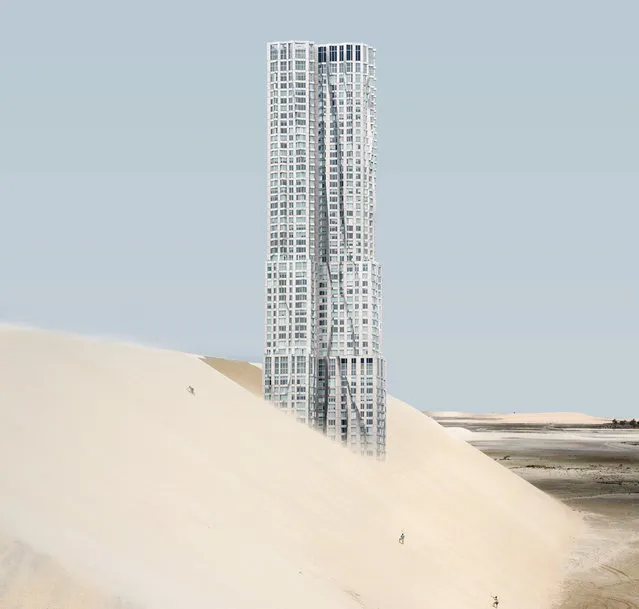
8 Spruce Street/New York By Gehry. Repponen has designed everything from skateboards and milk bottles to concepts for Estonia’s Olympic uniforms. (Photo by Anton Repponen/The Guardian)

Using digital editing, designer Anton Repponen places Manhattan buildings in desolate landscapes, “inviting viewers to see them as if for the first time”. Here: 8 Spruce Street/New York By Gehry. Photo by Anton Repponen/The Guardian)
Details
14 Jun 2016 12:42:00
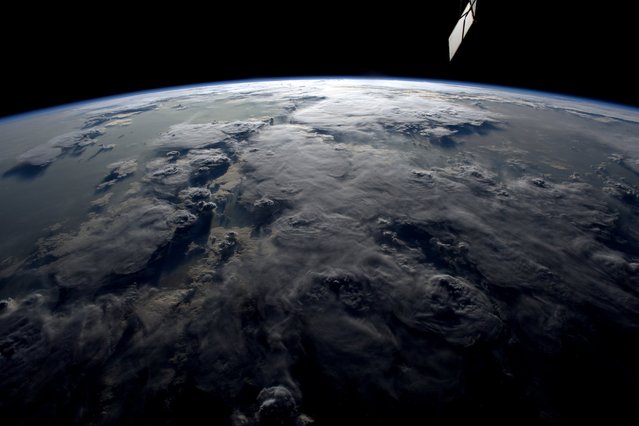
European Space Agency astronaut Tim Peake will return home after a six-month long mission on the International Space Station,on June 18, 2016. Peake was the first British ESA astronaut to visit the ISS and captured hundreds of photographs of the Earth during his mission. Here: “Lots of sun-glint right now during our whole orbit – we haven't seen a sunset for over 3 days”, he wrote. (Photo by Tim Peake/ESA/NASA)

European Space Agency astronaut Tim Peake will return home after a six-month long mission on the International Space Station,on June 18, 2016. Peake was the first British ESA astronaut to visit the ISS and captured hundreds of photographs of the Earth during his mission. Here: “Lots of sun-glint right now during our whole orbit – we haven't seen a sunset for over 3 days”, he wrote. (Photo by Tim Peake/ESA/NASA)
Details
18 Jun 2016 13:08:00