
25 Mar 2015 11:20:00,post received
0 comments

Details
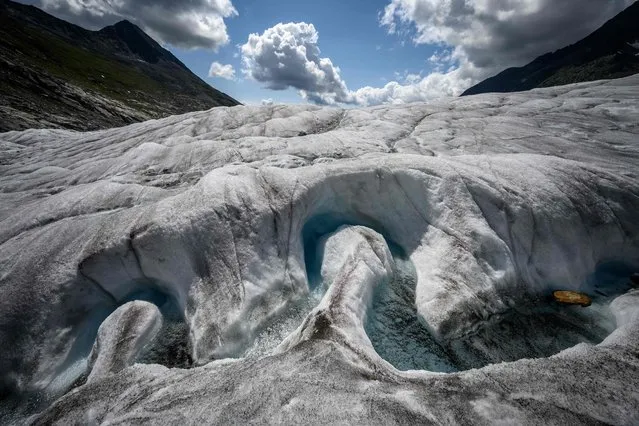
A picture taken on August 25, 2021 shows a view of the Aletsch Glacier. After hiking for hours across the mountain and a vast expanse of white, Swiss glaciologist Matthias Huss crouches down near the middle of the massive glacier and checks the measurements. Analysis of the data gathered from Aletsch, the largest glacier in the Alps, paints a dire picture of the toll that climate change is taking on the behemoth. (Photo by Fabrice Coffrini/AFP Photo)
21 Oct 2021 08:38:00,post received
0 comments
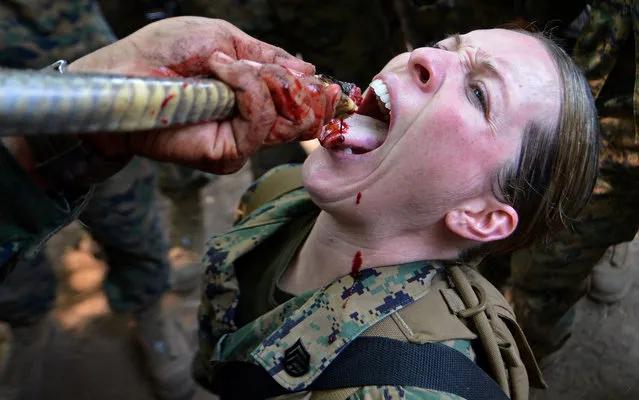
During a jungle survival program February 20, 2013 taught by Royal Thai Special Forces in Sannapit, Thailand, U.S. Marines learned to catch cobras and drink their fresh blood, not to mention eat forest insects and pull the heads off of chicken. The training was part of Operation Cobra Gold 13, the 32nd edition of international military exercises hosted by the Thai. According to a U.S. Marines press release, Cobra Gold is the largest exercise of its kind in Asia and incorporates troops from five other nations in addition to the U.S. and Thailand. The Daily Mail reports that the Marines were invited to experience the local custom of drinking cobra blood after being taught to catch and kill cobras in the wild. As CNN notes, Cobra blood is believed to be a panacea and aphrodiasic in parts of Southeast Asia. In Jakarta, vendors can earn over $100 a night selling shots of cobra blood mixed with liquor. (Photo by Pornchai Kittiwongsakul/AFP Photo)
23 Feb 2013 11:52:00,post received
0 comments
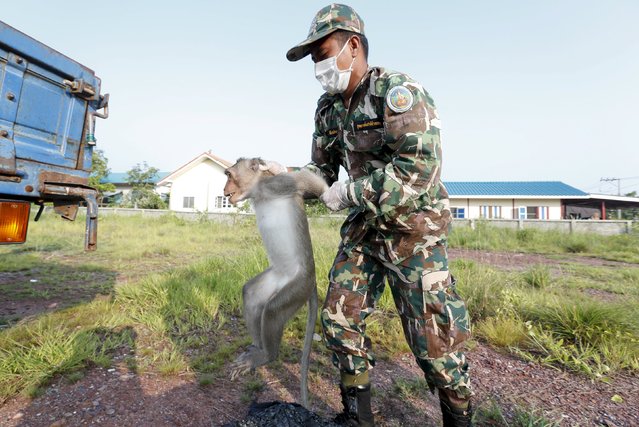
A Thai wildlife department official carries a long-tailed macaque to a cage at a village in Bangkok, Thailand, September 21, 2015. Thai authorities were relocating the long-tailed macaques on Monday to lessen conflicts with the local community. (Photo by Chaiwat Subprasom/Reuters)
23 Sep 2015 08:07:00,post received
0 comments
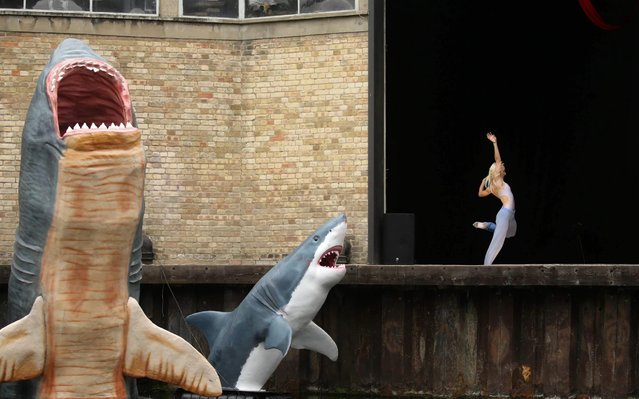
Dancers from The Royal Ballet perform beside the Regent's Canal in London on August 30, 2020, one of three performances they put on daily on weekends to experience performing in front of a live socially-distanced audience. (Photo by Isabel Infantes/AFP Photo)
11 Dec 2020 00:05:00,post received
0 comments
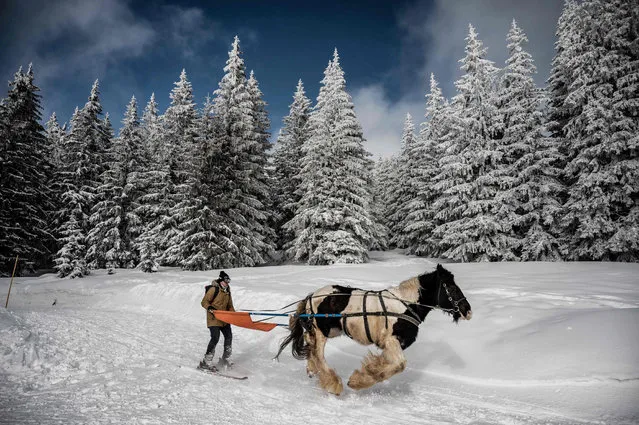
A person practices ski-joering at the Avoriaz resort in the French Alps on February 11, 2021. (Photo by Jeff Pachoud/AFP Photo)
08 Apr 2021 10:41:00,post received
0 comments
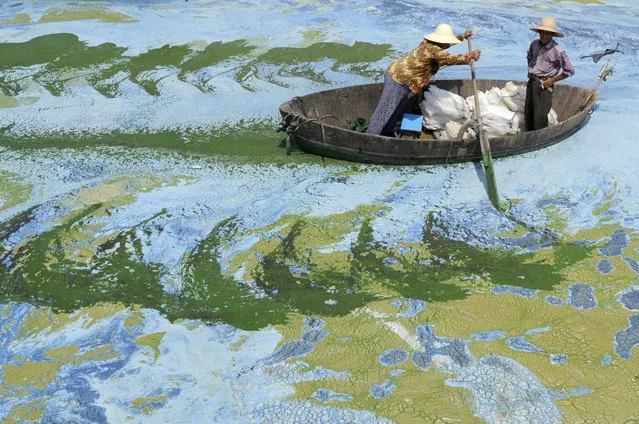
Growing cities, overuse of fertilizers and factory wastewater have degraded China's water supplies to the extent that half the nation's rivers and lakes are severely polluted. China aims to spend $850 billion to improve filthy water supplies over the next decade, but even such huge outlays may do little to reverse damage caused by decades of pollution and overuse in Beijing's push for rapid economic growth. Photo: Fishermen row a boat in the algae-filled Chaohu Lake in Hefei, Anhui province, June 19, 2009. (Photo by Jianan Yu/Reuters)
03 Aug 2014 08:01:00,post received
0 comments
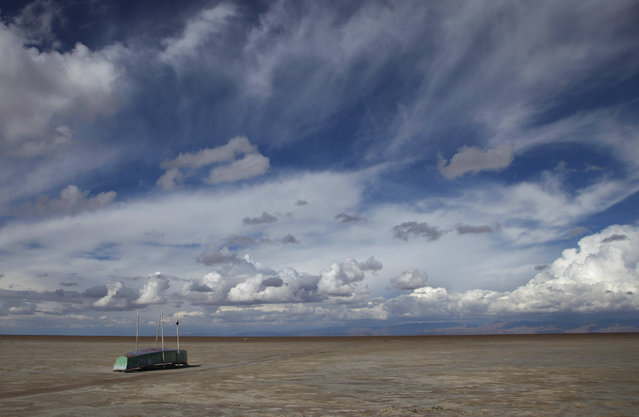
In this January 12, 2016 photo, an abandoned boat lies on the dried up lake bed of Lake Poopo, on the outskirts of Untavi, Bolivia. Drought caused by the recurrent El Nino meteorological phenomenon is considered the main driver of the lake's demise. Along with glacial melting, authorities say another factor is the diversion of water from Poopo's tributaries, mostly for mining but also for agriculture. (Photo by Juan Karita/AP Photo)
21 Jan 2016 12:33:00,post received
0 comments