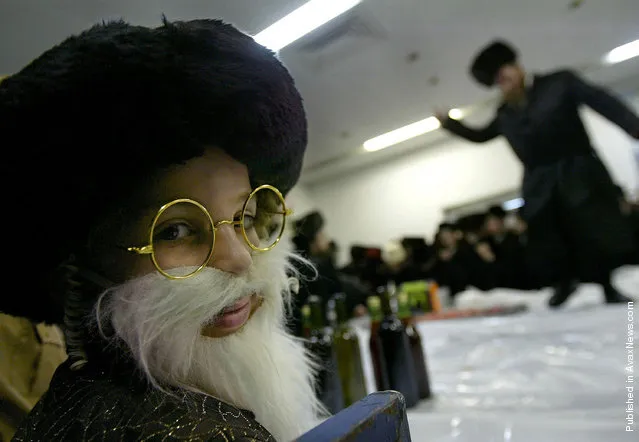
An Israeli girl in costume, celebrates the Jewish festival of Purim on March 5, 2004, in Tel Aviv, Israel. The Festival commemorates the rescue of Jews from genocide in ancient Persia.
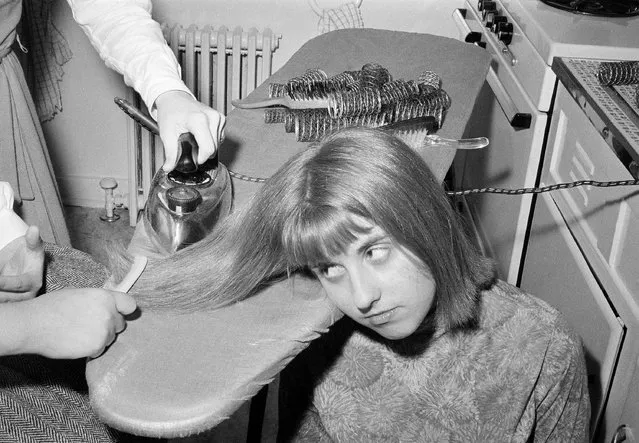
Teenage girls are all steamed up these days about straight hair. The steam iron is replacing the huge rollers on which countless teens slept every night to achieve the height and curls fashionable until. The same girls endure having their hair stretched to absolute straightness on the ironing board, and then ironed to keep it that way. Unlike the roller setting, this takes teamwork. Gay Stilley, 14, goes through an ironing session with a couple of her friends at the Stilley Home in Glen Oaks, Queens, New York City on December 23, 1964. With a wary eye, Gay tries to watch the straightening process as one friend stretches her hair with a comb and another does the ironing, in the Stilley kitchen. (Photo by Marty Zimmerman/AP Photo)
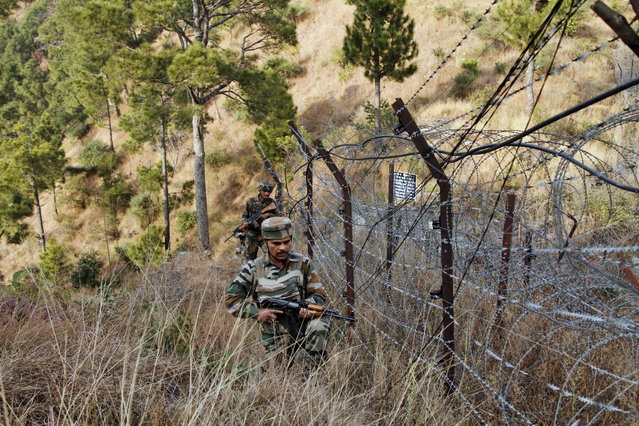
In this December 23, 2013 photo, Indian army soldiers patrol near one of their forward post at the Line of Control (LOC), that divides Kashmir between India and Pakistan, at Krishna Ghati (KG Sector) in Poonch, 290 kilometers (180 miles) from Jammu, India. The military commanders of longtime rivals India and Pakistan met on Tuesday in a bid to stop frequent cross-border attacks in disputed Kashmir which escalated tensions in the region in recent months. (Photo by Channi Anand/AP Photo)
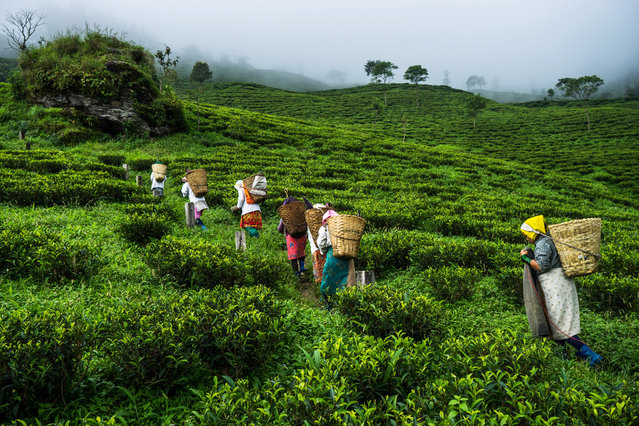
Workers carry baskets of hand-picked tea leaves at the Makaibari Tea Estate in Kurseong, West Bengal, India, on Monday, September 8, 2014. The 155-year-old Makaibari Tea Estate recently sold it's Darjeeling tea, named Silver Tips Imperial, for $1,850 a kilo to buyers from the U.K., the U.S. and Japan, becoming the most expensive Indian tea ever sold. (Photo by Sanjit Das/Bloomberg)
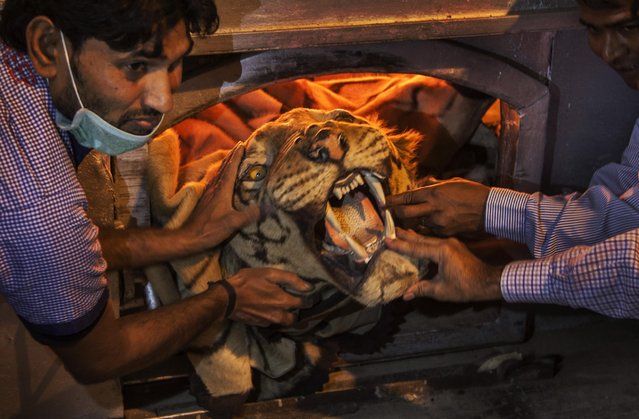
Indian authorities hold a tiger skin as they set fire to a stockpile of illegal wildlife parts at the Delhi Zoo in New Delhi, India, Sunday, November 2, 2014. A stockpile of tiger skins, elephant tusks, rhino horns and other illegal animal parts were burned Sunday in an effort to discourage wildlife smuggling in South Asia. (Photo by Tsering Topgyal/AP Photo)
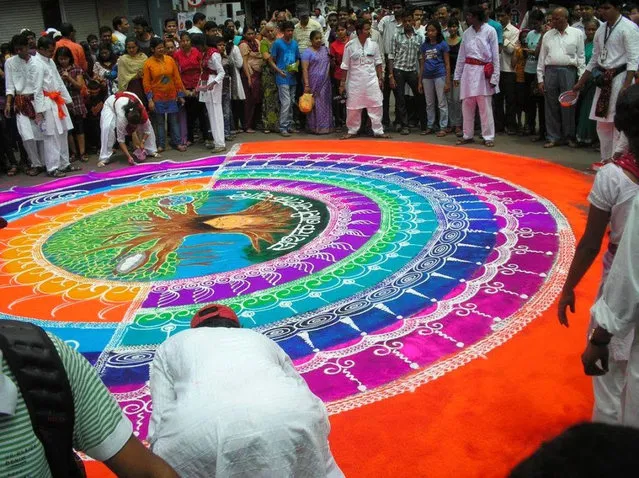
Rangoli, also known as kolam or Muggu, is a folk art from India in which patterns are created on the floor in living rooms or courtyards using materials such as colored rice, dry flour, colored sand or flower petals. It is usually made during Diwali, Onam, Pongal and other Indian festivals. They are meant to be sacred welcoming areas for the Hindu deities. The ancient symbols have been passed down through the ages, from each generation to the next, keeping both the art form and the tradition alive. Similar practices are followed in different Indian states: in Tamil Nadu, there is Kolam in Tamil Nadu; Mandana in Rajasthan; Chaookpurna in Chhattisgarh; Alpana in West Bengal; Aripana in Bihar; Chowk pujan in Uttar Pradesh; Muggu in Andhra Pradesh and others.
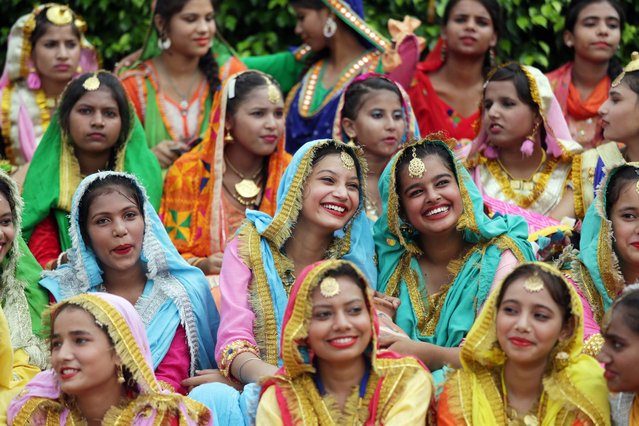
Indian school children wearing traditional Punjabi attire sit as they take part in the full and final dress rehearsal for India's Independence Day parade and celebrations in Amritsar, India, 13 August 2016. India's 70th Independence Day will be celebrated on 15 August, to commemorate its independence from British rule and its birth as a sovereign nation on that day in 1947. (Photo by Raminder Pal Singh/EPA)
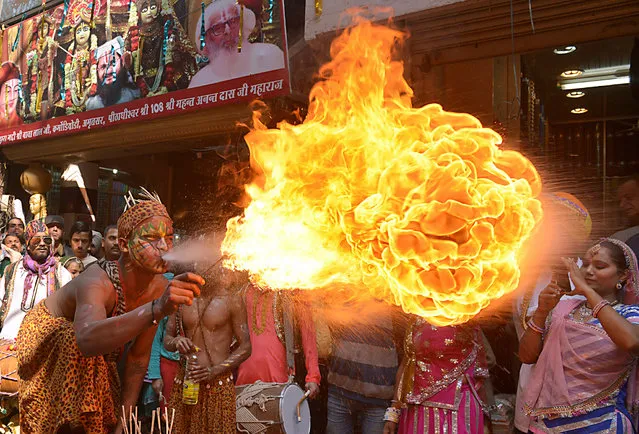
Indian dancers perform a fire breathing act during a procession to mark the 661st anniversary of the birth of Hindu guru Bawa Lal Dayal Maharaj in Amritsar on February 9, 2016. Bawa Lal Dayal Maharaj, a popular leader of his time, is especially revered by devotees of a temple in the town of Dhyanpur, some 45 kms north of Amritsar. (Photo by Narinder Nanu/AFP Photo)