Loading...
Done
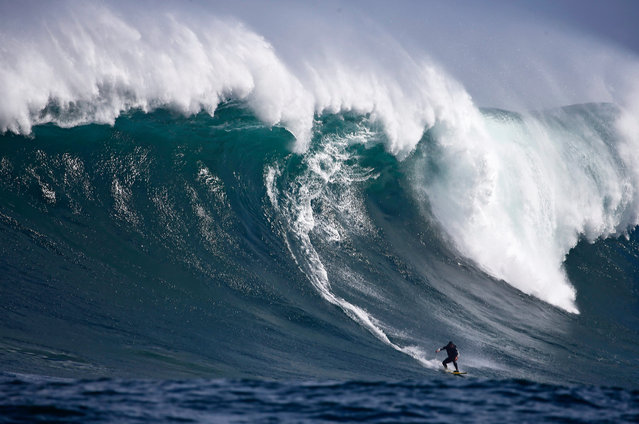
South African surfer Andy Marr rides a wave at Dungeons offshore reef in the Atlantic Ocean outside Cape Town, South Africa, 01 September 2016. The big wave surfing season is at its peak with winter swells driven by storms in the South Atlantic breaking on the Cape's outer reefs providing good conditions. Big wave surfers are competing in the 2016 Striped Horse Challenge and Rebel Sessions big wave competitons symultaneously throughout the season. (Photo by Nic Bothma/EPA)

South African surfer Andy Marr rides a wave at Dungeons offshore reef in the Atlantic Ocean outside Cape Town, South Africa, 01 September 2016. The big wave surfing season is at its peak with winter swells driven by storms in the South Atlantic breaking on the Cape's outer reefs providing good conditions. Big wave surfers are competing in the 2016 Striped Horse Challenge and Rebel Sessions big wave competitons symultaneously throughout the season. (Photo by Nic Bothma/EPA)
Details
02 Sep 2016 14:00:00
The Berenson robot strolls among visitors during the exhibition “Persona : Oddly Human” at the Quai Branly museum in Paris, France, February 23, 2016. The Berenson robot, developed in France in 2011, is the brainchild of anthropologist Denis Vidal and robotics engineer Philippe Gaussier. Its programming allows it to record reactions of museum visitors to certain pieces of art and then use the data to develop its own unique taste, which allows “Berenson” to judge whether or not it likes a certain work of art within an exhibition. (Photo by Philippe Wojazer/Reuters)

The Berenson robot strolls among visitors during the exhibition “Persona : Oddly Human” at the Quai Branly museum in Paris, France, February 23, 2016. The Berenson robot, developed in France in 2011, is the brainchild of anthropologist Denis Vidal and robotics engineer Philippe Gaussier. Its programming allows it to record reactions of museum visitors to certain pieces of art and then use the data to develop its own unique taste, which allows “Berenson” to judge whether or not it likes a certain work of art within an exhibition. (Photo by Philippe Wojazer/Reuters)
Details
25 Feb 2016 12:26:00
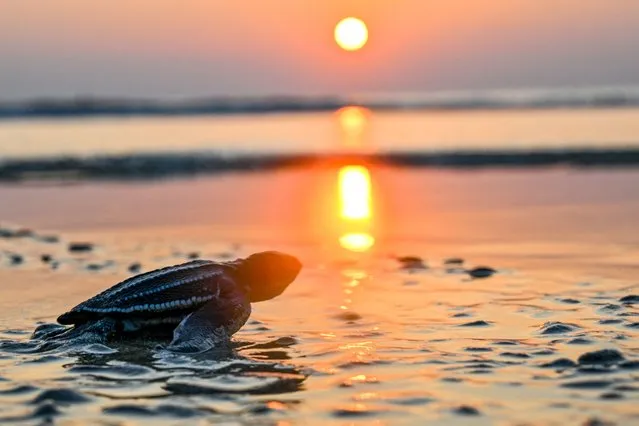
A small Leatherback sea turtle heads towards the sea during the sunset at Lhoknga beach in Aceh province on February 25, 2023. (Photo by Chaideer Mahyuddin/AFP Photo)

A small Leatherback sea turtle heads towards the sea during the sunset at Lhoknga beach in Aceh province on February 25, 2023. (Photo by Chaideer Mahyuddin/AFP Photo)
Details
11 Apr 2023 02:07:00
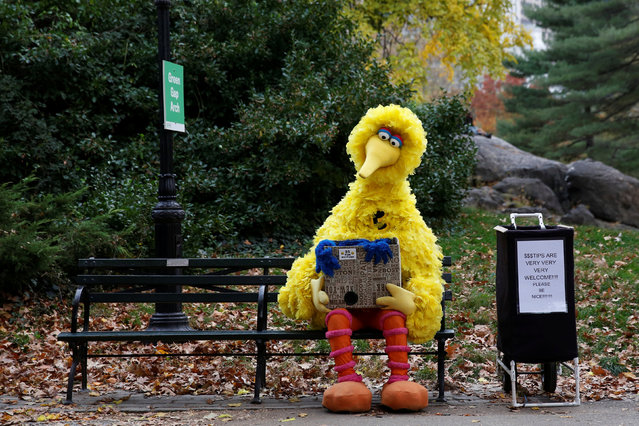
A man dressed as the Sesame Street character Big Bird sits on a bench waiting to take pictures with people walking through Central Park  in New York U.S., November 14, 2016. (Photo by Shannon Stapleton/Reuters)

A man dressed as the Sesame Street character Big Bird sits on a bench waiting to take pictures with people walking through Central Park in New York U.S., November 14, 2016. (Photo by Shannon Stapleton/Reuters)
Details
20 Nov 2016 11:18:00


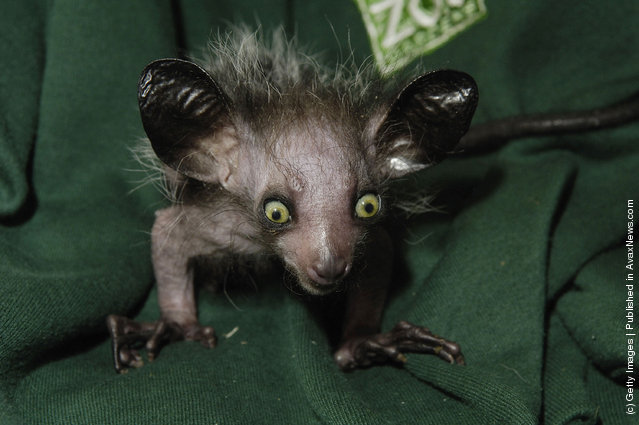
“The aye-aye (Daubentonia madagascariensis) is a lemur, a strepsirrhine primate native to Madagascar that combines rodent-like teeth and a special thin middle finger to fill the same ecological niche as a woodpecker. It is the world's largest nocturnal primate, and is characterized by its unusual method of finding food; it taps on trees to find grubs, then gnaws holes in the wood and inserts its narrow middle finger to pull the grubs out. The only other animal species known to find food in this way is the striped possum. From an ecological point of view the aye-aye fills the niche of a woodpecker as it is capable of penetrating wood to extract the invertebrates within”. – Wikipedia

Photo: In this handout image from Bristol Zoo is seen the first captive bred aye-aye in the UK named “Kintana” (meaning star in Malagasy) April 15, 2005 at Bristol Zoo Gardens, England. The zoo announced today only the second baby aye-aye to be hand-reared in the world (the first was in Jersey Zoo) and has now made his first public appearance since his birth on 11 February 2005. (Photo by Rob Cousins/Bristol Zoo via Getty Images)
Details
13 Apr 2011 13:33:00
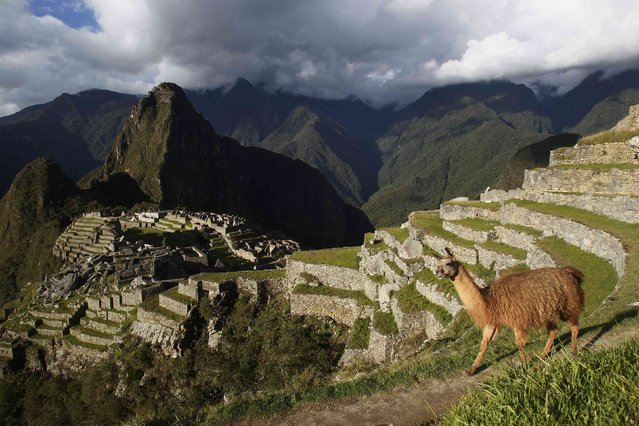
An alpaca is seen near the Inca citadel of Machu Picchu in Cusco December 2, 2014. Machu Picchu, a UNESCO World Heritage Site, is Peru's top tourist attraction, with the government limiting tourists to 2,500 per day due to safety reasons and concerns over the preservation of the ruins. (Photo by Enrique Castro-Mendivil/Reuters)

An alpaca is seen near the Inca citadel of Machu Picchu in Cusco December 2, 2014. Machu Picchu, a UNESCO World Heritage Site, is Peru's top tourist attraction, with the government limiting tourists to 2,500 per day due to safety reasons and concerns over the preservation of the ruins. (Photo by Enrique Castro-Mendivil/Reuters)
Details
04 Dec 2014 11:24:00
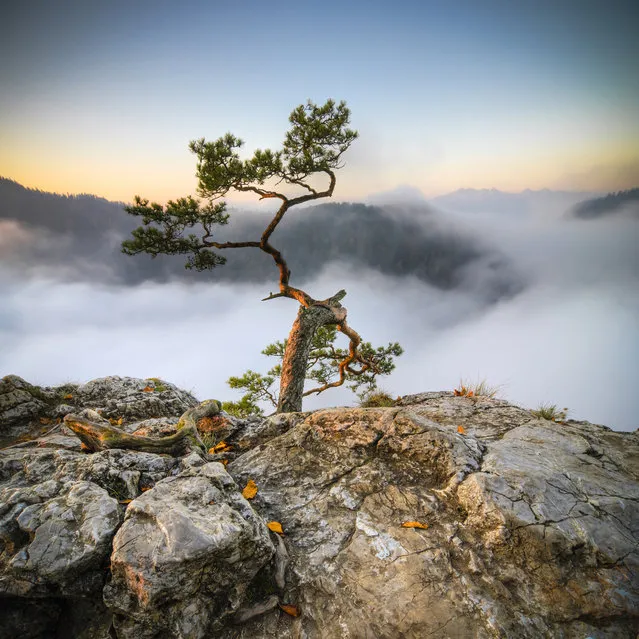
“Sokolica”. Sokolica, Poland. (Photo and caption by Marcin Kęsek/National Geographic Traveler Photo Contest)

“Sokolica”. Sokolica, Poland. (Photo and caption by Marcin Kęsek/National Geographic Traveler Photo Contest)

ATTENTION! All pictures are presented in high resolution. To see Hi-Res images – just TWICE click on any picture. In other words, click small picture – opens the BIG picture. Click BIG picture – opens VERY BIG picture.
Details
25 Jun 2013 09:13:00
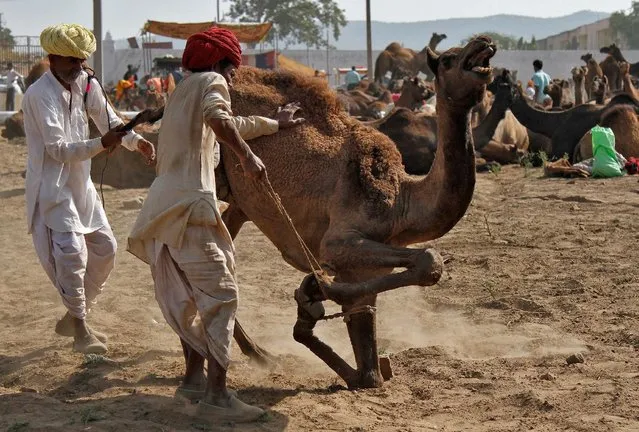
Traders try to control a camel at Pushkar Fair where animals, mainly camels, are brought to be sold and traded in the desert Indian state of Rajasthan November 6, 2016. (Photo by Himanshu Sharma/Reuters)

Traders try to control a camel at Pushkar Fair where animals, mainly camels, are brought to be sold and traded in the desert Indian state of Rajasthan November 6, 2016. (Photo by Himanshu Sharma/Reuters)
Details
07 Nov 2016 12:04:00