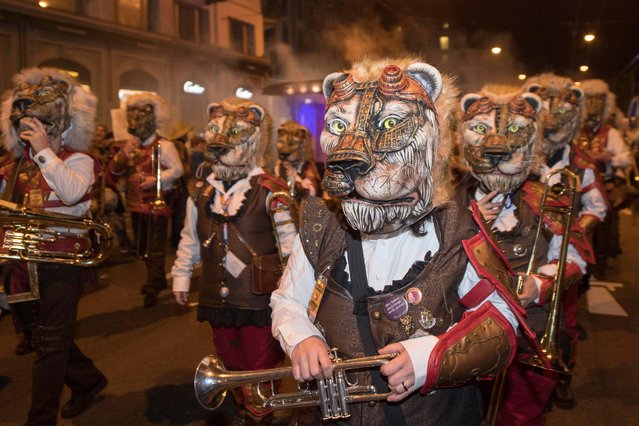
Masked Guggen music bands parade through the streets on the occasion of the beginning of the Fasnacht Carnival of Lucerne, Switzerland, early 23 February 2017. (Photo by Urs Flueeler/EPA)
Border Security Force (BSF) soldiers ride their camels as they take part in a rehearsal for a road show ahead of the visit of U.S. President Donald Trump, in Ahmedabad, India, February 21, 2020. (Photo by Amit Dave/Reuters)
Sherry Pie attends “RuPaul's Drag Race Season 12” meet the queens at TRL Studios on February 26, 2020 in New York City. (Photo by Astrid Stawiarz/Getty Images for VH1 “RuPaul's Drag Race”)
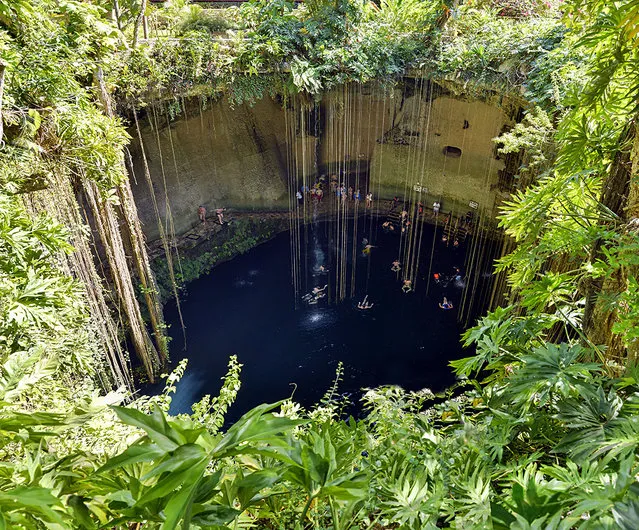
A cenote is a natural phenomenon, a sinkhole in the Earth’s surface. The Yucatan Peninsula in Mexico has an estimated 7,000 cenotes because it is primarily made up of porous limestone. For millions of years, rainfall slowly ate away at the limestone and a huge system of underground caves and caverns was formed. Many filled with water from rain or from the underground water table. When the roof of a water filled cave collapses, a cenote is born. The water found in a cenote may be fresh water, salt water, or both. Structurally it may be completely open, like a lake, almost completely closed with just a small opening at the top, or somewhere in between.
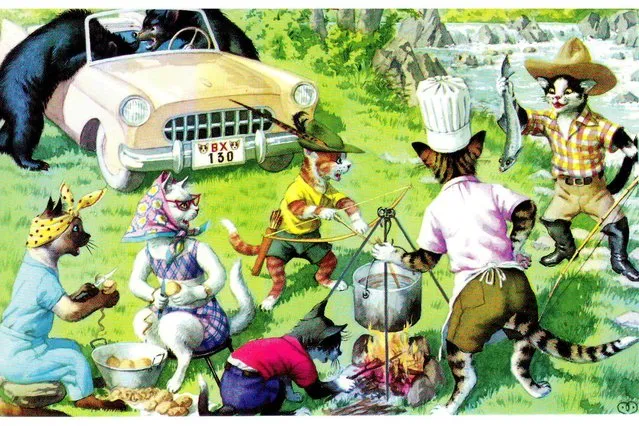
From the 1940s through the 1960s, the Alfred Mainzer Company of Long Island City, NY published a series of linen and photochrome humorous cat postcards illustrated by Eugen Hartung (or Hurtong) (1897–1973), sometimes referred to as “Mainzer Cats”. These postcards normally illustrate settings that are filled with action, often with a minor disaster just about to occur. While the dressed cats were by far the most popular and most plentiful cards, Hartung also painted other dressed animals – primarily mice, dogs, and hedgehogs.
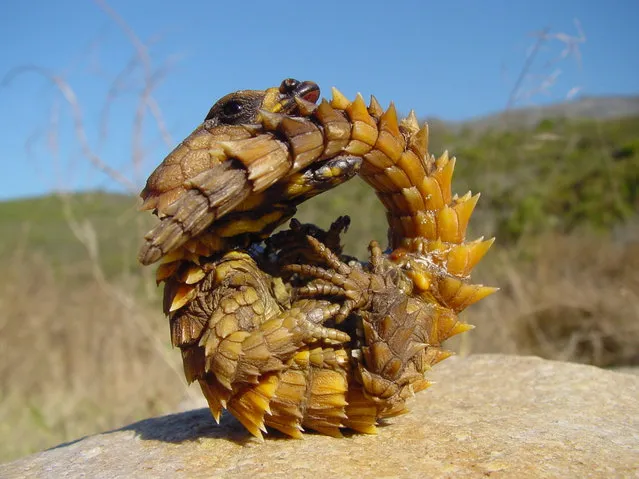
The armadillo girdled lizard, Ouroborus cataphractus, is a lizard endemic to desert areas of southern Africa. It is also commonly known as typical girdled lizard, armadillo lizard, golden armadillo lizard, and armadillo spiny-tailed lizard.