Loading...
Done
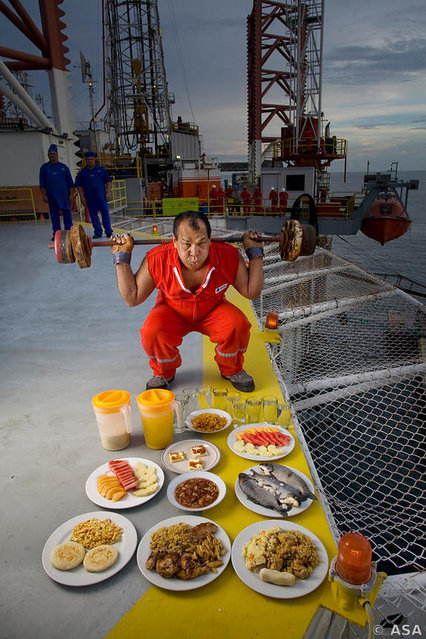
What the World Eats By Peter Menzel And Faith D'Aluisio Part 1

A stunning photographic collection featuring portraits of people from 30 countries and the food they eat in one day. In this fascinating study of people and their diets, 80 profiles are organized by the total number of calories each person puts away in a day. Featuring a Japanese sumo wrestler, a Massai herdswoman, world-renowned Spanish chef Ferran Adria, an American competitive eater, and more, these compulsively readable personal stories also include demographic particulars, including age, activity level, height, and weight. Essays from Harvard primatologist Richard Wrangham, journalist Michael Pollan, and others discuss the implications of our modern diets for our health and for the planet. This compelling blend of photography and investigative reportage expands our understanding of the complex relationships among individuals, culture, and food.
Details
23 Apr 2014 14:34:00
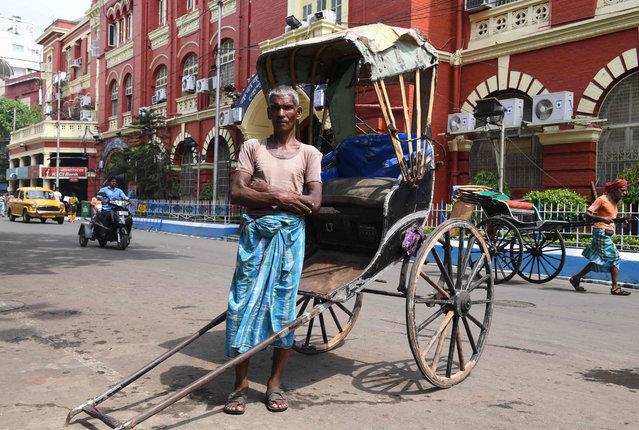
Mohammad Ashgar, 65, an Indian rickshaw puller, poses for a photograph next to his rickshaw in Kolkata on April 21, 2018. A mainstay of 19 th century transportation options, the hand- pulled rickshaw survives in India only in Kolkata after being outlawed elsewhere. The local puller's union puts the number of pullers in the city at 3,000. The union has resisted all previous attempts to ban their livelihood, previously organising mass protests of their members against moves to stamp out the practice. (Photo by Dibyangshu Sarkar/AFP Photo)

Ahead of May Day, AFP' s video and photo teams spoke to men and women around the globe whose jobs are becoming increasingly rare, particularly as technology transforms societies. Here: Mohammad Ashgar, 65, an Indian rickshaw puller, poses for a photograph next to his rickshaw in Kolkata on April 21, 2018. (Photo by Dibyangshu Sarkar/AFP Photo)
Details
02 May 2018 00:01:00
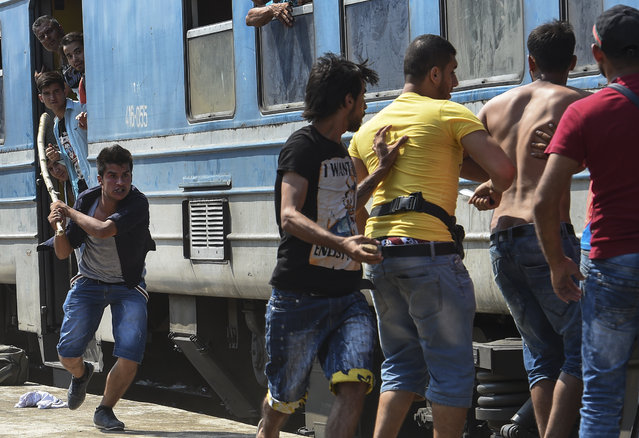
Migrants with a stick, stones and knife fight with each other after a brawl erupted over a place in an overcrowded train heading to the Serbian border at the train station in Gevgelija, The Former Yugoslav Republic of Macedonia, 14 August 2015. The number of migrants passing through Macedonia increases day by day, local sources said. From the beginning of the year to mid-June 2015, nearly 160,000 migrants landed in the southern European countries, mainly Greece and Italy, on their way to wealthier countries in Western and Northern Europe, according to estimates by the International Organization for Migration (IOM). (Photo by Georgi Licovski/EPA/EFE)

Migrants with a stick, stones and knife fight with each other after a brawl erupted over a place in an overcrowded train heading to the Serbian border at the train station in Gevgelija, The Former Yugoslav Republic of Macedonia, 14 August 2015. (Photo by Georgi Licovski/EPA/EFE)
Details
15 Jul 2018 00:05:00
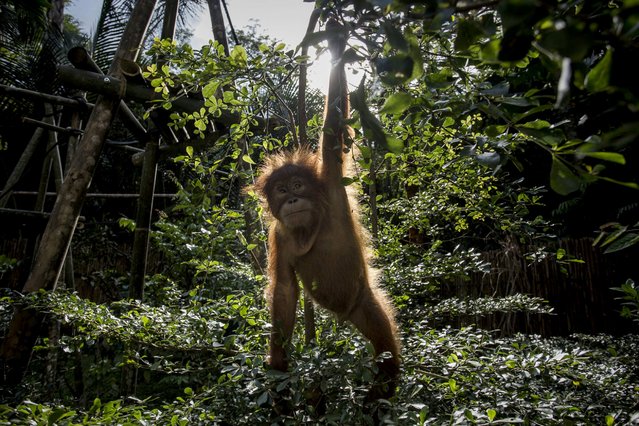
A Baby sumatran orangutan (Pongo abelii) plays around in a tree as they train at Sumatran Orangutan Conservation Programme's rehabilitation center on November 12, 2016 in Kuta Mbelin, North Sumatra, Indonesia. The Orangutans in Indonesia have been known to be on the verge of extinction as a result of deforestation and poaching. Found mostly in South-East Asia, where they live on the islands of Sumatra and Borneo, the endangered species continue to lose their habitat as a result of corporate expansion in a developing economy. Indonesia approved palm oil concessions on nearly 15 million acres of peatlands over the past years and thousands of square miles have been cleared for plantations, including the lowland areas that are the prime habitat for orangutans. (Photo by Ulet Ifansasti/Getty Images)

A Baby sumatran orangutan (Pongo abelii) plays around in a tree as they train at Sumatran Orangutan Conservation Programme's rehabilitation center on November 12, 2016 in Kuta Mbelin, North Sumatra, Indonesia. The Orangutans in Indonesia have been known to be on the verge of extinction as a result of deforestation and poaching. Found mostly in South-East Asia, where they live on the islands of Sumatra and Borneo, the endangered species continue to lose their habitat as a result of corporate expansion in a developing economy. Indonesia approved palm oil concessions on nearly 15 million acres of peatlands over the past years and thousands of square miles have been cleared for plantations, including the lowland areas that are the prime habitat for orangutans. (Photo by Ulet Ifansasti/Getty Images)
Details
16 Nov 2016 11:14:00
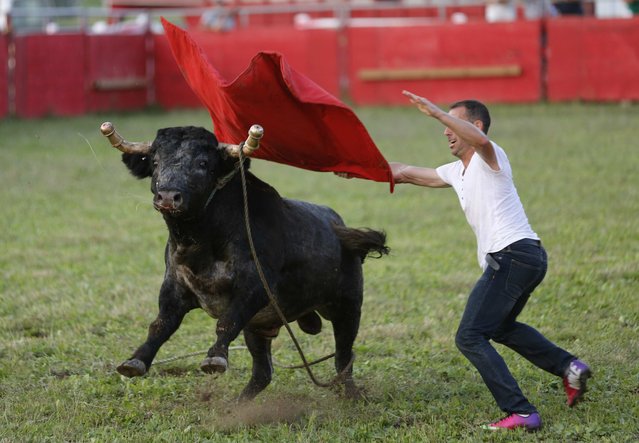
Matador Marco Espinola, who emigrated from the Azores two years ago, challenges a bull during an Azorean “tourada a corda” (bullfight by rope) in Brampton, Ontario August 15, 2015. (Photo by Chris Helgren/Reuters)

Matador Marco Espinola, who emigrated from the Azores two years ago, challenges a bull during an Azorean “tourada a corda” (bullfight by rope) in Brampton, Ontario August 15, 2015. Bulls in a tourada a corda are held by a rope controlled by a team of men to make sure the animal does not cause injury. Bulls are never killed, in contrast with bullfighting in Spain. The Portuguese population in Canada, numbering 429,000 in the 2011 census, mainly centers around Toronto with immigrants from the nine islands of the mid-Atlantic Azores archipelago. (Photo by Chris Helgren/Reuters)
Details
18 Aug 2015 13:39:00
Hong Kong Shop Cats #17. Marcel Heijnen returned to Hong Kong in 2015 and found himself living without a cat for the first time in decades. Soon, though, he was indulging in what he calls “re-tail therapy” and found himself on a first-name basis with a number of cats in his neighbourhood, Sai Ying Pun. (Photo by Marcel Heijnen/Blue Lotus)

When Dutch photographer Marcel Heijnen moved to Hong Kong, the territory’s shop cats instantly caught his eye. While the “feline emperors” are the stars, his shots also offer insights into Hong Kong’s wares, from dried fish to paper. Here: Hong Kong Shop Cats #17. (Photo by Marcel Heijnen/Blue Lotus)
Details
03 Jan 2017 11:04:00
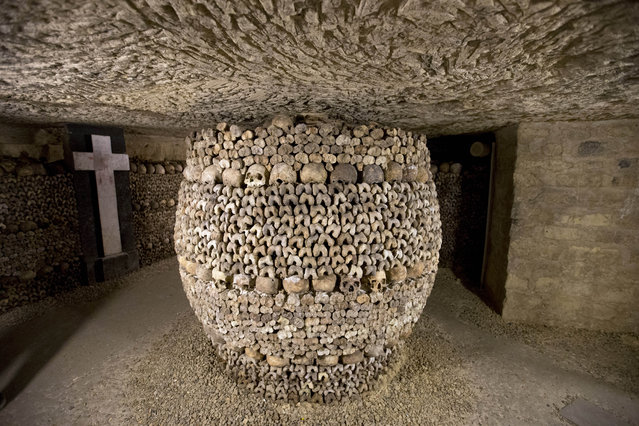
In this photo taken Tuesday, October 14, 2014, skulls and bones are stacked at the Catacombs in Paris, France. (Photo by Francois Mori/AP Photo)

In this photo taken Tuesday, October 14, 2014, skulls and bones are stacked at the Catacombs in Paris, France. The subterranean tunnels, stretching 2 kilometers (1.24 miles), cradle the bones of some 6 million Parisians from centuries past and once gave refuge to smugglers. The site used to close at 5 p.m., but is now staying open until 8 p.m. The change is mainly aimed at allowing more people to visit and reducing long lines, since it can only hold a limited number of people at a time and visits can't be reserved in advance. (Photo by Francois Mori/AP Photo)
Details
17 Oct 2014 13:27:00
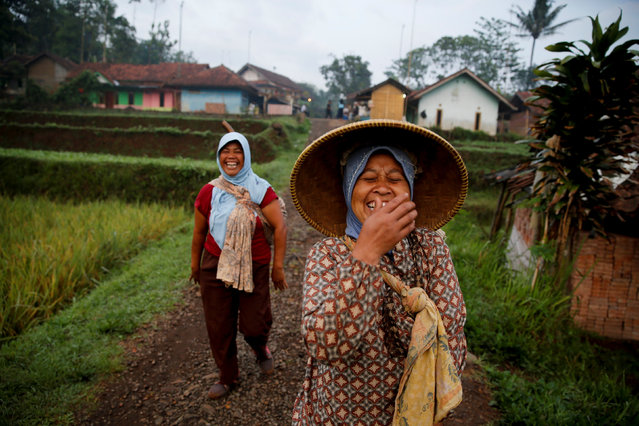
Women share a joke as they walk to a paddy field in Cikawao village of Majalaya, West Java province, Indonesia, October 12, 2017. (Photo by Reuters/Beawiharta)

A gory fight to the death between snarling dogs and captured wild boars. Gathered around a bamboo-walled arena, Indonesians in this remote part of Java island seem eager to watch the blood-curdling contests, known locally as “adu bagong” (boar fighting). Not surprisingly, animal rights activists are up in arms against the regular spectacle, which began in the 1960s when wild pig numbers in this area in West Java soared and they were hunted to protect crops. Here: Women share a joke as they walk to a paddy field in Cikawao village of Majalaya, West Java province, Indonesia, October 12, 2017. (Photo by Reuters/Beawiharta)
Details
21 Oct 2017 07:46:00