Loading...
Done
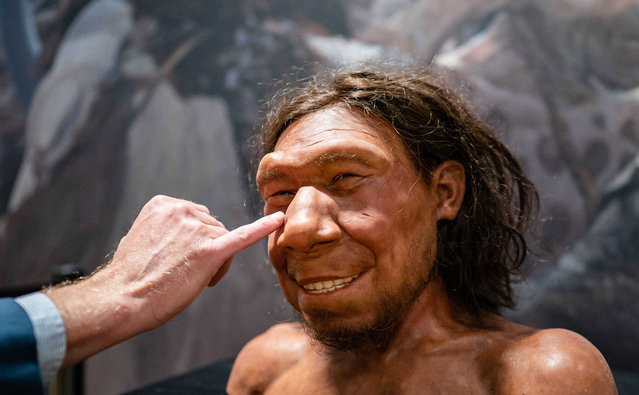
A reconstruction of the first Neanderthal in the Netherlands, nicknamed Krijn, is on display in the National Museum of Antiquities in Leiden, The Netherlands, 06 September 2021. Krijn's face has been worked on for years by the brothers Adrie and Alfons Kennis. (Photo by Bart Maat/EPA/EFE)

A reconstruction of the first Neanderthal in the Netherlands, nicknamed Krijn, is on display in the National Museum of Antiquities in Leiden, The Netherlands, 06 September 2021. Krijn's face has been worked on for years by the brothers Adrie and Alfons Kennis. (Photo by Bart Maat/EPA/EFE)
Details
07 Sep 2021 08:46:00
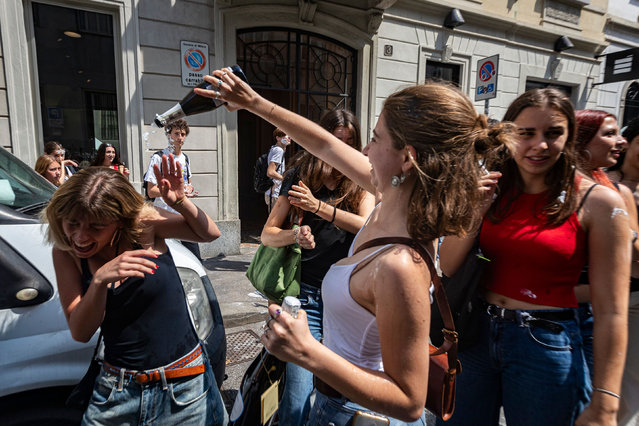
Students from the Liceo Parini school celebrate the end of term in Milan, Italy on June 6, 2024. (Photo by Marco Ottico/LaPresse/Rex Features/Shutterstock)

Students from the Liceo Parini school celebrate the end of term in Milan, Italy on June 6, 2024. (Photo by Marco Ottico/LaPresse/Rex Features/Shutterstock)
Details
28 Oct 2025 05:01:00
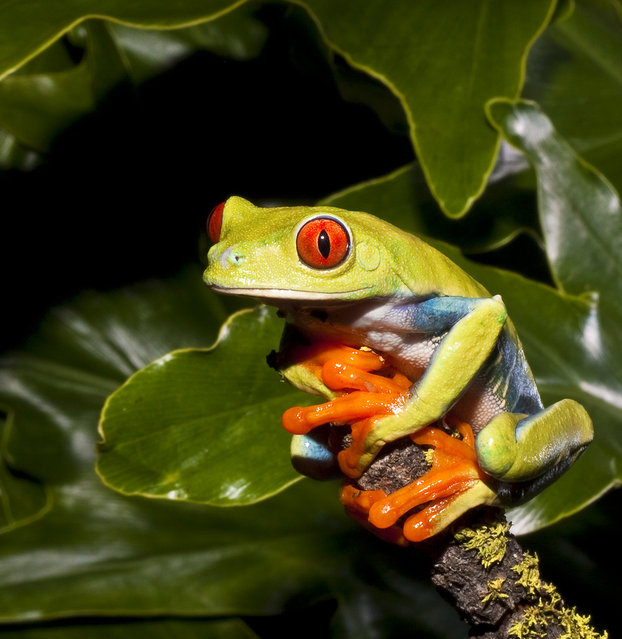
The Red-eyed Treefrog (Agalychnis callidryas)

“The Red-eyed Treefrog (Agalychnis callidryas) is an arboreal hylid native to Neotropical rainforests in Central America. Red-eyed tree frogs, as their name states, have red eyes with vertically narrowed noses, a vibrant green body with yellow and blue vertically striped sides, and orange or yellow webbed feet and toes”. – Wikipedia. (Photo by Donald Quintana)
Details
26 Jun 2012 10:13:00
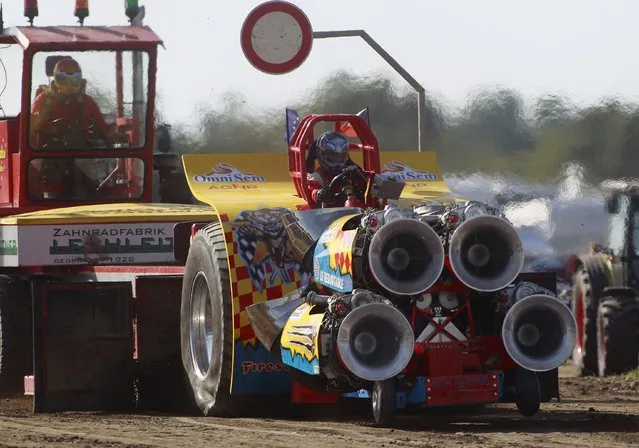
A driver competes in his tractor during the Tractor Pulling Euro Championships in the western German town of Fuechtorf September 9, 2012. Eighty teams from across Europe participated in the two-day competition where high-powered tractor prototypes must pull a trailer down a 100-metre (328 ft) track as far as possible. (Photo by Ina Fassbender/Reuters)

A driver competes in his tractor during the Tractor Pulling Euro Championships in the western German town of Fuechtorf September 9, 2012. Eighty teams from across Europe participated in the two-day competition where high-powered tractor prototypes must pull a trailer down a 100-metre (328 ft) track as far as possible. (Photo by Ina Fassbender/Reuters)
Details
22 Jul 2013 08:50:00
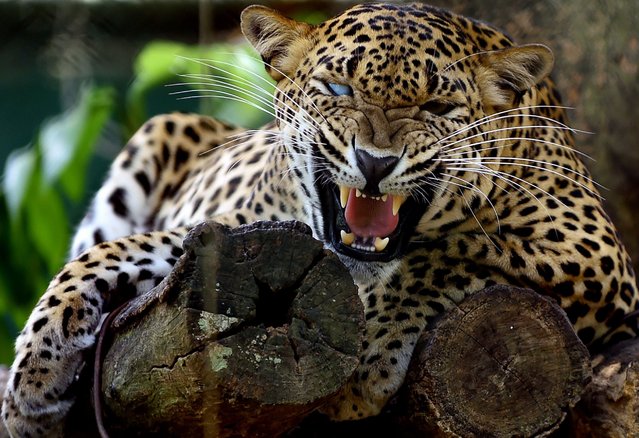
A Sri Lankan leopard is pictured at a zoo in Dehiwala near Colombo on March 3, 2016, on World Wildlife Day. (Photo by Ishara S. Kodikara/AFP Photo)

A Sri Lankan leopard is pictured at a zoo in Dehiwala near Colombo on March 3, 2016, on World Wildlife Day. (Photo by Ishara S. Kodikara/AFP Photo)
Details
06 Mar 2016 09:07:00
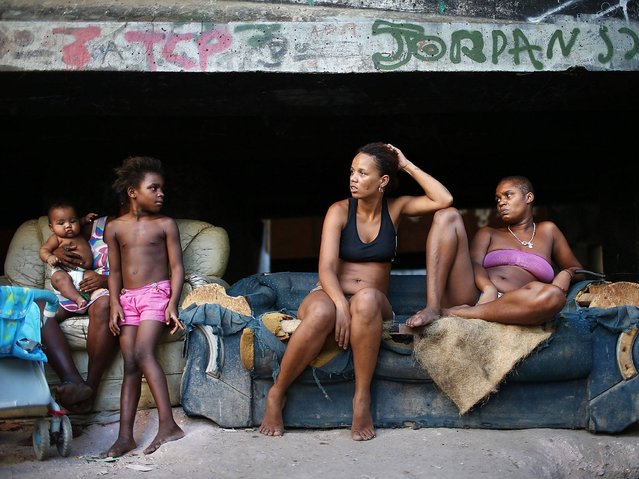
Residents (R to L) Luiza, Janubie, Leiticia and Lucas sit beneath an overpass near their houses in an impoverished area in the unpacified Complexo da Mare slum complex, one of the largest “favela” complexes in Rio de Janeiro. (Photo by Mario Tama/Getty Images)

Residents (R to L) Luiza, Janubie, Leiticia and Lucas sit beneath an overpass near their houses in an impoverished area in the unpacified Complexo da Mare slum complex, one of the largest “favela” complexes in Rio, on March 18, 2014 in Rio de Janeiro, Brazil. (Photo by Mario Tama/Getty Images)
Details
21 Mar 2014 06:07:00
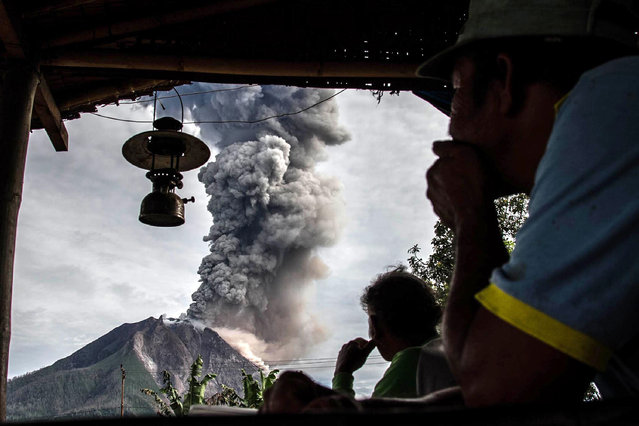
Villagers look on as Mount Sinabung volcano spews thick volcanic ash, as seen from Beganding village in Karo, North Sumatra province, on May 19, 2017. Sinabung roared back to life in 2010 for the first time in 400 years. After another period of inactivity, it erupted once more in 2013 and has remained highly active since. (Photo by Ivan Damanik/AFP Photo)

Villagers look on as Mount Sinabung volcano spews thick volcanic ash, as seen from Beganding village in Karo, North Sumatra province, on May 19, 2017. Sinabung roared back to life in 2010 for the first time in 400 years. After another period of inactivity, it erupted once more in 2013 and has remained highly active since. (Photo by Ivan Damanik/AFP Photo)
Details
20 May 2017 10:09:00
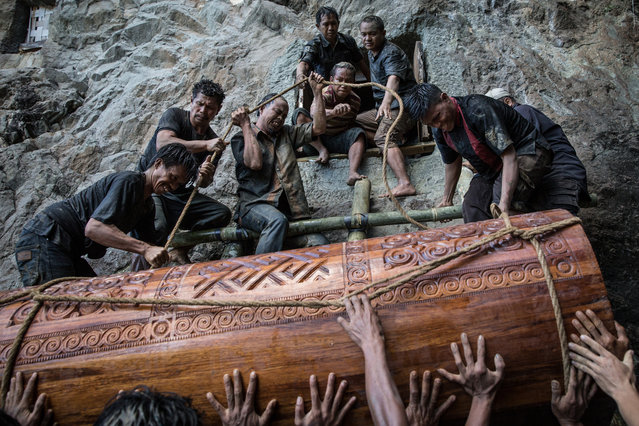
It is said that Torajans are people who “live to die”. For this Indonesian ethnic group, funerals are such extravagant events that they sometimes attract tourists. Families can postpone burials years (and the deceased are considered sick and hosted at home until the funeral) until the family can raise enough money and gather as many relatives as possible. And then it’s a jubilant multiday social event with a parade, dances and animal sacrifices. Agung Parameswara photographed these funerary practices when he traveled to South Sulawesi province, where the Torajans live. But often, their funeral isn’t the last time the dead are seen. In August, crypts are opened, coffins are slid back out and bodies delicately unsheathed. This tender ritual is known as Ma’Nene, which is customarily performed every few years. (Photo by Agung Parameswara/The Washington Post)

It is said that Torajans are people who “live to die”. For this Indonesian ethnic group, funerals are such extravagant events that they sometimes attract tourists. Families can postpone burials years (and the deceased are considered sick and hosted at home until the funeral) until the family can raise enough money and gather as many relatives as possible. And then it’s a jubilant multiday social event with a parade, dances and animal sacrifices. Agung Parameswara photographed these funerary practices when he traveled to South Sulawesi province, where the Torajans live. (Photo by Agung Parameswara/The Washington Post)
Details
06 Oct 2016 09:15:00