A model presents a creation from the Betsey Johnson Spring/Summer 2016 collection during New York Fashion Week in New York, September 11, 2015. (Photo by Andrew Kelly/Reuters)
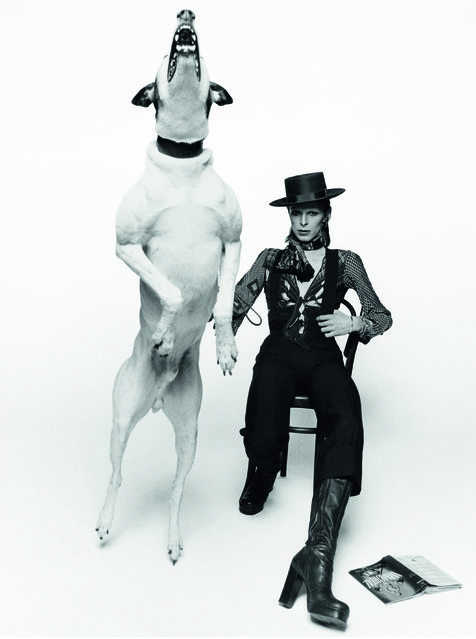
David Bowie, 1974. David Bowie's quirky character and style was perfectly encapsulated in this shot by Terry O'Neill, which shows the music legend posing next to a barking dog on the artwork for his 1974 album “Diamond Dogs” in London. (Photo by Terry O'Neill)
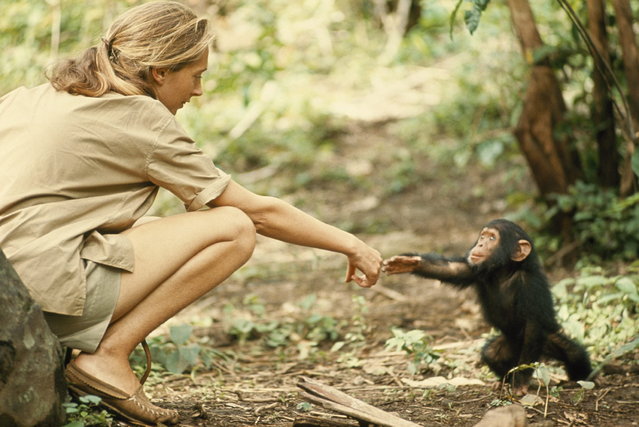
Tanzania, 1964. A touching moment between primatologist and National Geographic grantee Jane Goodall and young chimpanzee Flint at Tanzania's Gombe Stream Reserve. (Photo by Hugo van Lawick via National Geographic)
A competition, now in its 43rd year, dedicated to showcasing the beautiful and bizarre as seen under a light microscope attracted over 2,000 entries from 88 countries. Here: Honorable Mention by Emre Can Alagöz, Istanbul, Turkey: The eyes of a jumping spider, magnified 6x. (Photo by Emre Can Alagöz/2017 Nikon Small World Photomicrography Competition)
Kim Kardashian goes shopping for gummy bears in sheer Gucci bra on October 9, 2017. She paired the risqué outfit with a waist-fitted midi length pencil skirt and clear lucite wedges from Kanye West’s fashion line. (Photo by Splash News and Pictures)
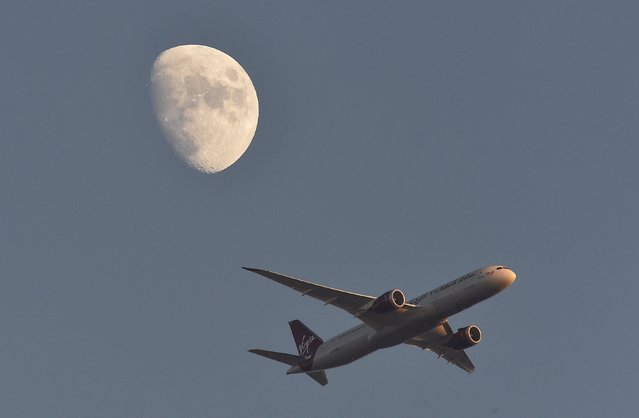
A Virgin Atlantic passenger plane flies in the sky with the moon seen in the background, in London, Britain January 19, 2016. (Photo by Toby Melville/Reuters)
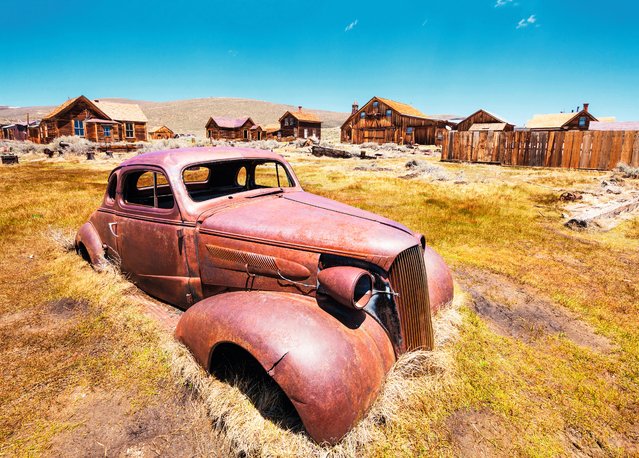
Kieron Connolly’s new book of photographs of more than 100 once-busy and often elegant buildings gives an idea of how the world might look if humankind disappeared. Here: Bodie, Mono County, California. Gold was discovered at Bodie in 1859 (just after the initial California gold rush) and it went from mining camp to boomtown. Its decline began in 1880, when word spread of new boomtowns elsewhere. The Standard Consolidated Mine closed in 1913, and four years later the Bodie Railway was abandoned. By 1940 the population was down to 40. Today, Bodie is maintained in a state of arrested decay as a visitor attraction. (Photo by Alamy Stock Photo)
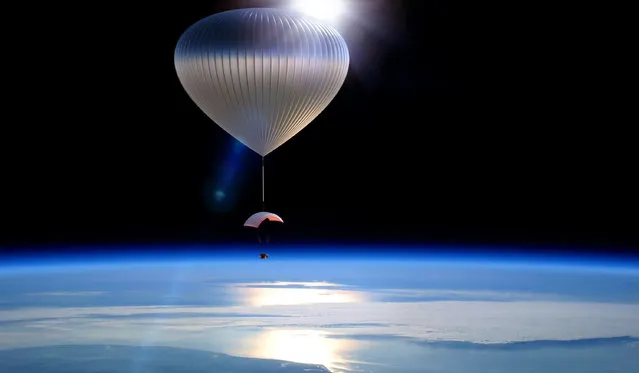
This undated image provided by World View shows World View capsule and balloon spacecraft that will rise to 100,000 feet above Earth for passengers to see the curvature of the planet and the blackness of space. Space tourism companies are employing designs including winged vehicles, vertical rockets with capsules and high-altitude balloons. While developers envision ultimately taking people to orbiting habitats, the moon or beyond, the immediate future involves short flights into or near the lowest reaches of space without going into orbit. (Photo by World View via AP Photo)