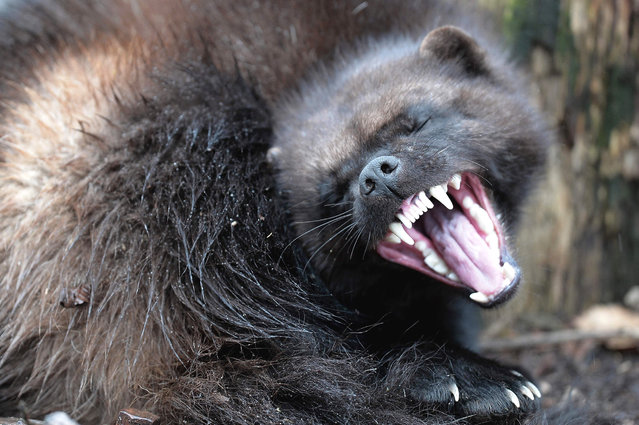
A wolverine is pictured during its first public appearance at the Animal Park of Sainte-Croix in Rhodes, eastern France on January 28, 2016. (Photo by Frederick Florin/AFP Photo)
A youth in make-up waits for the start of the annual Zombie walk in Mexico City, Saturday, October 22, 2016. Hundreds dressed in rags and ghoulish makeup to look bloody and decaying, gathered in the historic center of Mexico's capital. (Photo by Christian Palma/AP Photo)
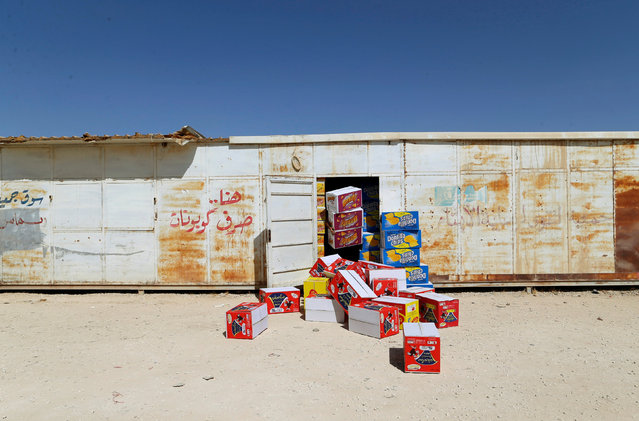
A Syrian refugee man (obscured) moves boxes of goods at his shop in Zaatari refugee camp near the border with Syria, in Mafraq, Jordan October 15, 2016. (Photo by Ammar Awad/Reuters)
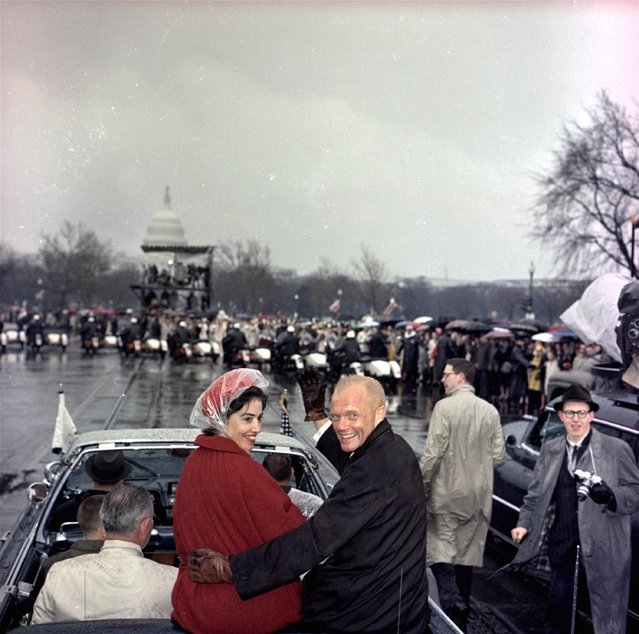
In this February 26, 1962 file photo, Mercury astronaut John Glenn, and his wife, Annie, ride in the back of an open car with Vice-President Johnson during a parade in Glenn's honor in Washington. The Capitol is seen in the background. Glenn, the first American to orbit Earth who later spent 24 years representing Ohio in the Senate, died Thursday, Dec. 8, 2016, at the age of 95. (Photo by AP Photo)
Spanish soldiers of the 7th Airborne Light Infantry Brigade “Galicia” fire a howitzer Light Gun L118 during maneuvers with other units in preparation to NATO's Very High Readiness Joint Task Force (VJTF) in Zaragoza, Spain, April 19, 2016. (Photo by Javier Cebollada/EPA)
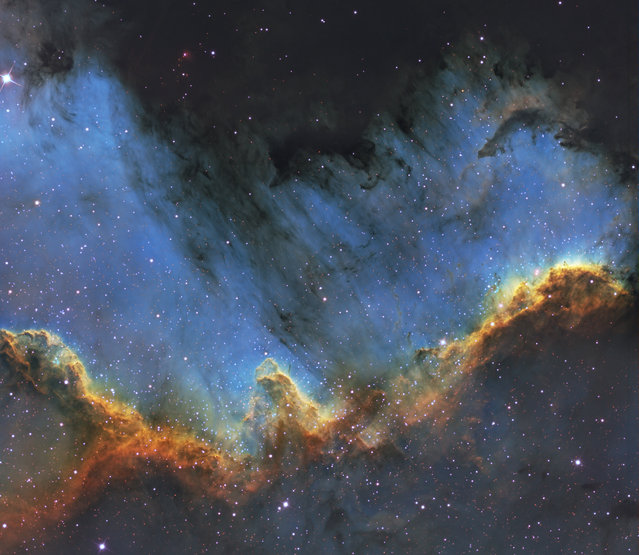
Amateur astronomer Bill Snyder has been involved with astrophotography since 2007. Photo: The Cygnus Wall is in the southern area of NGC7000 also known as the North America Nebula. It is approximately 1800 light years from Earth, and is in the constellation Cygnus. The Wall is an energized shock front and contains the most concentrated star formations in the nebula. The size of the North America Nebula is about 4 full moons. (Photo and caption by Bill Snyder)
A boy holds his mother's leg as he cries in front of their damaged house after a strong 6.6 magnitude earthquake at Longmen village, Lushan county in Ya'an, Sichuan province. (Photo by Jason Lee/Reuters)
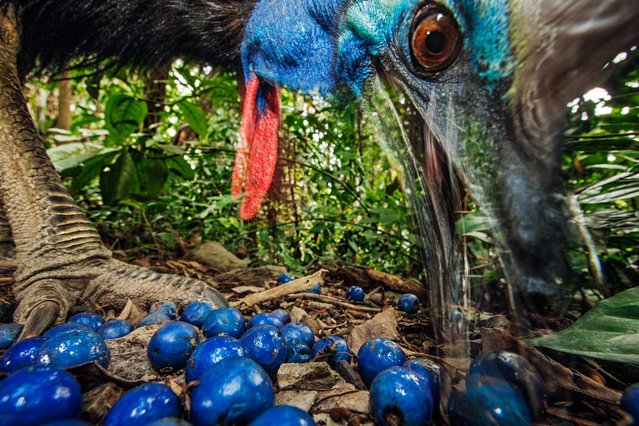
“Cassowaries are large, flightless birds related to emus and (more distantly) to ostriches, rheas, and kiwis”, writes Olivia Judson in the September issue of National Geographic magazine. How large? People-size: Adult males stand well over five foot five and top 110 pounds. Females are even taller, and can weigh more than 160 pounds. Dangerous when roused, they’re shy and peaceable when left alone. But even birds this big and tough are prey to habitat loss. The dense New Guinea and Australia rain forests where they live have dwindled. Today cassowaries might number 1,500 to 2,000. And because they help shape those same forests – by moving seeds from one place to another – “if they vanish”, Judson writes, “the structure of the forest would gradually change” too. (Photo by Christian Ziegler/National Geographic)